Reservation for SC/ST/OBC/EWS in UPSC IAS Exam
UPSC Reservation Rules 2025: Understand SC/ST/OBC/EWS/PwBD quotas, relaxations, and eligibility for Civil Services aspirants. Read now!
Nov, 2025
•5 min read
Reservation in UPSC plays an important role in making the Civil Services more inclusive and fair. It supports communities that have faced social and educational disadvantages to ensure a more equal footing.
Over the years, this system has opened doors for many aspirants and helped bring different voices into policy-making. This blog explains the reservation system in UPSC CSE, so you know how it applies to you before starting your preparation.
Category-wise Reservation in UPSC
UPSC follows a structured reservation policy to ensure fair representation across different social and economic groups. Each category is allotted a specific quota that applies to vacancies, cut-offs, and service allocation. 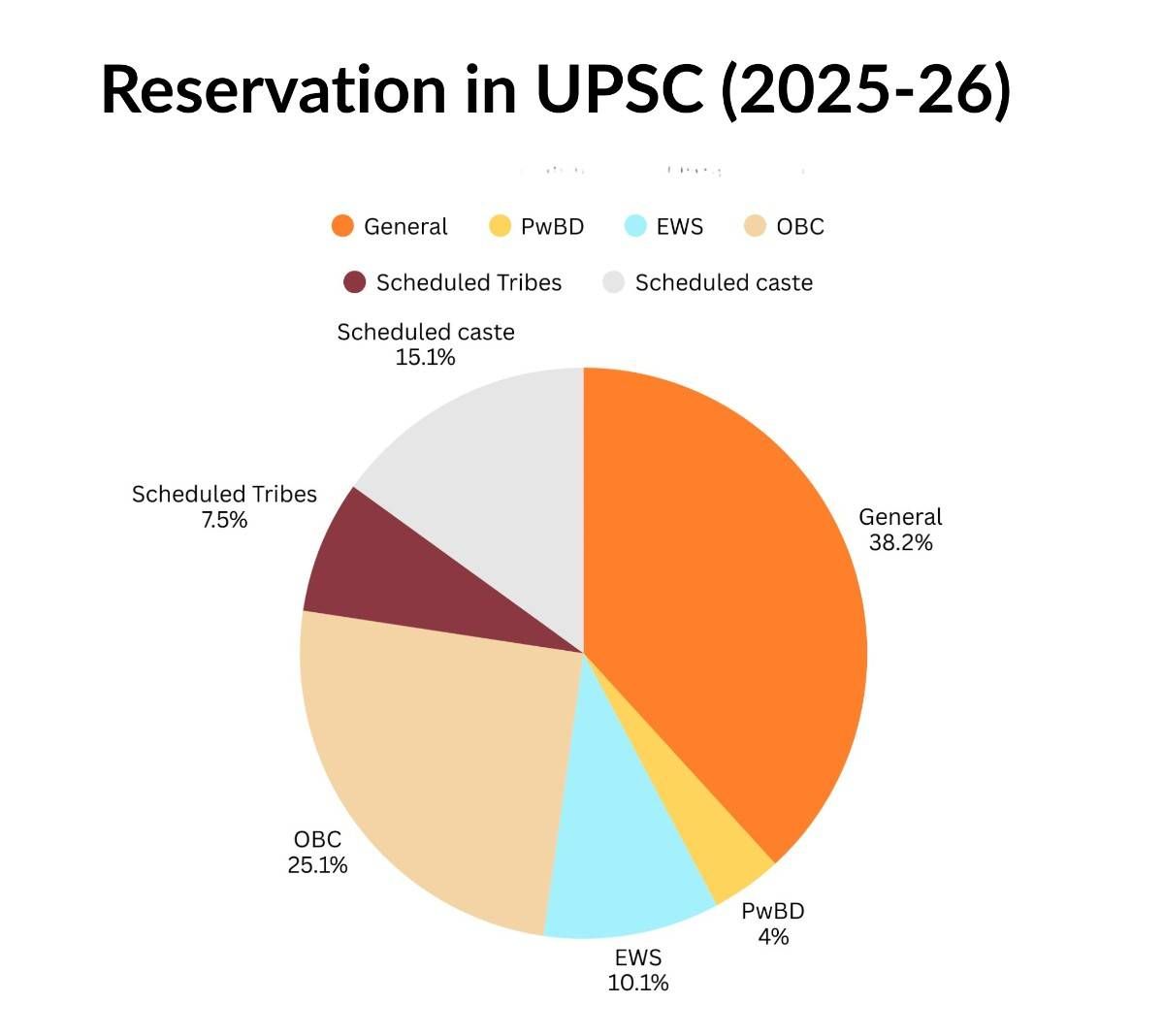
Eligibility Requirements for UPSC Reservation
To avail reservation benefits in the UPSC Civil Services Exam, candidates must meet specific criteria laid down by the Central Government. Here are the key requirements:
- The candidate’s caste or community must be listed in the Central Government’s official list of reserved categories.
- OBC candidates must belong to the Non-Creamy Layer (NCL). They must produce a valid Non-Creamy Layer certificate issued within the required time frame.
- EWS candidates must meet the income and asset criteria set by the Central Government. A valid EWS certificate is mandatory.
- PwBD candidates must meet the benchmark disability criteria (40% or above) as defined by the Rights of Persons with Disabilities Act, 2016. They must provide a valid medical/disability certificate from an authorised medical board.
All these certificates must be issued by competent authorities and presented during the UPSC interview/personality test. Improper or incomplete documentation can lead to cancellation of the reservation claim.
Also read: PRATIBHA Setu: UPSC Aspirants’ Bridge to Alternative Career Pathways
Age Relaxation Under UPSC Reservation
UPSC provides age relaxation to candidates from reserved categories so they have a fair chance to compete in the Civil Services Exam. These relaxations are added to the upper age limit and vary based on the category.
Note: To claim age relaxation, candidates must submit valid proof of age and supporting documents such as caste certificates, disability certificates, or service-related certificates (where applicable).
This ensures that the relaxation is granted only to eligible candidates as per UPSC rules.
Also read: Difference Between IAS and IPS: Rank, Salary Structure & Powers
UPSC Reservation for SC/ST and OBC Candidates
UPSC provides different relaxations for SC/ST and OBC candidates in terms of attempts, age limit, and application fee. Here are the details:
Reservation in UPSC for the EWS Category
The Government of India introduced a 10% reservation for the Economically Weaker Sections (EWS) in the UPSC Civil Services Exam in 2020. This reservation is based on the 103rd Constitutional Amendment Act, 2019, which defines the EWS category using specific income and asset conditions.
Eligibility Criteria for EWS Reservation
To claim the EWS quota in UPSC, candidates must meet all the following conditions:
- Must belong to the General category and should not be eligible for SC, ST, or OBC reservation.
- Family’s gross annual income must be less than ₹8 lakh in the previous financial year.
- Family should NOT own:
- Agricultural land of 5 acres or more,
- A residential flat of 1000 sq. ft. or more,
- A residential plot of 100 sq. yards or more in notified municipalities,
- A residential plot of 200 sq. yards or more in non-notified areas.
- Income and asset criteria apply to the candidate, parents, siblings (below 18), and spouse.
- Must produce a valid EWS Certificate issued by a competent authority.
UPSC Exam Benefits for the EWS Category
Here are the details:
PwBD Reservation in UPSC
UPSC provides special benefits to Persons with Benchmark Disabilities (PwBD) to ensure equal access to the Civil Services Examination. UPSC recognises the following disability categories:
- PH-1: Orthopedically Handicapped (OH)
- PH-2: Visually Handicapped (VH)
- PH-3: Hearing Handicapped (HH)
To qualify for PwBD reservation, a candidate must have a minimum 40% disability and must submit a valid disability certificate issued by a government-approved medical board.
PwBD reservation applies to most Group A services under UPSC, including the IAS, IPS, and IFS, depending on service-specific suitability rules.
Benefits for PwBD Candidates in UPSC
PwBD candidates receive reservation benefits, age relaxation, extra attempts, and exam-day assistance.
- Age Relaxation: Up to 10 years added to the upper age limit.
- Extra Attempts: Eligible for up to 9 attempts, regardless of category.
- Exam Support: Facilities such as scribes, extra time, accessible seating, and other assistive provisions are provided as needed.
You might also like: What UPSC Wants from IAS Aspirants
Conclusion
Reservation in UPSC helps ensure fair chances for candidates from different backgrounds. Knowing the rules for each category makes it easier to plan your preparation with clarity. Now, with the basics clear, you can focus on what matters most: preparing confidently for the exam.
Must see: UPSC Calendar 2026: Exam Dates and Details
Start your UPSC Preparation with SuperKalam
Your Personal AI Mentor that teaches, instantly evaluates handwritten answers & builds daily discipline. Cover 100 of % Prelims & Mains syllabus to add magic in your preparation.
Click the banner below:
Crack UPSC with SuperKalam
Your Personal AI Mentor that teaches, instantly evaluates Handwritten Answers & builds Daily Discipline
Download Now