Sikkim is the first ‘Organic State’ in India. What are the ecological and economic benefits of an Organic State?
Sikkim is the first ‘Organic State’ in India. What are the ecological and economic benefits of an Organic State?
Sikkim's achievement as India's first certified organic state in 2016 demonstrates how sustainable agricultural transformation can deliver comprehensive ecological and economic benefits while establishing a replicable model for sustainable development.
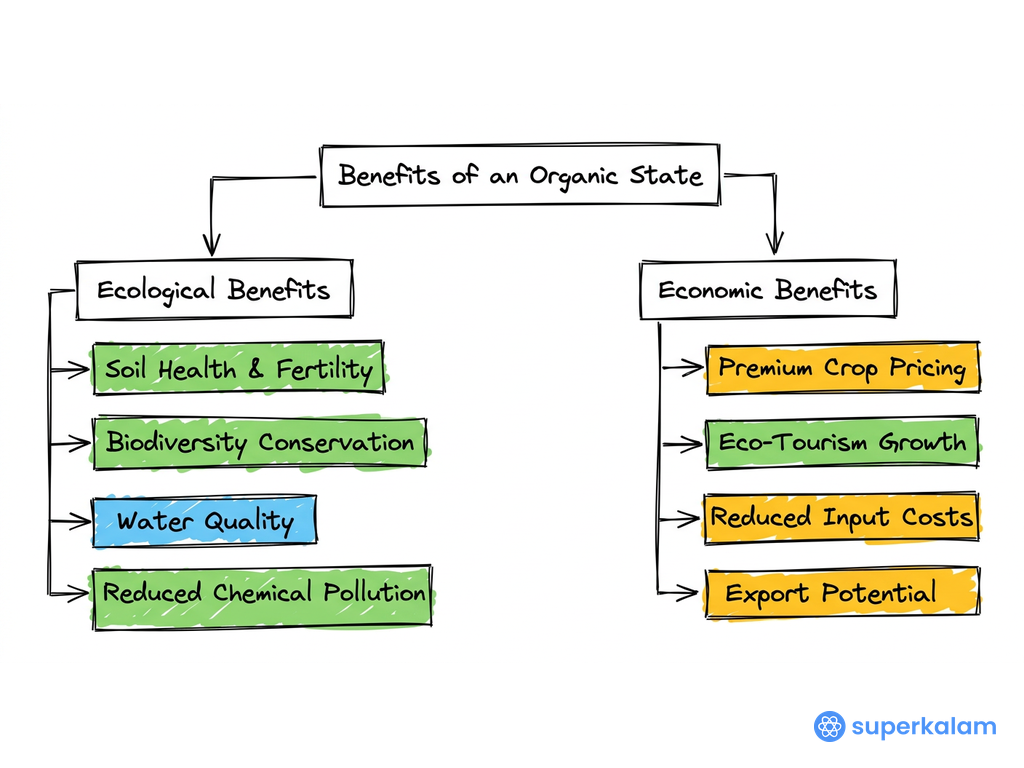
Benefits of an Organic State Flowchart
Ecological Benefits of Organic State
Soil Health Enhancement
- Zero chemical fertilizer use has improved soil organic matter content by 25-30% since transition
- Enhanced microbial activity and natural nutrient cycling restore soil fertility
- Reduced soil erosion through cover cropping and organic matter retention
- Prevention of soil acidification caused by synthetic fertilizers
- Improved water retention capacity supporting drought resilience
Biodiversity Conservation
- Protection of indigenous seed varieties and traditional crop species
- Natural pest control through beneficial insect populations
- Enhanced pollinator diversity supporting ecosystem services
- Preservation of native flora and fauna in agricultural landscapes
- Maintenance of genetic diversity in crop varieties
Economic Benefits of Organic State
Premium Market Access
- 15-30% premium pricing for certified organic produce in domestic markets
- Access to international export markets worth $120 billion globally
- Strong brand identity as "Sikkim Organic" creates market differentiation
- Growing consumer demand for chemical-free products
- Direct marketing opportunities reducing middleman dependency
| Economic Indicator | Before Organic (2010) | After Organic (2020) |
|---|---|---|
| Average Farm Income | ₹45,000/year | ₹68,000/year |
| Export Value | ₹15 crore | ₹95 crore |
| Tourism Revenue | ₹350 crore | ₹1,240 crore |
Employment and Tourism Growth
- Eco-tourism boom with 15% annual growth in organic farm visits
- Creation of 25,000 new jobs in organic farming sector
- Development of agri-processing units and value-addition facilities
- Growth in organic food startups and entrepreneurship
- Enhanced rural livelihoods through diversified income sources
The organic state model positions Sikkim as a leader in sustainable agriculture, contributing to India's target of achieving 20 million hectares under organic farming by 2030 while supporting climate-resilient agricultural transformation.
Answer Length
Model answers may exceed the word limit for better clarity and depth. Use them as a guide, but always frame your final answer within the exam’s prescribed limit.
Evaluate this PYQ now
Write your answer & evaluate in just 60 seconds




500+ students evaluated
Model Answers from
- 2018Economy15 MarksView Answer
With growing energy needs should India keep on expanding its nuclear energy programme? Discuss the facts and fears associated with nuclear energy.
- 2018Economy15 MarksView Answer
How has the emphasis on certain crops brought about changes in cropping patterns in the recent past? Elaborate the emphasis on millet production and consumption.
- 2018Economy15 MarksView Answer
Assess the role of the National Horticulture Mission (NHM) in boosting the production, productivity and income of horticulture farms. How far has it succeeded in increasing the income of farmers?
- 2018Economy15 MarksView Answer
How would the recent phenomena of protectionism and currency manipulations in world trade affect the macroeconomic stability of India?
- 2018Economy15 MarksView Answer
How are the principles followed by NITI Aayog different from those followed by the erstwhile planning commission in India?
- 2018Economy10 MarksView Answer
Examine the role of supermarkets in supply chain management of fruits, vegetables and food items. How do they eliminate the number of intermediaries?
Model Answers by Subject


Crack UPSC with your
Personal AI Mentor
An AI-powered ecosystem to learn, practice, and evaluate with discipline



