Though not very useful from the point of view of a connected political history of South India, the Sangam literature portrays the social and economic conditions of its time with remarkable vividness. Comment.
Though not very useful from the point of view of a connected political history of South India, the Sangam literature portrays the social and economic conditions of its time with remarkable vividness. Comment.
Though Sangam literature lacks chronological political narratives, it provides an extraordinary portrayal of early South Indian society's social fabric and economic dynamism.
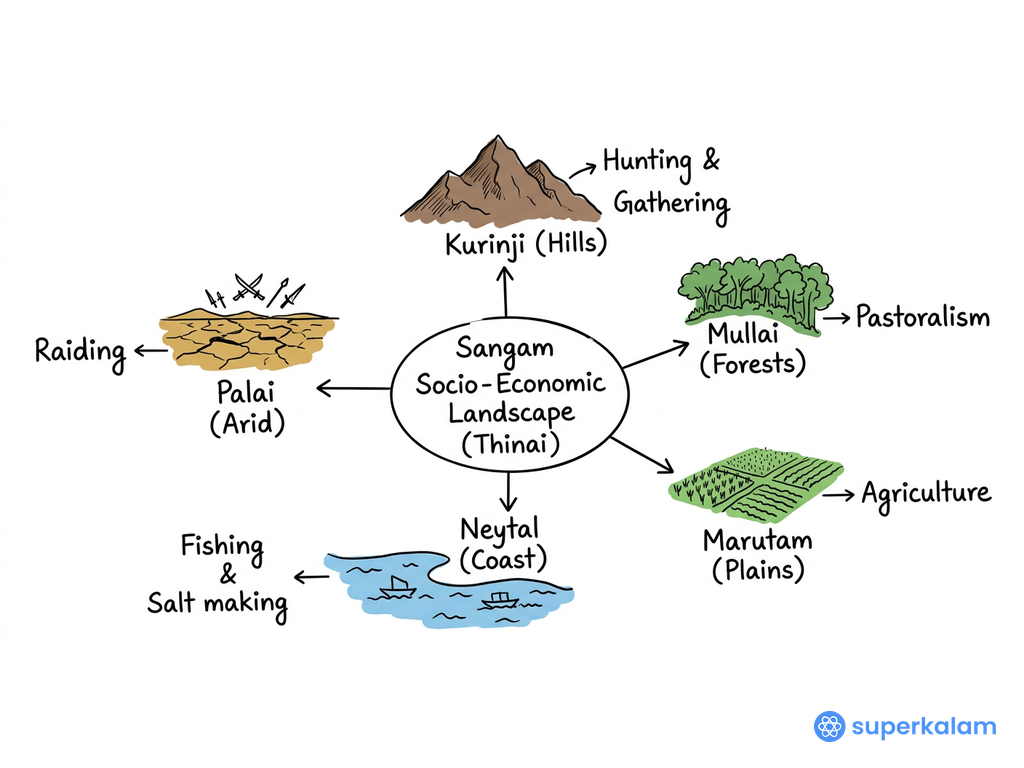
Sangam Socio Economic Landscape Framework Diagram
Social Conditions as Depicted in Sangam Literature
- Distinctive Social Structure: Literature reveals a four-fold division - Arasar (rulers), Anthanar (Brahmins), Vanigar (traders), and Vellalar (agriculturists), different from rigid Vedic varna system
- Women's Status: Participation of 30 women poets among 473 total poets indicates relatively progressive gender roles and women's literary freedom
- Occupational Diversity: Poets represented various professions - teachers, merchants, carpenters, blacksmiths, and musicians, showing social mobility across occupations
- Cultural Integration: Akam (love poetry) and Puram (heroic poetry) themes demonstrate sophisticated understanding of private emotions and public valor
- Religious Practices: References to Murugan worship, nature deities, and early Shaivism-Vaishnavism show religious syncretism
Economic Landscape Through Literary Evidence
- Agricultural Economy: Detailed descriptions of rice cultivation, irrigation systems, and seasonal farming practices in fertile river valleys
- Trade Networks: Extensive references to maritime commerce through ports like Puhar and Korkai, indicating active Indo-Roman trade (1st-3rd centuries CE)
- Craft Specialization: Mentions of goldsmiths, weavers, and metalworkers suggest guild-based economy and skilled artisanship
- Urban Centers: Descriptions of bustling market towns with diverse goods - pearls, spices, textiles, and precious stones
- Currency System: References to gold coins and barter systems showing monetary development
Political History Limitations
- Chronological Gaps: Absence of systematic dating makes it difficult to establish sequential political events
- Fragmented References: Multiple Chera, Chola, and Pandya rulers mentioned without clear dynastic succession
- Literary Focus: Emphasis on poetic expression over historical documentation limits political analysis
The Sangam corpus remains invaluable for reconstructing socio-economic history of ancient Tamil Nadu (300 BCE-300 CE), offering vivid insights into daily life, trade practices, and cultural values that shaped early South Indian civilization.
Answer Length
Model answers may exceed the word limit for better clarity and depth. Use them as a guide, but always frame your final answer within the exam’s prescribed limit.
Evaluate this PYQ now
Write your answer & evaluate in just 60 seconds




500+ students evaluated
Model Answers by Subject


Crack UPSC with your
Personal AI Mentor
An AI-powered ecosystem to learn, practice, and evaluate with discipline



