GS 3: Environment & EcologyGS 2: GovernanceGS 1: Indian GeographyGS 1: Indian Society
Fully aware of Great Nicobar project’s impact, says Centre, Pg16
Centre defends Great Nicobar project, assures mitigation of biodiversity impact through conservation and monitoring programs till 2052.
Practice MCQs
825 Students attempted
Key Highlights:
- The Union government defended the Great Nicobar Island project at the National Green Tribunal (NGT).
- The project, costing ₹92,000 crore, includes a transshipment port, international airport, township, and power plant on 160 sq. km of land.
- The government stated it is aware of the project's impact and has mandated conservation and monitoring programs for 30 years.
- Petitions challenge the environmental clearance, citing violations of the Island Coastal Regulation Zone (ICRZ) notification and inadequacies in environmental impact assessment.
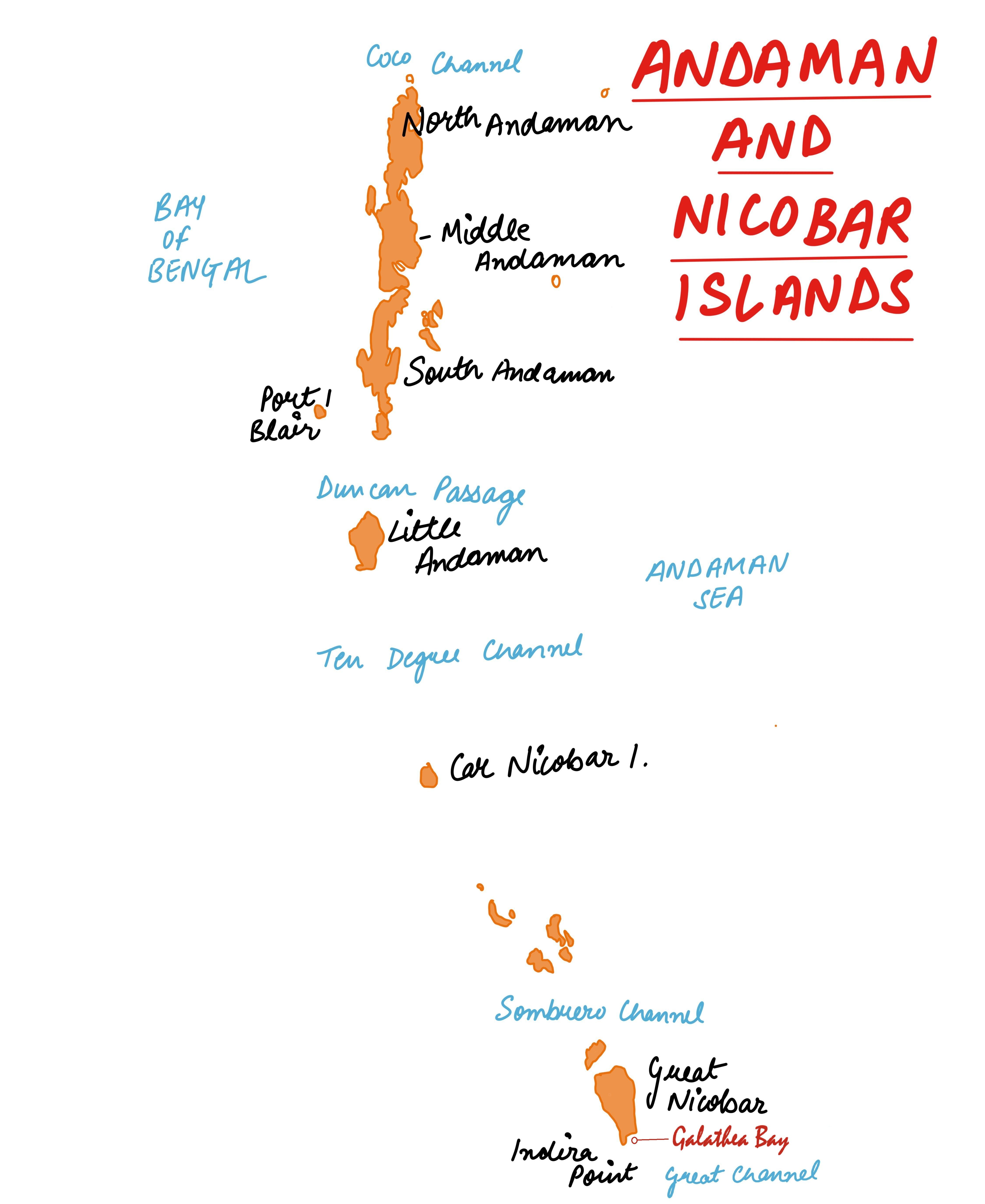
andaman_and_nicobar_islands_map
Detailed Insights:
- The project impacts 130 sq. km of forest land inhabited by the Nicobarese and Shompen communities, both Scheduled Tribes, with the Shompen categorized as a Particularly Vulnerable Tribal Group.
- The government plans to translocate over 16,000 coral colonies and monitor the remaining 4,500, along with conserving Nicobar megapode nests.
- The project will cover 1.82% of the island's archipelago, leaving over two-thirds of Great Nicobar Island (GNI) as forests, with no displacement of tribal persons.
- The environmental clearance mandates biodiversity studies and monitoring until 2052, with the next hearing scheduled for November 7.
Key Concepts Involved:
- National Green Tribunal (NGT): A specialized body handling environmental disputes.
- Island Coastal Regulation Zone (ICRZ): Regulations governing activities in coastal areas of islands.
- Scheduled Tribes: Indigenous communities recognized by the Indian Constitution.
- Environmental Impact Assessment: Evaluation of the environmental consequences of a project.

SuperKalam is your personal mentor for UPSC preparation, guiding you at every step of the exam journey.
Download the App


STUDY RESOURCES
CONTACT US
ⓒ Snapstack Technologies Private Limited