GS 1: Indian SocietyGS 2: Social JusticePrelims
Progress in women’s education, digital access, Pg10
NFHS-6 reveals progress in women's education and digital access, but persistent issues like underage marriage and low property ownership remain.
Practice MCQs
796 Students attempted
Dataset
The Key Findings
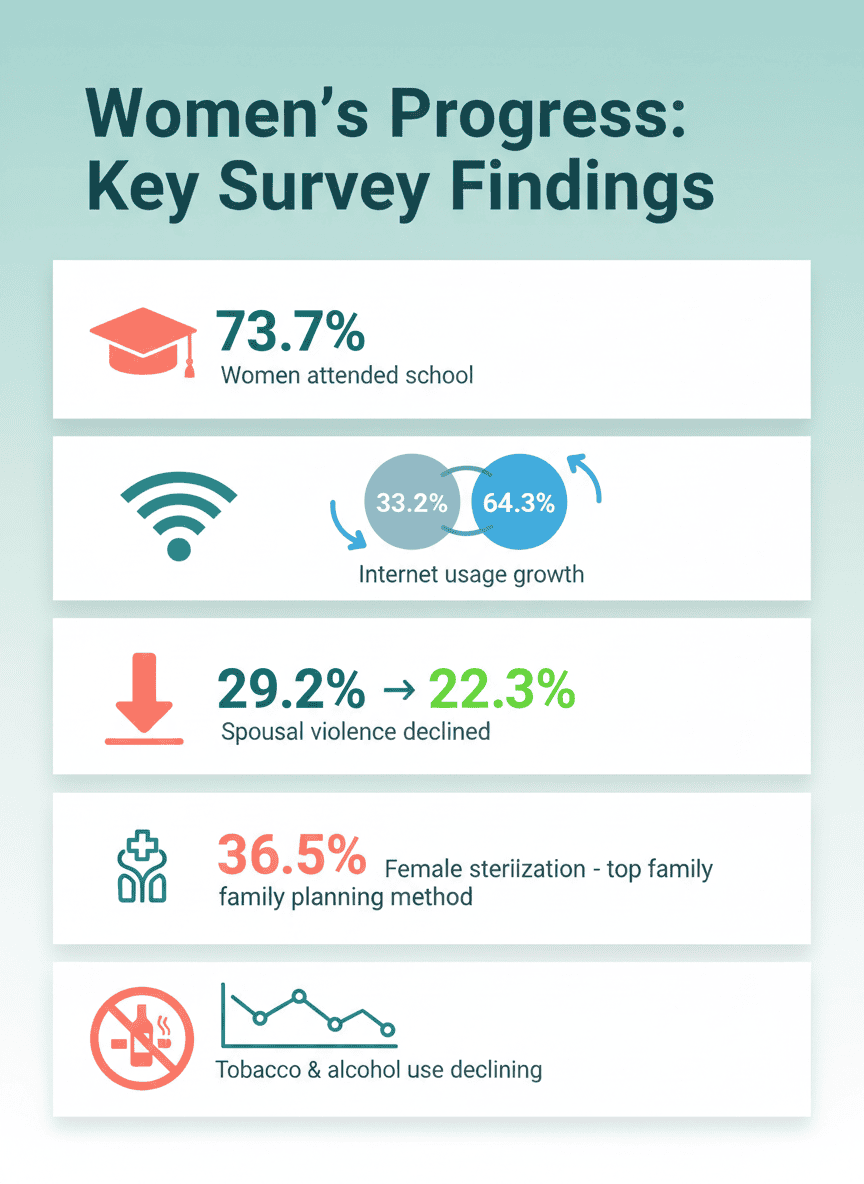
- Women's education continues to improve, with 73.7% of women having attended school.
- Internet usage among women nearly doubled from 33.2% to 64.3% since NFHS-5.
- Spousal violence declined to 22.3%, down from 29.2% in the previous survey.
- Female sterilization remains the most widely used family planning method at 36.5%.
- Tobacco and alcohol consumption have declined, though significant disparities remain across regions and social groups.
Why It Matters
- Higher educational attainment strengthens women's human capital and participation in economic activities.
- Growing digital access enhances digital inclusion and access to information, services and opportunities.
- Reduced spousal violence reflects progress in women's social empowerment and well-being.
- Declining tobacco and alcohol consumption can contribute to better public health outcomes.
The Persistent Challenges
- Women's ownership of house or land remains low at just 18.8%, indicating limited economic control over assets.
- About 20.1% of women aged 20–24 were married before 18, highlighting the persistence of child marriage.
- Kerala recorded a rise in spousal violence from 9.8% to 17.7%, contrary to the national trend.
- Female sterilization continues to dominate family planning, reflecting unequal reproductive responsibility.
- Tobacco and alcohol use remain concentrated among rural and socio-economically disadvantaged populations.
Broader Implications
- The findings highlight that social empowerment is progressing faster than economic empowerment.
- Greater emphasis is needed on improving women's economic agency through property ownership and financial inclusion.
- Reducing child marriage remains essential for achieving better health, education and gender outcomes.
- The survey underscores the importance of combining welfare interventions with long-term behavioural and social change.
- Progress toward gender equality requires addressing both opportunity gaps and entrenched social norms.
Key Concepts
- NFHS-6 → Nationwide survey assessing health, nutrition, demographic and socio-economic indicators across India.
- Spousal Violence → Physical, emotional or sexual violence inflicted by a spouse or intimate partner.
- Economic Agency → Ability of individuals to make independent economic decisions and control resources.
- Digital Inclusion → Equitable access to digital technologies, services and opportunities.
The Takeaway
NFHS-6 reveals meaningful gains in education, digital access and social indicators, but true empowerment will depend on strengthening women's economic agency and reducing persistent structural inequalities.

SuperKalam is your personal mentor for UPSC preparation, guiding you at every step of the exam journey.
Download the App


STUDY RESOURCES
CONTACT US
ⓒ Snapstack Technologies Private Limited