GS 3: Economy
Uneven growth, Pg6
India's industrial growth slows to 3%, a five-year low, despite manufacturing sector rebound; labor-intensive sectors contract, raising job concerns.
Practice MCQs
818 Students attempted
Key Highlights:
- Industrial growth for April-September 2025 was the slowest in five years, registering at just 3%.
- Q2 growth showed improvement at 4.1%, compared to 2% in Q1 of FY26.
- The manufacturing sector grew by 4.8% in September 2025, the second highest in FY26.
- Mining sector activity contracted in September 2025, Q2, and the first half of FY26.
- More than half of the 23 main manufacturing sub-sectors contracted in Q2 of FY26.
- The consumer non-durables sector has contracted for the last six consecutive quarters.
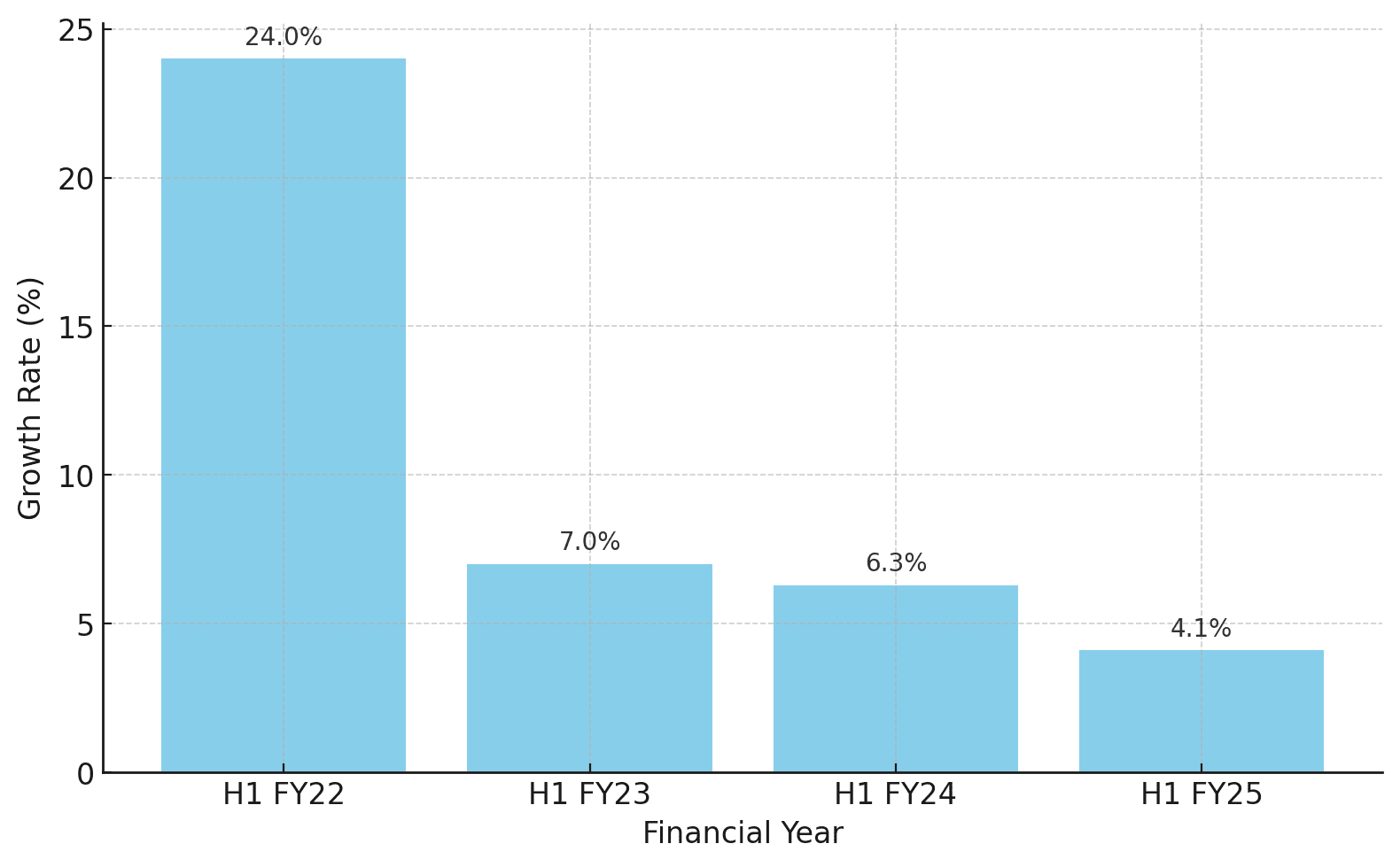
Half-Yearly (H1) IIP Growth Comparison — FY22 to FY25.png
Detailed Insights:
- Manufacturing sector's growth bounced back to 4.1% in April-September 2025, after slowing to 3.8% in the first half of the previous year.
- The July-September 2025 quarter saw the manufacturing sector grow by 4.9%, the fastest quarterly growth since the quarter ended December 2023.
- Contraction in the mining sector is attributed to the monsoon, but its performance remains unusually poor, requiring focus on energy and strategic mineral security.
- Growth in the manufacturing sector is not broad-based, with more than half of the 23 sub-sectors contracting in the July-September 2025 quarter.
- Labour-intensive sectors like apparels, leather, rubber, and plastics contracted in September 2025, potentially impacting job creation.
- Sectors that grew were mostly capital-intensive, including wood, mineral products, basic metals, and fabricated metal products.
- The contraction in the consumer non-durables sector reflects slack demand, which policymakers have been addressing, with the solution lying in increasing incomes and creating jobs.
Key Concepts Involved:
- Index of Industrial Production (IIP): An index that shows the growth rates in various industry groups of the economy in a specified period.
- Base Effect: The distortion in a monthly inflation figure caused by abnormally high or low levels of inflation in the year-ago month.
- Capital-Intensive Sectors: Industries that require a large amount of investment to produce a good or service.

SuperKalam is your personal mentor for UPSC preparation, guiding you at every step of the exam journey.
Download the App


STUDY RESOURCES
CONTACT US
ⓒ Snapstack Technologies Private Limited