GS 1: Art & CultureGS 3: Science & TechnologyGS 2: GovernancePrelims
Maharashtra to use AI to analyse, document petroglyphs in Konkan, Pg14
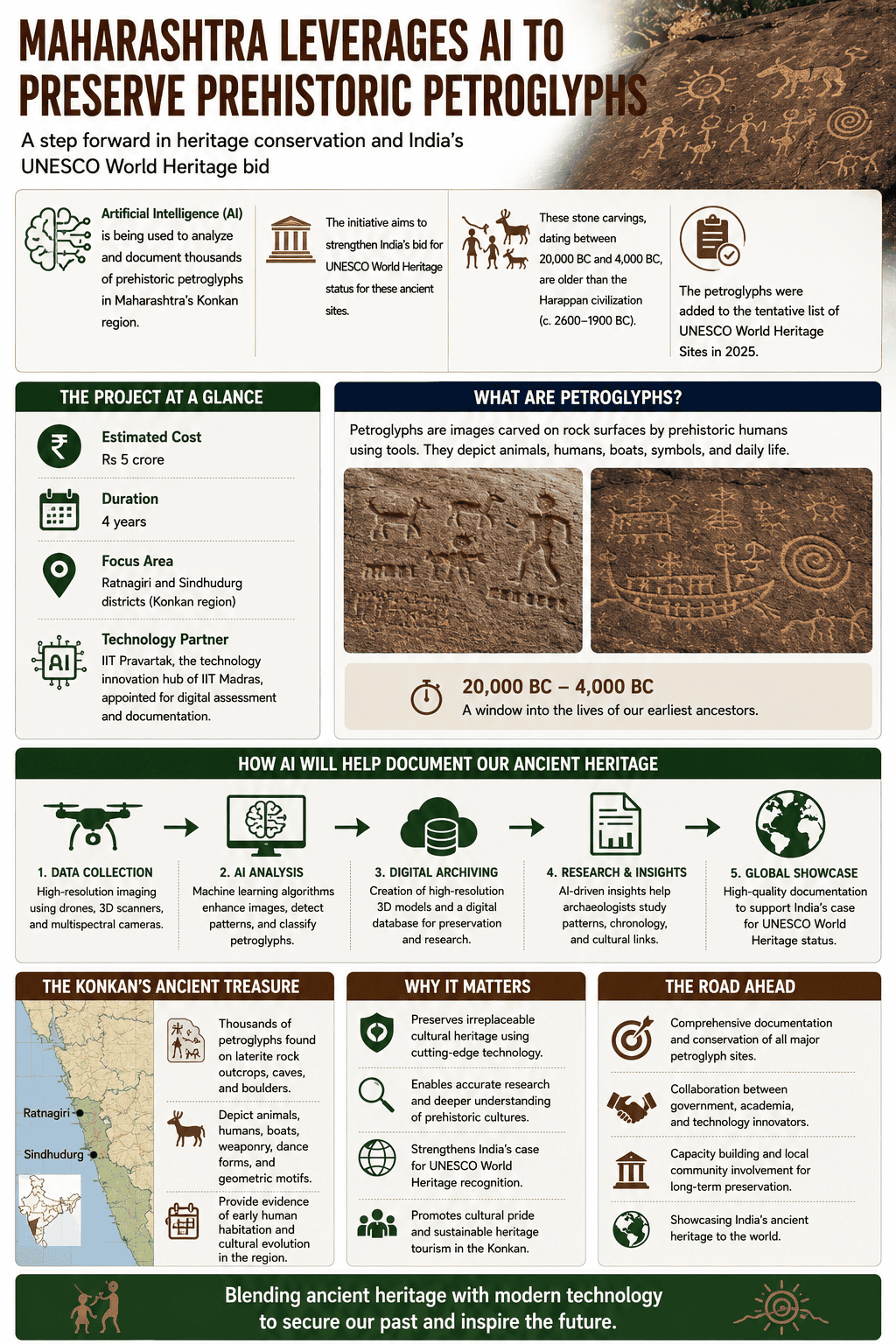
Maharashtra allocates Rs 5 crore for AI-powered analysis of 20,000 BC Konkan petroglyphs, bolstering UNESCO World Heritage bid.
Practice MCQs
796 Students attempted
Key Highlights:
- The Maharashtra government is implementing Artificial Intelligence (AI) to analyze and document thousands of prehistoric petroglyphs in the Konkan region.
- This initiative aims to strengthen India’s bid for UNESCO World Heritage status for these ancient sites.
- The project, estimated to cost Rs 5 crore and take four years, focuses on petroglyphs found in Ratnagiri and Sindhudurg districts.
- These stone carvings, dating between 20,000 BC and 4,000 BC, are considered older than the Harappan civilization.
- IIT Pravartak, the technology innovation hub of IIT Madras, has been appointed for the digital assessment and documentation.
- The petroglyphs were added to the tentative list of UNESCO World Heritage Sites in 2025.
Petroglyph.png
Detailed Insights:
- The petroglyphs are stone carvings depicting animal figures and humanoids, primarily found in the lateral plateau regions of coastal Maharashtra.
- They span approximately 150 square kilometers across 107 villages, making manual documentation challenging due to their size.
- The absence of horse and bull figurines in the carvings suggests their creation during the Mesolithic era, indicating a pre-agricultural period.
- The carvings represent the earliest evidence of art in the Indian context on a large scale, showcasing early human cognitive abilities.
- The discovery of these petroglyphs began in 2007 by local residents led by Sudhir Risbud, with subsequent surveys identifying over 3,000 figurines.
- High-end drone cameras are essential for proper documentation due to the extensive spread and size of the carvings.
- Securing UNESCO World Heritage status would provide international recognition and support for the preservation of these significant archaeological sites.
Scientific/Technical Concepts Involved:
- Artificial Intelligence (AI): The use of advanced computational systems to analyze, classify, and interpret complex data, in this case, archaeological findings.
- Petroglyphs: Prehistoric rock engravings or carvings made by removing part of a rock surface, often depicting symbolic images.
- Mesolithic Era: Also known as the Middle Stone Age, a transitional period in human history (roughly 9,000 to 4,000 BCE) characterized by hunter-gatherer societies and the use of microliths.
- UNESCO World Heritage Status: An international designation by the United Nations Educational, Scientific and Cultural Organization for sites of outstanding universal value, ensuring their protection and preservation for humanity.

SuperKalam is your personal mentor for UPSC preparation, guiding you at every step of the exam journey.
Download the App


STUDY RESOURCES
CONTACT US
ⓒ Snapstack Technologies Private Limited