GS 3: EconomyGS 2: GovernanceGS 3: Environment & EcologyPrelims
Lower oil prices, a window of opportunity, don't waste it, Pg13
India urged to strategically utilize lower global oil prices to fortify macroeconomic fundamentals, boost export competitiveness, and uphold fiscal credibility for enduring economic resilience.
Practice MCQs
796 Students attempted
Key Highlights:
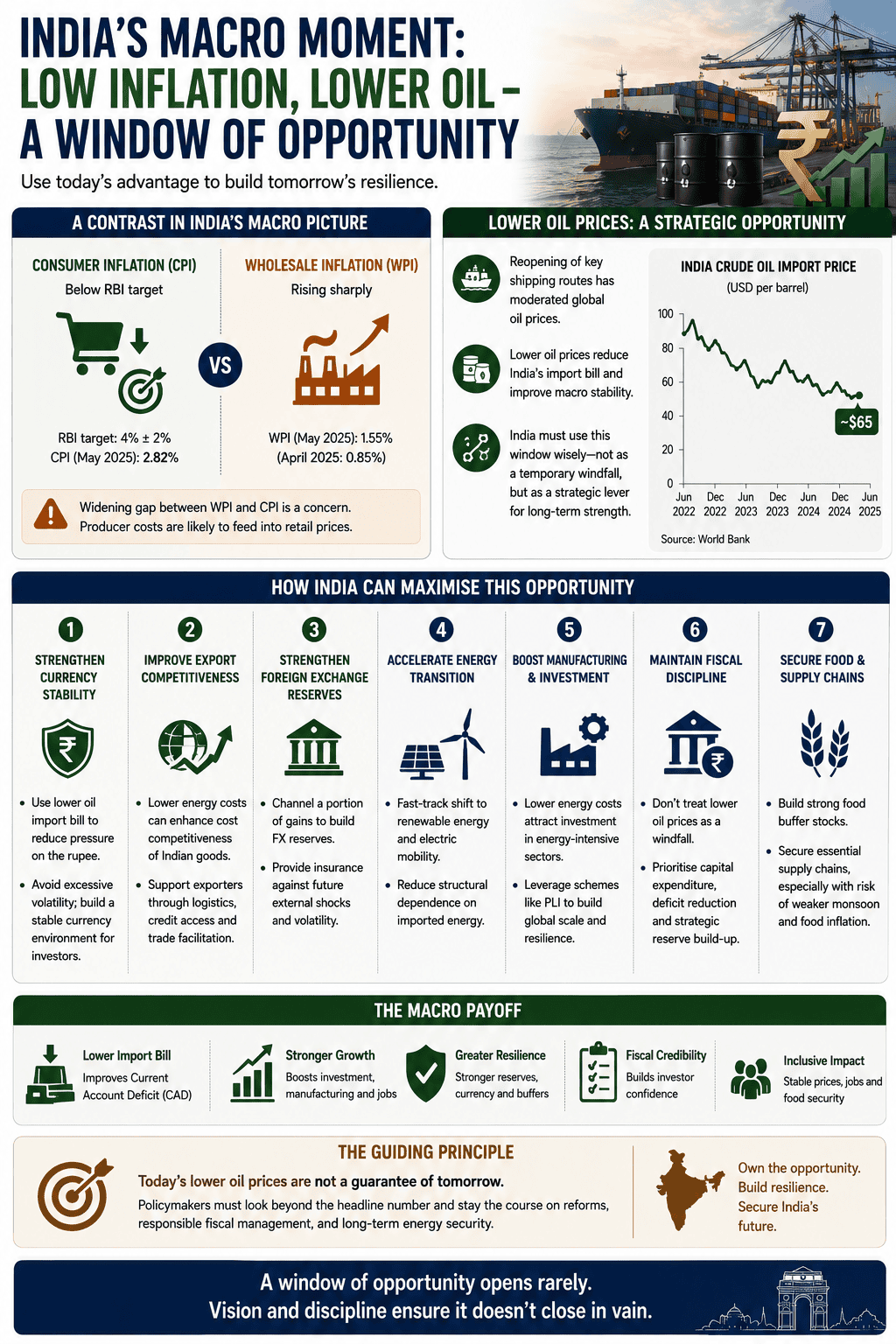
- India's macroeconomic situation presents a contrast with consumer inflation below the Reserve Bank of India's (RBI) target, while wholesale inflation has risen sharply.
- Moderated global oil prices, due to the reopening of key shipping routes, offer India a strategic opportunity.
- The country is urged to utilize this period to strengthen currency stability, export competitiveness, and fiscal credibility.
- Policymakers are advised against treating lower oil prices as a temporary windfall and instead focus on long-term structural reforms.
Lower Oil Prices.png
Detailed Insights:
- The widening gap between Wholesale Price Index (WPI) and Consumer Price Index (CPI) is a concern, as producer costs are likely to eventually impact retail prices.
- Lower oil prices reduce India's import bill, which can improve the Current Account Deficit (CAD).
- A portion of the gains from lower oil prices should be used to strengthen Foreign Exchange Reserves to provide insurance against future external shocks.
- India should accelerate its transition to renewable energy and electric mobility to reduce its structural dependence on imported energy.
- Reduced energy costs can boost export competitiveness and attract investment into energy-intensive manufacturing sectors, supported by frameworks like the Production-Linked Incentive (PLI) Scheme.
- Maintaining fiscal discipline is crucial, prioritizing capital expenditure, deficit reduction, and strategic reserve accumulation over increased subsidies.
- Strengthening food buffer stocks and securing supply chains are also vital, especially given the potential impact of a weaker monsoon on food inflation.
Key Concepts Involved:
- Wholesale Price Index (WPI): Measures the average change in prices of goods at the wholesale or producer level, reflecting price movements before goods reach the final consumer.
- Consumer Price Index (CPI): Measures the average change in prices of a fixed basket of goods and services consumed by households, reflecting retail inflation.
- Current Account Deficit (CAD): Occurs when a country's payments on the current account (imports of goods, services, and income) exceed its receipts (exports and income from abroad).
- Foreign Exchange Reserves: External assets, such as foreign currencies, gold, and government securities, held by a central bank to balance payments, influence exchange rates, and maintain financial market confidence.
- Fiscal Discipline: A government's practice of maintaining prudent and responsible spending and budgetary policies to ensure long-term financial stability and control deficits.
- Production-Linked Incentive (PLI) Scheme: A government initiative launched in 2020 to incentivize domestic manufacturing and reduce import dependency by offering financial benefits on incremental sales.

SuperKalam is your personal mentor for UPSC preparation, guiding you at every step of the exam journey.
Download the App


STUDY RESOURCES
CONTACT US
ⓒ Snapstack Technologies Private Limited