Why Air Conditioners Catch Fire And How Rising Temperatures Increase The Risk,Pg14
AC fires are often preventable and underscore how rising temperatures, electrical stress and inadequate maintenance can combine to create urban safety risks.
Practice MCQs
Why Air Conditioners Catch Fire And How Rising Temperatures Increase The Risk
AC.png
The Safety Concern
1. A series of recent incidents has renewed concerns about AC-related fires during summer.
2. Higher ambient temperatures increase the likelihood of overheating in air-conditioning systems.
3. AC fires have been reported in residential buildings across several Indian cities.
4. Rising AC usage is making electrical safety an increasingly important urban concern.
How ACs Catch Fire
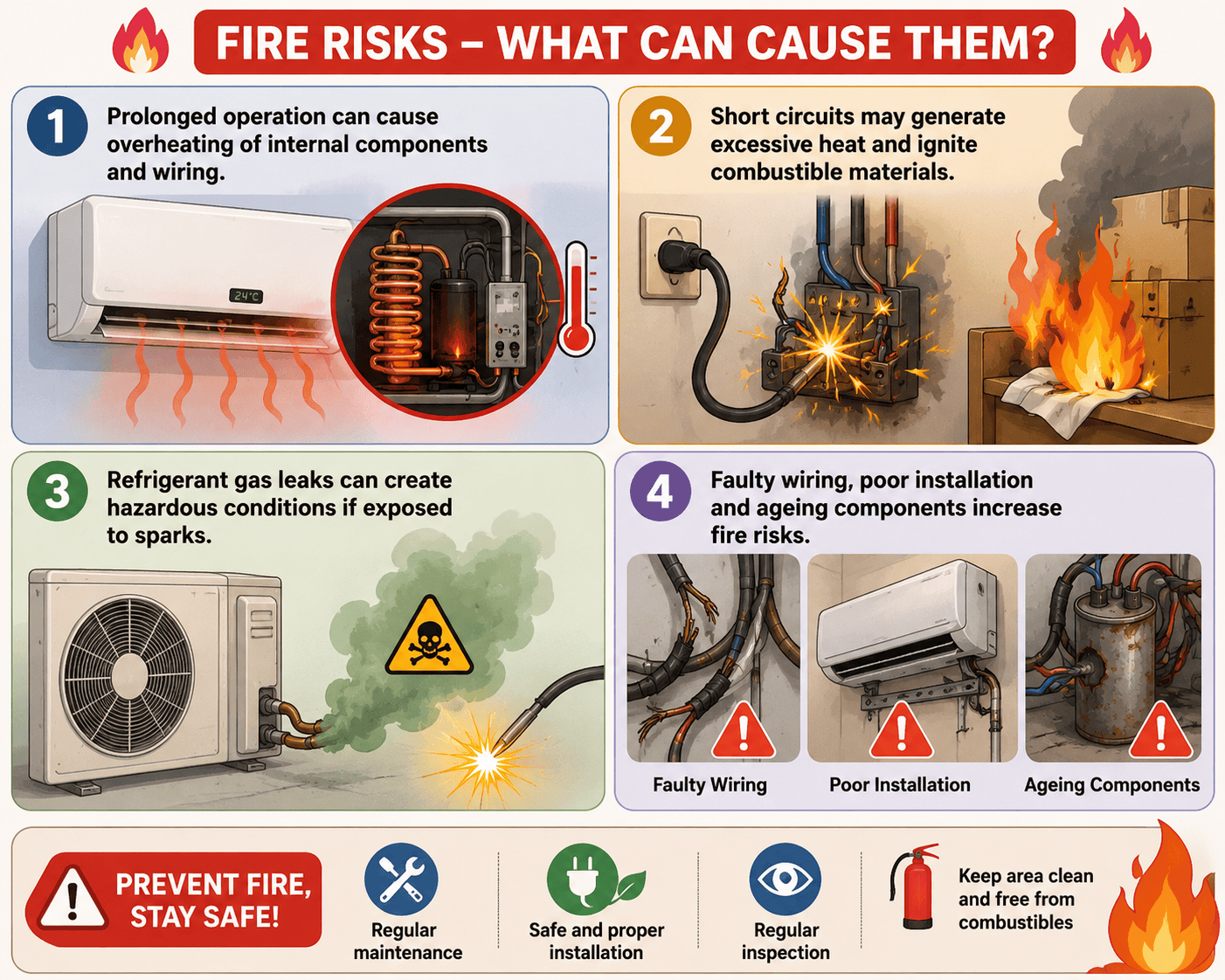
1. Prolonged operation can cause overheating of internal components and wiring.
2. Short circuits may generate excessive heat and ignite combustible materials.
3. Refrigerant gas leaks can create hazardous conditions if exposed to sparks.
4. Faulty wiring, poor installation and ageing components increase fire risks.
Key Risk Factors
1. Blocked air filters restrict airflow and place additional stress on the system.
2. Damaged or ageing compressors are more vulnerable to overheating.
3. Voltage fluctuations can affect electrical circuits and critical components.
4. Lack of regular maintenance often allows minor defects to escalate into safety hazards.
Broader Implications
1. Rising temperatures are increasing dependence on cooling infrastructure across cities.
2. Climate change may lead to greater energy demand and appliance usage.
3. Urban resilience requires stronger awareness of electrical safety and maintenance practices.
4. The issue highlights the intersection of climate adaptation, energy use and public safety.
Key Concepts
Short Circuit → Unintended flow of electricity that can generate excessive heat and sparks.
Compressor → Core AC component responsible for circulating refrigerant and cooling the system.
Refrigerant → Substance used in air conditioners to absorb and transfer heat.
Voltage Fluctuation → Variation in electrical supply that can damage appliances and circuits.
The Takeaway
AC fires are often preventable and underscore how rising temperatures, electrical stress and inadequate maintenance can combine to create urban safety risks.

Download the App

