Concrete fever, Pg6
India's heat challenge is increasingly becoming a city-design problem, making climate-sensitive urban planning as important as climate mitigation itself.
Practice MCQs
Concrete Fever: Why Indian Cities Need Better Heat Management
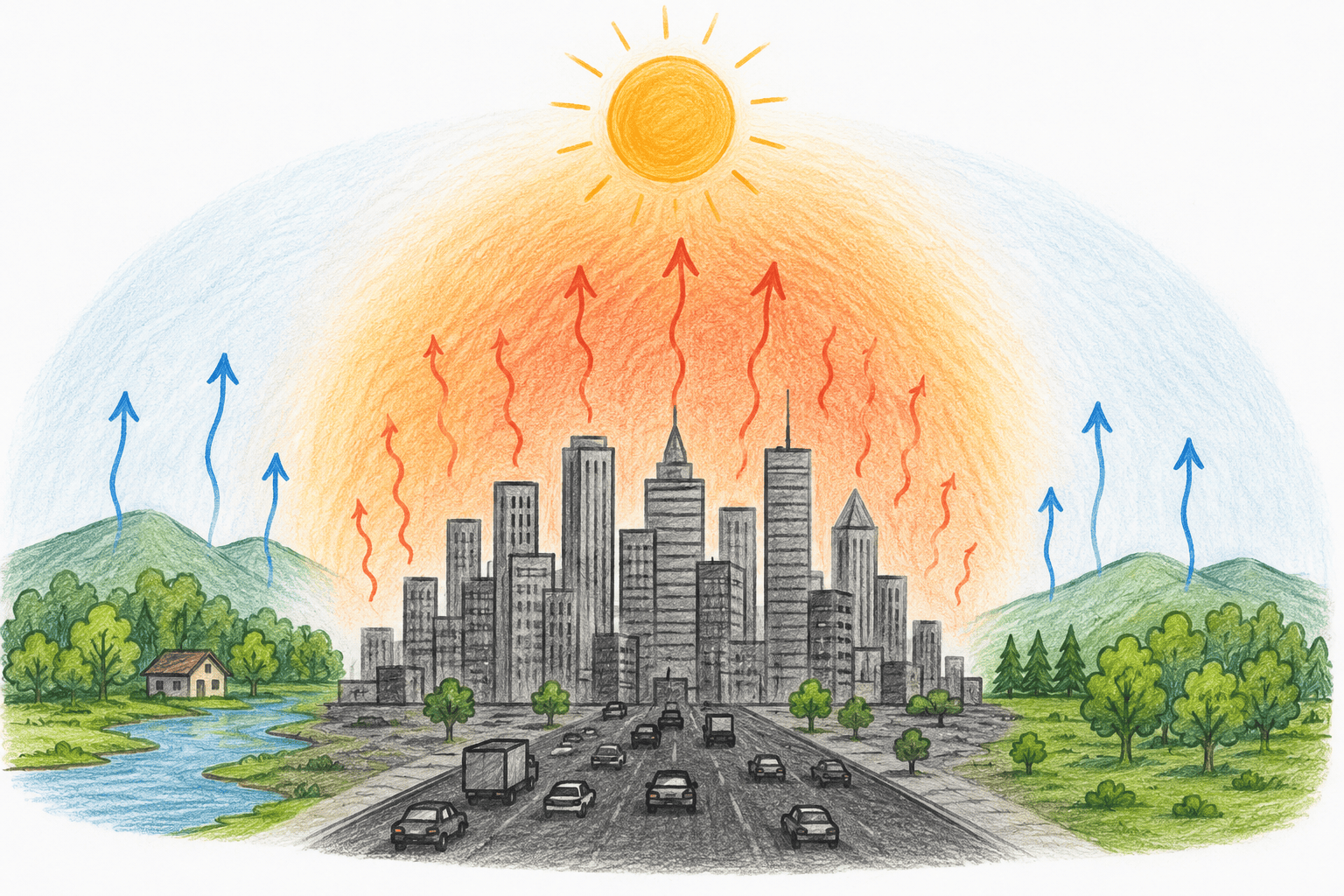
UHI.png
The Growing Concern
1. Rapid urbanisation and expanding concrete infrastructure are intensifying heat stress across Indian cities.
2. Built-up surfaces such as concrete and asphalt absorb and retain large amounts of heat.
3. Rising temperatures are increasing the frequency and severity of urban heat events.
4. Extreme heat is emerging as a major challenge for urban planning and public health.
Why It Matters
1. Higher urban temperatures increase risks of heat-related illnesses and mortality.
2. Heat stress disproportionately affects outdoor workers, low-income groups and vulnerable populations.
3. Rising temperatures increase dependence on air conditioning, raising electricity demand.
4. Urban heat reduces productivity, affects livability and strains public infrastructure.
The Core Challenge
1. The Urban Heat Island effect makes cities significantly hotter than surrounding rural areas.
2. Loss of green cover reduces natural cooling through evapotranspiration.
3. Dense construction and poor ventilation create heat-trapping urban canyons.
4. Increasing AC usage can further worsen local heat through anthropogenic warming.
Broader Implications
1. Heat management must become a core component of urban governance and city planning.
2. Cities require greater investment in green infrastructure, cool roofs and reflective materials.
3. Climate adaptation strategies must address both outdoor and indoor heat exposure.
4. The issue highlights the growing intersection of climate change, public health and urban development.
Key Concepts
Urban Heat Island (UHI) → Phenomenon where urban areas record higher temperatures than surrounding rural regions due to built infrastructure.
Evapotranspiration → Natural cooling process through water evaporation and plant transpiration.
Green Infrastructure → Use of trees, parks and vegetation-based systems to improve environmental resilience.
Climate Adaptation → Measures aimed at reducing vulnerability to climate-related risks and impacts.
The Takeaway
India's heat challenge is increasingly becoming a city-design problem, making climate-sensitive urban planning as important as climate mitigation itself.

Download the App

