GS 2: GovernanceGS 3: Disaster Management
Six-year-old dies of rabies in Kerala despite vaccination, Pg5
Practice MCQs
775 Students attempted
A six-year-old girl in Kerala died of rabies despite receiving anti-rabies vaccination, raising public health concerns.
Key Highlights:
- The child, Ziya Faris, was bitten on the head and limbs by a stray dog and treated at Kozhikode Government Medical College Hospital.
- Family alleged lapses in treatment; hospital denied, citing protocol compliance.
- Kerala has reported 12 rabies deaths in 2025 so far; 22 deaths occurred in 2024.
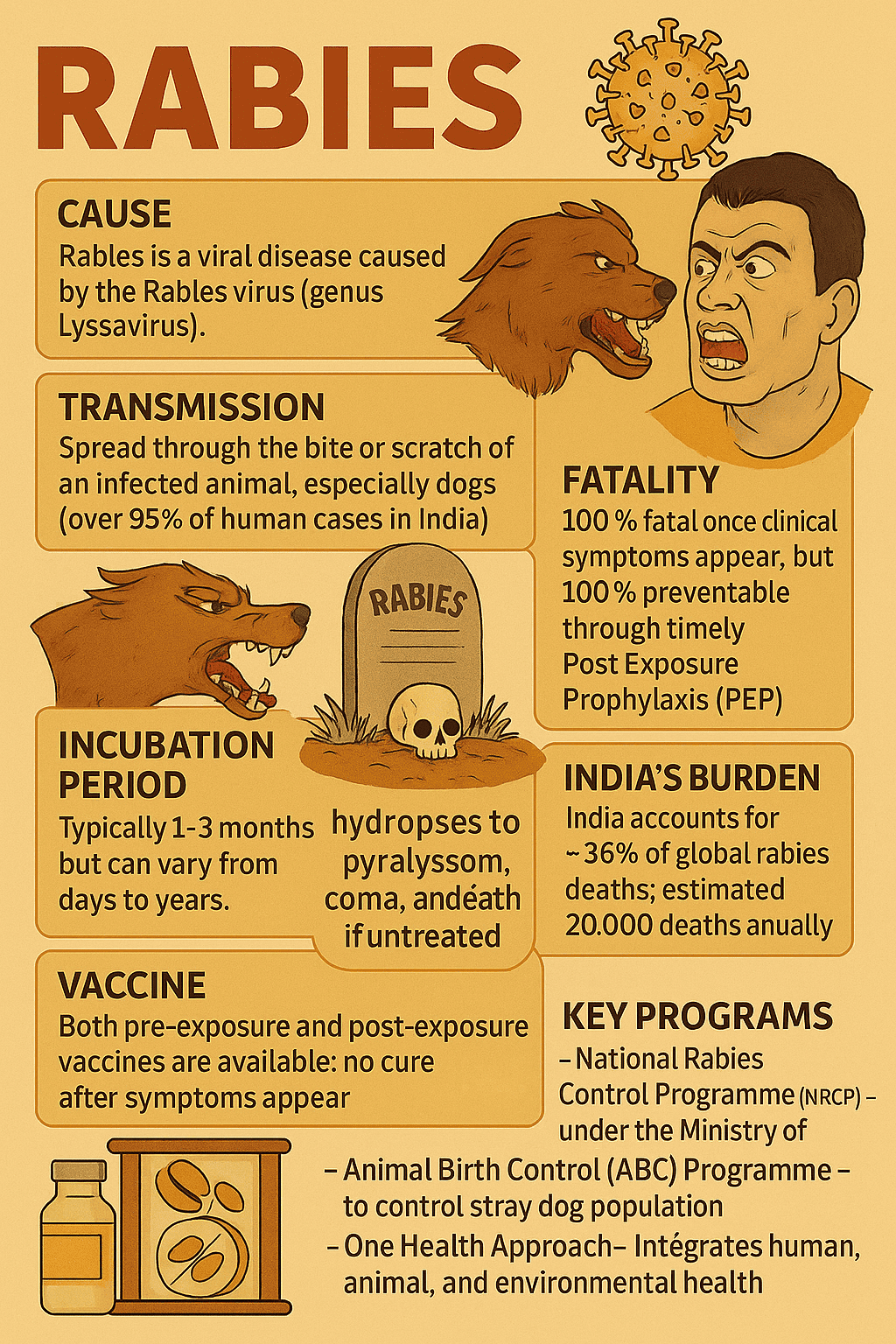
Rabies
Detailed Insights:
- Medical Context:
- Rabies infection in the head region may have resulted in faster progression to the brain, making treatment ineffective despite vaccination.
- Ziya was discharged post-vaccination but developed symptoms six days before death and died in the ICU.
- Public Health Implications:
- Incident exposes possible gaps in rabies treatment protocols, especially in high-risk bite cases.
- Raises questions on the efficacy of post-exposure prophylaxis (PEP) and clinical decision-making in government hospitals.
- Animal Control Failures:
- Surge in stray dog population and related rabies cases in Kerala — calls for better implementation of animal birth control (ABC) and vaccination programmes.
- Highlights the absence of comprehensive stray dog population management, despite growing fatalities.
- Rabies infection in the head region may have resulted in faster progression to the brain, making treatment ineffective despite vaccination.
Significance:
- Signals a crisis in zoonotic disease management in urban and semi-urban India.
- Emphasizes the need for robust public health infrastructure, especially in preventive vaccination follow-up.
- Demonstrates the importance of animal-human interface policies to mitigate zoonotic risks.
- Reinforces the urgency to scale up community awareness, dog control measures, and vaccine logistics.
Mains Mock Question:
"Rabies remains a major public health threat despite available vaccines. Critically examine India’s strategy to combat rabies and suggest measures for effective zoonotic disease control."

SuperKalam is your personal mentor for UPSC preparation, guiding you at every step of the exam journey.
Download the App


STUDY RESOURCES
CONTACT US
ⓒ Snapstack Technologies Private Limited