GS 3: EconomyGS 1: Indian Society
‘Services sector employs 30% of Indian workforce’, Pg15.
NITI Aayog reveals India's service sector employs 30% of workforce, lagging global average, hindering structural transition and inclusive growth.
Practice MCQs
811 Students attempted
Key Highlights:
- India's services sector employs nearly 30% of the country's workforce as of 2023-24.
- The NITI Aayog report indicates that 40 million jobs were created in the services sector in the last six years.
- The services sector's employment rate in India is lower than the global average of 50%, indicating a slower structural transition.
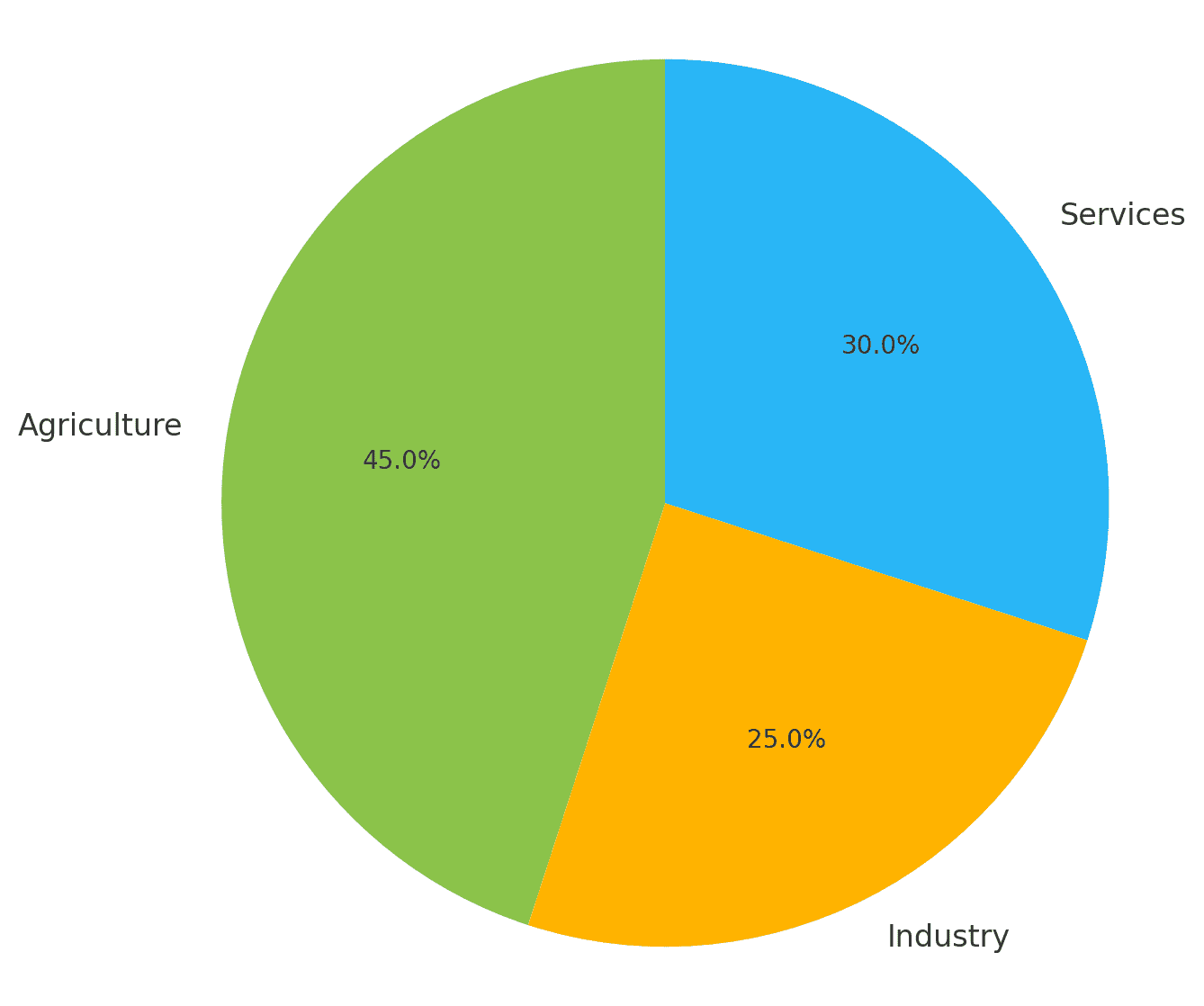
Sectoral Contribution to Employment in India (2023-24).png
Detailed Insights:
- The NITI Aayog report highlights that services remain crucial for India's employment growth and post-pandemic recovery.
- Despite contributing over half of India's national output, the services sector provides less than a third of the jobs, which are mostly informal and low-paying.
- The report suggests structural reforms, digitizing informal worker registration, and formalizing care services to boost formal employment in the services sector.
- Over 60% of urban workers are employed in services, compared to less than 20% in rural areas, indicating a significant urban-rural divide in services sector employment.
Key Concepts Involved:
- Structural Transition: The shift of economic activity and employment from agriculture to industry and then to services.
- Informal Sector: The part of the economy that is neither taxed nor monitored by the government, and not included in any formal legal framework.
- Social Protection: Policies and programs designed to reduce poverty and vulnerability by promoting efficient labor markets, diminishing people's exposure to risks, and enhancing their capacity to protect themselves against hazards and interruption/loss of income.
Previous16/16

SuperKalam is your personal mentor for UPSC preparation, guiding you at every step of the exam journey.
Download the App


STUDY RESOURCES
CONTACT US
ⓒ Snapstack Technologies Private Limited