GS 3: EconomyPrelimsGS 2: Governance
Reprieve to rupee, bond markets is short-term, Pg10
India's rupee and bond markets experience fragile, short-term recovery; geopolitical tensions, fiscal strain, and El Niño threats demand urgent domestic reforms for macroeconomic stability.
Practice MCQs
789 Students attempted
Key Highlights:
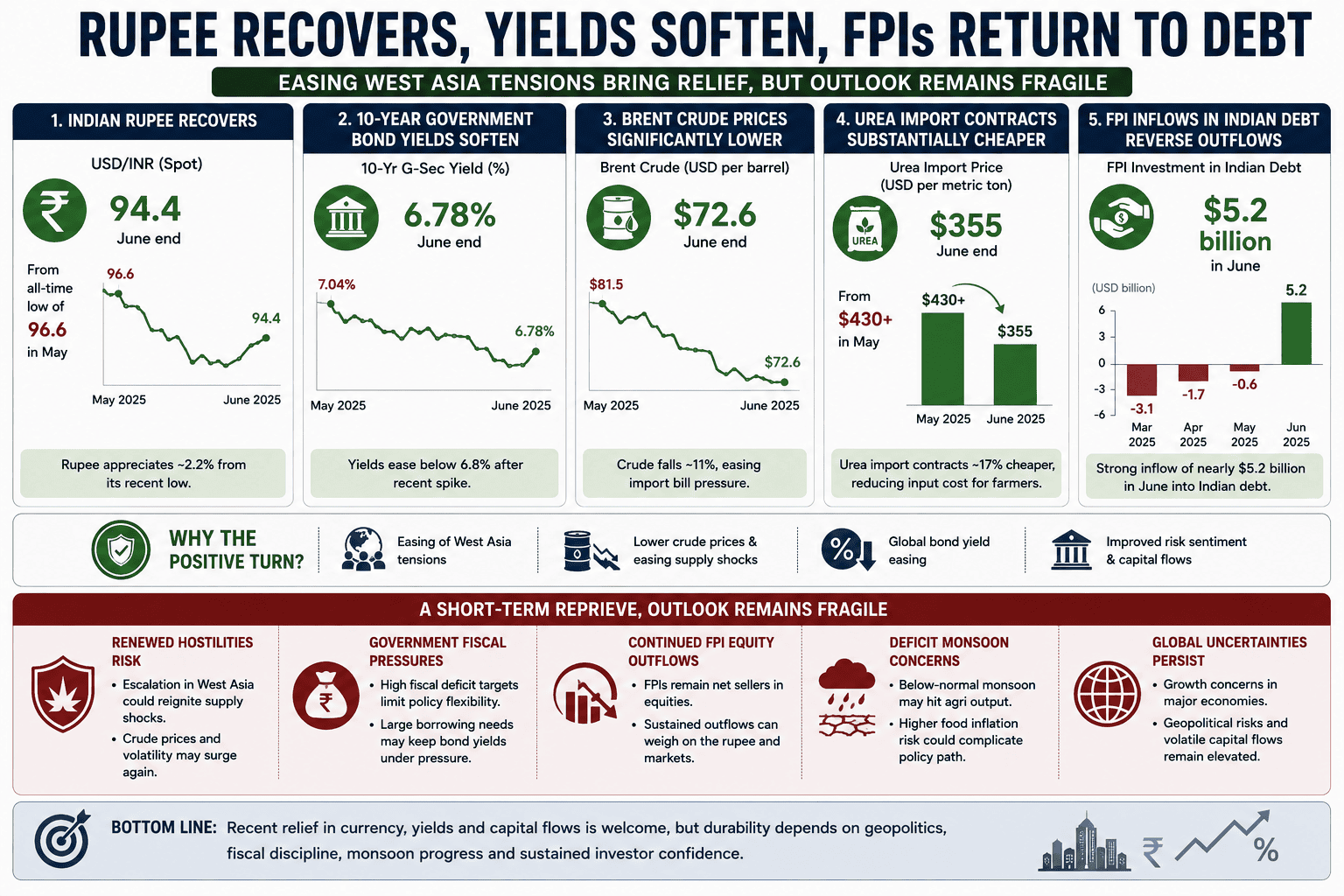
- The Indian rupee recovered to 94.4 against the US dollar from an all-time low of 96.6, while 10-year government bond yields softened below 6.8%.
- Brent crude prices significantly decreased to $72.6 per barrel, and urea import contracts became substantially cheaper.
- Foreign Portfolio Investors (FPI) invested nearly $5.2 billion in Indian debt in June, reversing previous outflows.
- These positive trends are largely attributed to an easing of West Asia tensions and associated supply shocks.
- However, the reprieve is considered short-term and fragile due to renewed hostilities, government fiscal pressures, continued FPI equity outflows, and a deficit monsoon.
FPI.png
Detailed Insights:
- The rupee's recovery from 96.6 on May 20 to 94.4 indicates a temporary strengthening against the US dollar.
- Softening of 10-year Indian government bond yields from over 7.1% reflects improved investor sentiment or liquidity.
- Brent crude prices fell sharply from $126.4 in late April, reducing India's import bill and inflationary pressures.
- Urea import contracts dropped from $935-959 in April to $444.9-449.3 per tonne, easing agricultural input costs.
- The $5.2 billion FPI debt inflow in June contrasts with net outflows in the preceding three months, signaling renewed interest in Indian debt.
- Despite debt inflows, FPIs remain net sellers in Indian equity markets, with significant outflows continuing.
- Government and Reserve Bank of India actions, such as tax exemptions on FPI investments in government bonds and concessional dollar-rupee swap facilities for FCNR(B) deposits and External Commercial Borrowings (ECB), supported the rupee.
- Fiscal pressures persist due to the ₹10/litre excise duty cut on transport fuels and an expected overshoot in fertiliser subsidy.
- A 43% rainfall deficit in June, even before the full impact of El Niño, adds to economic vulnerabilities, particularly for agriculture.
- India's Debt-GDP ratio at 80% is considered unsustainable, highlighting the need for fiscal consolidation and reforms.
Key Concepts Involved:
- Foreign Portfolio Investment (FPI): Investments made by foreign entities in the financial assets of a country, including stocks and bonds.
- External Commercial Borrowings (ECB): Loans raised by eligible resident entities from recognized non-resident entities.
- FCNR(B) deposits: Foreign Currency Non-Resident (Bank) deposits, which are term deposits held by NRIs in foreign currency.
- El Niño: A climate pattern describing the unusual warming of surface waters in the eastern tropical Pacific Ocean, often linked to droughts in India.
- Debt-GDP ratio: The ratio of a country's public debt to its Gross Domestic Product, indicating its ability to pay back its debts.

SuperKalam is your personal mentor for UPSC preparation, guiding you at every step of the exam journey.
Download the App


STUDY RESOURCES
CONTACT US
ⓒ Snapstack Technologies Private Limited