GS 3: Internal SecurityGS 3: EconomyGS 3: Science & TechnologyGS 3: Environment & EcologyPrelims
From seas to skies, India is becoming self-reliant: Modi, Pg12
PM Modi champions India's defence self-reliance, celebrating maiden C-295 flight, LRLACM test, and indigenous warships, urging citizen austerity.
Practice MCQs
789 Students attempted
Key Highlights:
- The first made-in-India C-295 transport aircraft completed its maiden flight, marking a significant step in indigenous defence manufacturing.
- The Defence Research and Development Organisation (DRDO) successfully flight-tested the indigenous Long-Range Land-Attack Cruise Missile (LRLACM).
- The Indian Navy inducted three indigenously designed and built warships: INS Dunagiri, INS Sanshodhak, and INS Agray.
- Prime Minister Narendra Modi highlighted India's growing self-reliance across defence and aviation sectors during his monthly Mann Ki Baat address.
- Citizens responded to the Prime Minister's call for austerity amidst the West Asia crisis by adopting measures like carpooling and recycling gold.
- Efforts in environmental conservation, including the protection of the Greater Adjutant Stork and the nomination of Meghalaya's Living Root Bridges for UNESCO World Heritage status, were also commended.
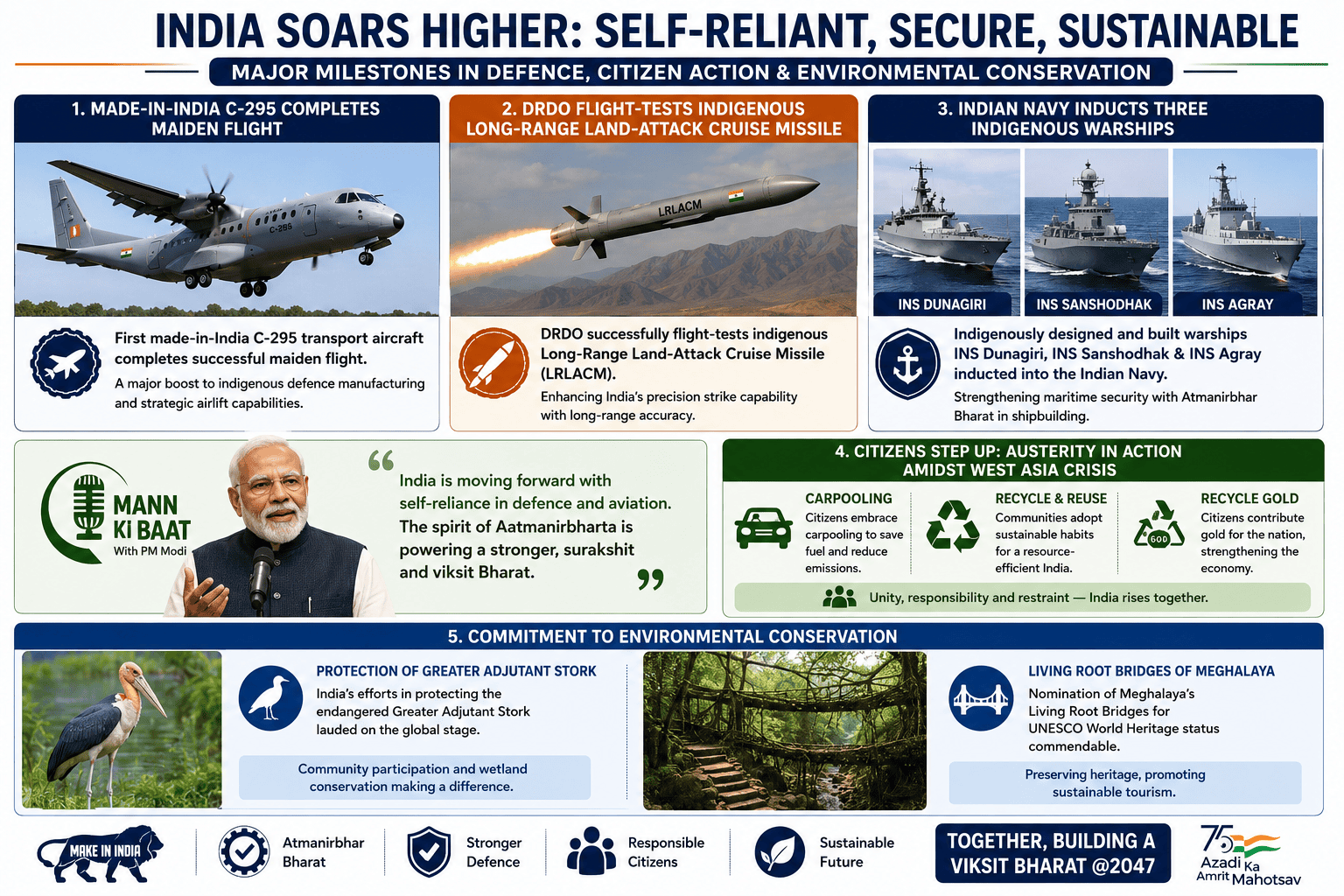
Self reliant.png
Detailed Insights:
- The C-295 programme involves the procurement of 56 aircraft for the Indian Air Force, with 40 being manufactured by Tata Advanced Systems Limited in partnership with Airbus in Vadodara, Gujarat.
- The LRLACM is a subsonic, surface-launched cruise missile designed for precision strikes against land targets at long distances, with all major subsystems indigenously developed.
- INS Dunagiri is a stealth guided-missile frigate, INS Sanshodhak is a deep-water survey vessel, and INS Agray is an Anti-Submarine Warfare Shallow Water Craft, all built with over 75% indigenous content.
- The Prime Minister's appeal for resource conservation included encouraging the use of public transport, natural fertilizers, and postponing foreign travel.
- Biologist Purnima Devi Barman's work in Assam has been instrumental in changing public perceptions and conserving the endangered Greater Adjutant Stork.
- Meghalaya's Living Root Bridges, created by indigenous Khasi communities, have been nominated for UNESCO World Heritage status, showcasing unique bio-engineering and cultural heritage.
- Women in Madhya Pradesh's Rajgarh district are converting plastic waste into eco-bricks, contributing to sustainable waste management and public space beautification.
- The 'Baby League' football initiative in Nagaland promotes sports among children aged five to twelve, fostering grassroots talent.
- The Prime Minister urged citizens to support local artisans by purchasing Indian-crafted Ganesh idols, emphasizing material and country of manufacture.
Key Concepts Involved:
- Aatmanirbhar Bharat: A vision for a self-reliant India, aiming to make the country and its citizens independent in all senses, across various sectors.
- Make in India: A government initiative launched in 2014 to encourage companies to manufacture in India and boost the domestic manufacturing sector.
- MSMEs: Micro, Small, and Medium Enterprises, which are crucial for employment generation, industrial output, and exports in the Indian economy.
- UNESCO World Heritage Site: A landmark or area recognized by the United Nations Educational, Scientific and Cultural Organization for its outstanding cultural, historical, or natural significance.

SuperKalam is your personal mentor for UPSC preparation, guiding you at every step of the exam journey.
Download the App


STUDY RESOURCES
CONTACT US
ⓒ Snapstack Technologies Private Limited