GS 2: International RelationsPrelims
The quiet work that sustains Quad, Pg9
Analysis of Quad's durability: cooperative practices, diverse domains beyond security, and institutional breadth sustain the minilateral arrangement.
Practice MCQs
782 Students attempted
Key Highlights:
- The Quad, comprising India, Japan, Australia, and the US, has demonstrated durability due to its cooperative practices since its revival in 2017.
- Working groups focusing on areas like maritime domain awareness, critical technologies, health, infrastructure, and climate have fostered consistent engagement among officials.
- The New Delhi joint statement highlights the Quad's focus on maritime surveillance, critical minerals, undersea cables, counterterrorism, and humanitarian assistance.
- The Quad's strength lies in its ability to work across a broader agenda, building trust and restraint through cooperation on practical domains.
Detailed Insights:
- The Quad's endurance is attributed to cooperative practices and habits of consultation developed among bureaucracies, rather than solely strategic considerations.
- Unlike purely strategic arrangements that are vulnerable to political changes, the Quad has persisted through shifts in government and strategic postures of its member states.
- Cooperation in areas such as vaccine distribution, undersea cables, critical minerals, cyclone response, and maritime awareness has allowed the Quad to build trust.
- The Quad's focus on concrete initiatives and tangible benefits in practical domains reinforces its durability and distinguishes it from transactional alignments dependent on immediate interests.
- The Quad serves as an example of how partnerships can deepen beyond immediate exchange, fostering moral restraint and long-term cooperation among member states.
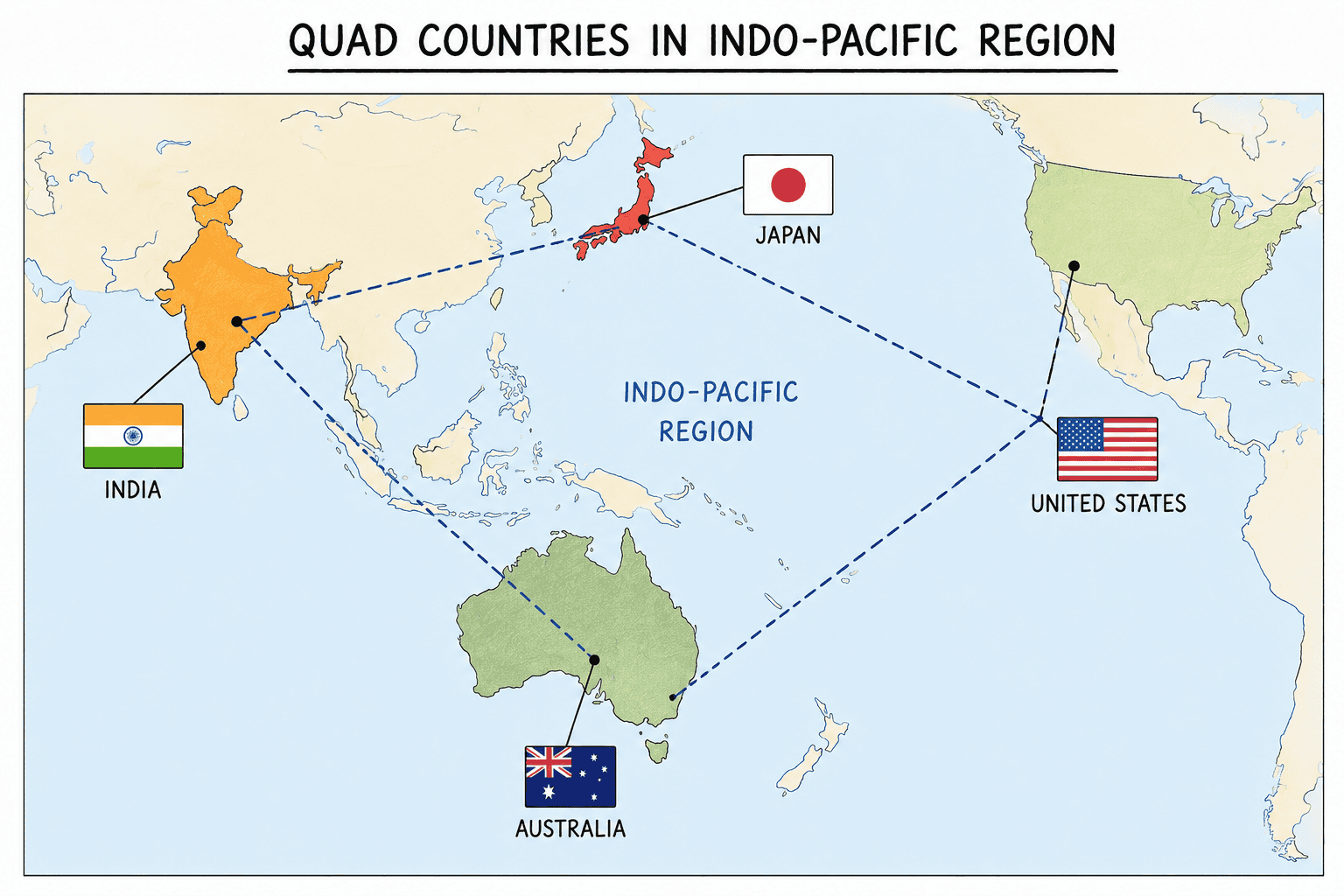
quad.png
Key Concepts Involved:
- Minilateralism: Diplomatic cooperation between three or more states to address specific issues.
- Maritime Domain Awareness: Understanding anything associated with the maritime environment that could impact security, safety, economy, or environment.
- Strategic Posture: A nation's overall approach to employing military resources to achieve its strategic objectives.

SuperKalam is your personal mentor for UPSC preparation, guiding you at every step of the exam journey.
Download the App


STUDY RESOURCES
CONTACT US
ⓒ Snapstack Technologies Private Limited