GS 3: Environment & EcologyGS 3: Internal SecurityGS 2: GovernancePrelims
From Ganga to global pet markets: Police in MP map rail route of protected turtles, Pg1
MP police expose vast interstate railway network smuggling protected turtles from Ganga basin to global pet markets, prompting coordinated crackdown.
Practice MCQs
782 Students attempted
Key Highlights:
- Madhya Pradesh police are initiating a coordinated crackdown on wildlife trafficking through the state's railway network.
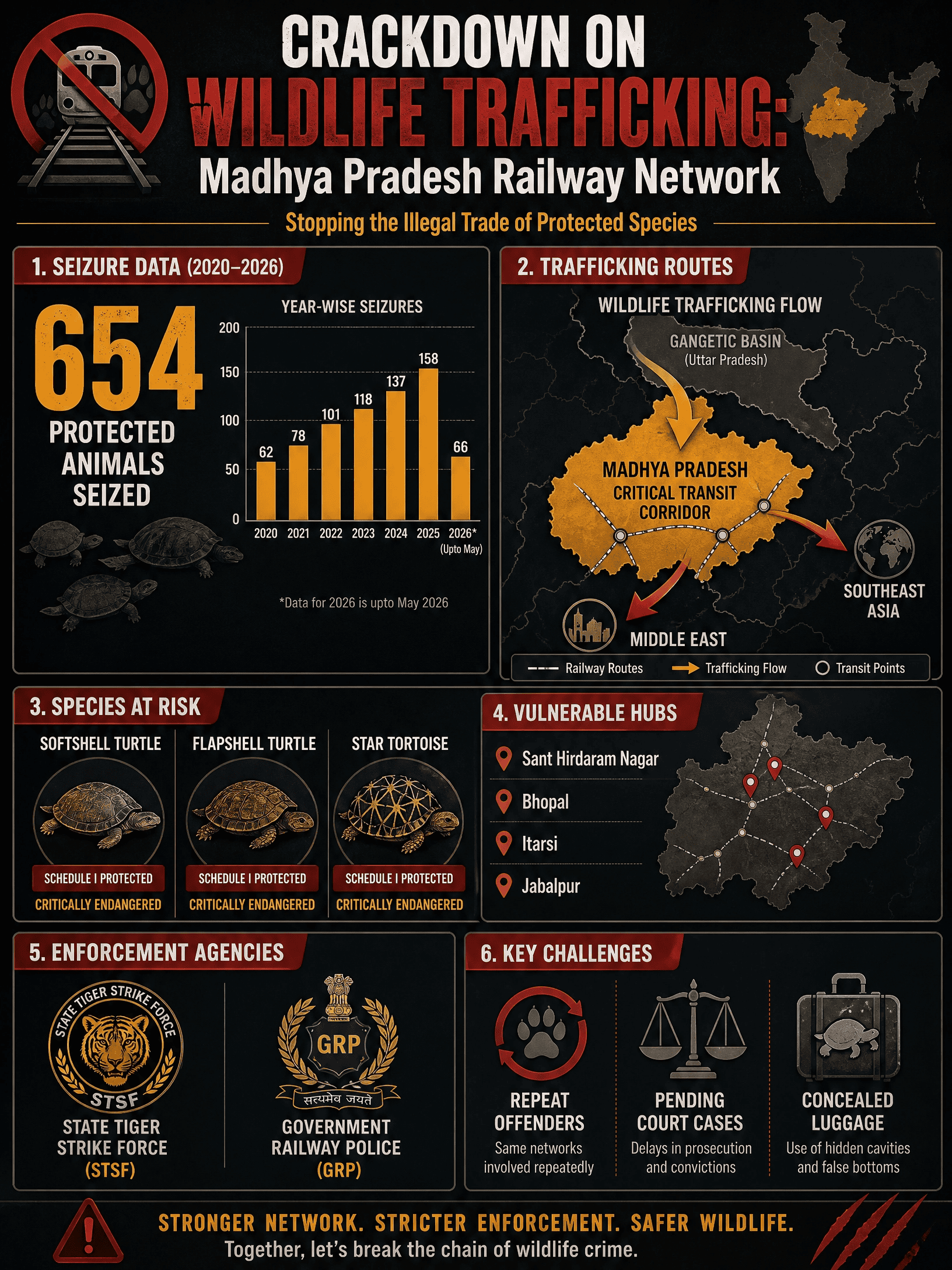
- Between 2020 and 2026, 654 protected animals, predominantly turtles, were seized from passenger trains in Madhya Pradesh.
- Organized interstate networks are smuggling freshwater turtles from northern India's river systems to markets in Southeast Asia and the Middle East.
- Indian softshell and Indian flapshell turtles, listed under Schedule I of the Wildlife Protection Act, 1972, are among the frequently trafficked species.
- Madhya Pradesh acts as a critical transit corridor for these illegal wildlife trade operations.
wildlife_trafficking_infographic.png
Detailed Insights:
- An analysis of six years of seizure data revealed established rackets operating along specific railway corridors.
- Traffickers primarily utilize passenger trains, concealing live animals in personal luggage to evade detection.
- The turtles are sourced from the Gangetic basin, particularly from the Ganga and its tributaries in Uttar Pradesh.
- Indian roofed turtles and star tortoises are mainly trafficked for the illegal pet trade, often moving towards Western India.
- The critically endangered Batagur turtle is specifically targeted for exotic pet markets in Southeast Asia.
- The scale of trafficking is increasing, with recent incidents involving hundreds of turtles seized in single operations.
- Enforcement efforts involve the State Tiger Strike Force (STSF) and Government Railway Police (GRP), coordinating with other agencies.
- Key vulnerable railway stations in Madhya Pradesh include Sant Hirdaram Nagar, Bhopal, Itarsi, and Jabalpur.
- Challenges in curbing this trade include pending court cases, repeat offenders, and the use of small batches for trafficking.
Key Concepts Involved:
- Wildlife Protection Act, 1972: An Act of the Parliament of India for the protection of wild animals, birds, and plants.
- Schedule I: The highest protection category under the Wildlife Protection Act, 1972, for endangered species.
- Wildlife Trafficking: The illegal trade of wild animals and plants, often involving organized criminal networks.

SuperKalam is your personal mentor for UPSC preparation, guiding you at every step of the exam journey.
Download the App


STUDY RESOURCES
CONTACT US
ⓒ Snapstack Technologies Private Limited