GS 3: Science & TechnologyGS 2: Social JusticePrelims
CAR-T cell therapy senses ‘faint’ targets to clear solid tumours, PgII
CAR-T cell therapy breakthrough: New HIT receptor design eliminates 'invisible' cancer cells in solid tumors by detecting faint signals.
Practice MCQs
767 Students attempted
Key Highlights:
- CAR-T cell therapy works well in blood cancers, but faces difficulty in solid tumours due to antigen heterogeneity
- Tumour cells previously thought “undetectable” actually express very low levels of CD70 protein
- This low expression is not absence, but a hidden signal missed by conventional CAR-T cells
- Scientists developed a HIT (HLA-independent T-cell) receptor to detect these faint signals
- HIT receptor links detection directly to the natural activation pathway of T-cells
- In experimental models, HIT-based T-cells showed complete and long-lasting tumour removal
Detailed Insights:
- Antigen heterogeneity in solid tumors allows some cells to evade detection by CAR-T cells, leading to cancer regrowth.
- The enzyme EZH2 suppresses the gene for CD70, reducing its production and making cells undetectable to current immune therapies.
- The HIT receptor bypasses the HLA system, enabling it to detect antigens at much lower densities than synthetic CAR-T cells.
- Safety concerns about the HIT receptor reacting to normal cells were addressed by analyzing a single-cell atlas, which showed limited CD70 activity in vital organs.
- Drug-tolerant persisters, which survive targeted therapies, can be addressed by the HIT receptor's ability to uncover and eliminate hidden cells.
Key Concepts Involved:
- CAR-T Cell Therapy: Immunotherapy using engineered T-cells to identify and destroy cancer cells
- Antigen Heterogeneity: Variation in protein expression across tumour cells, enabling immune evasion
- HLA System: Cell-surface protein system that helps immune cells recognise targets
- Pseudo-heterogeneity: Apparent absence of antigen due to extremely low expression levels
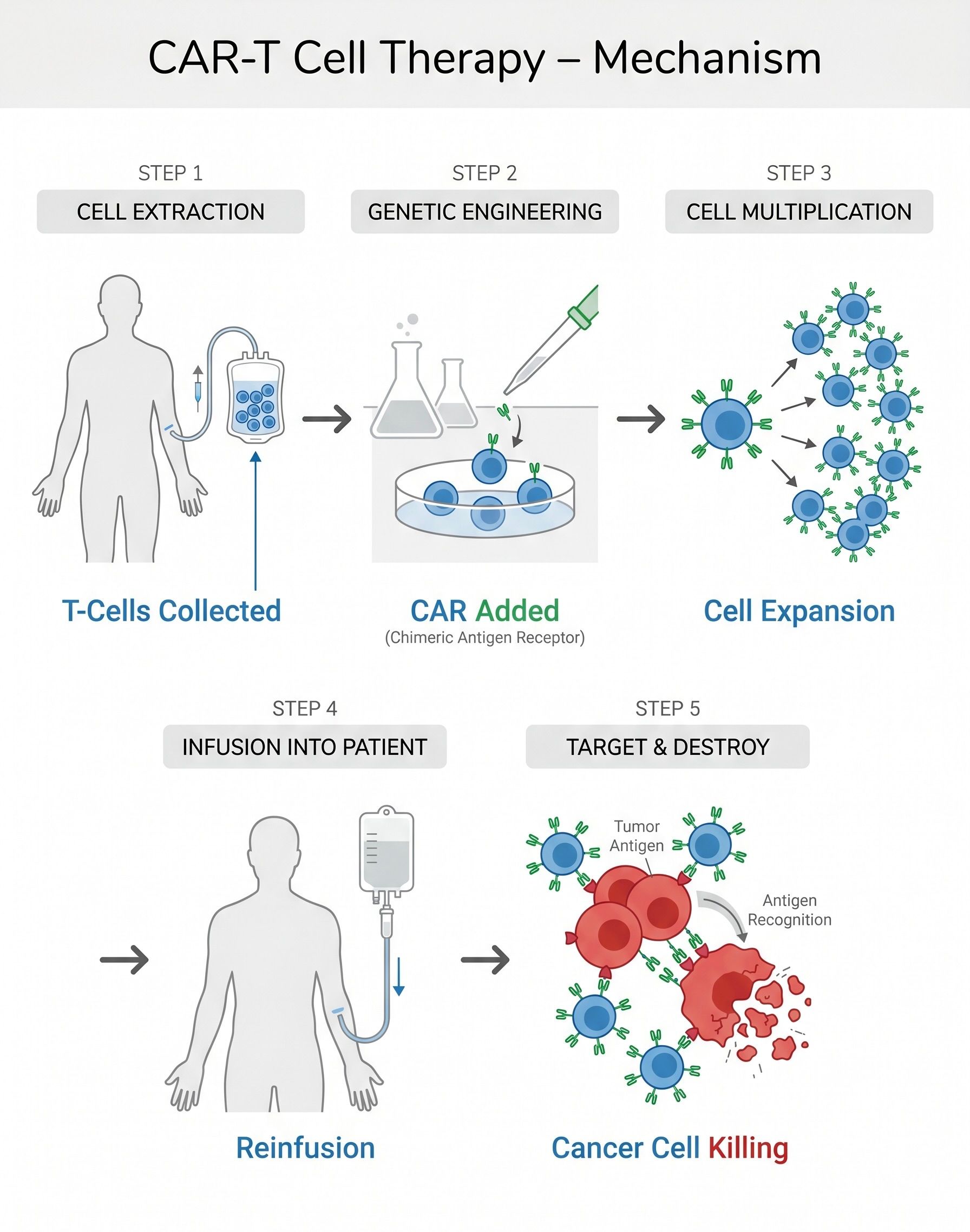
CAR-T Cell Therapy
Previous8/8

SuperKalam is your personal mentor for UPSC preparation, guiding you at every step of the exam journey.
Download the App


STUDY RESOURCES
CONTACT US
ⓒ Snapstack Technologies Private Limited