GS 2: PolityGS 2: GovernancePrelims
Presidential opinion versus the federal structure, Pg6
Supreme Court addresses Presidential reference on Governor's powers, raising concerns over federalism erosion and potential subjugation of states.
Practice MCQs
804 Students attempted
Key Highlights:
- The Supreme Court of India addressed the Presidential reference regarding the powers of Governors and the President of India, emphasizing the importance of federalism.
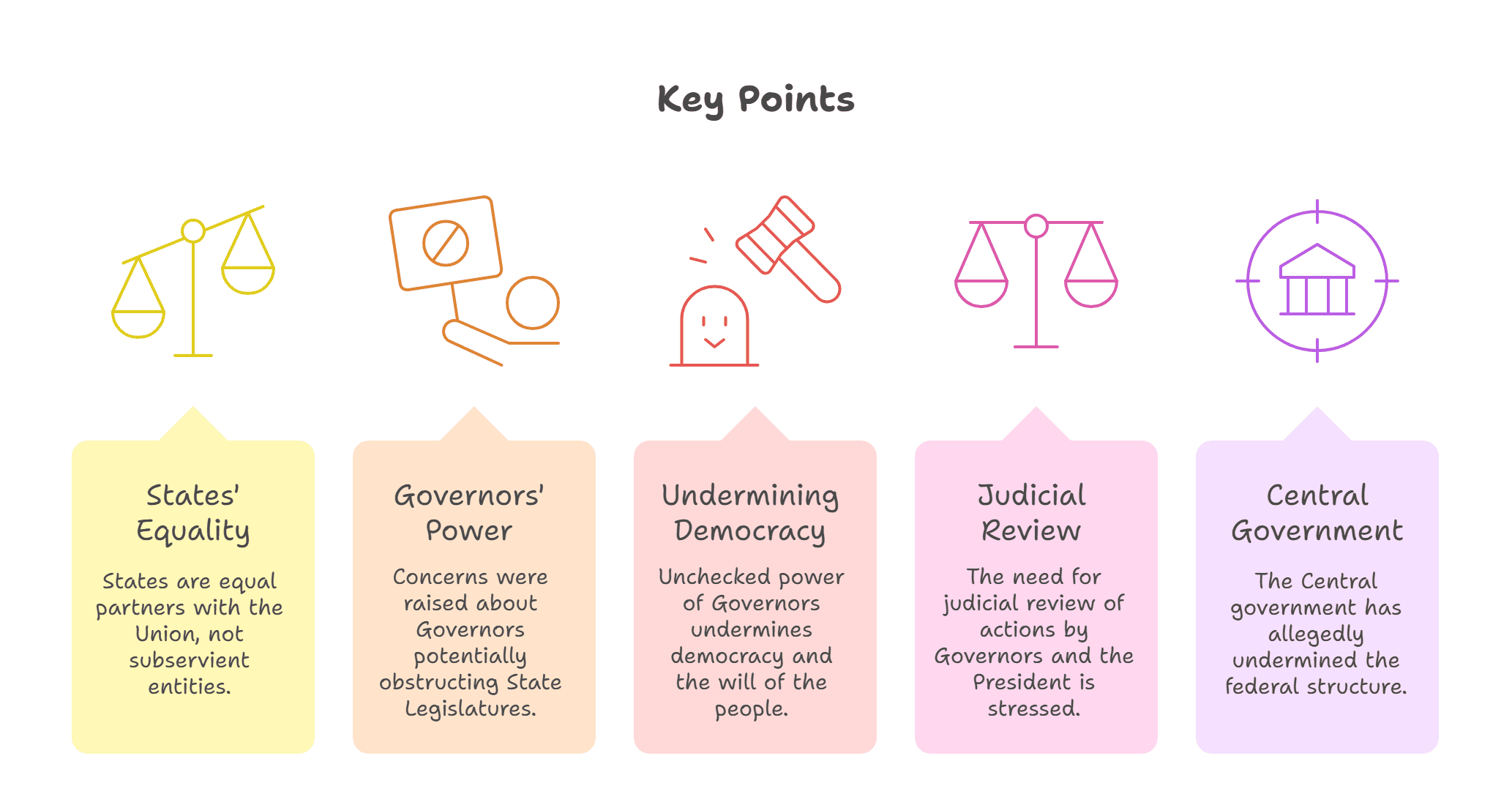
- The court highlighted that States are equal partners with the Union, not subservient entities.
- Concerns were raised about Governors potentially obstructing State Legislatures by delaying or withholding assent to bills.
- The article argues that unchecked power of Governors undermines democracy and the will of the people.
- The piece stresses the need for judicial review of actions by Governors and the President.
- The article points out several instances where the Central government has allegedly undermined the federal structure.
Key Points.png
Detailed Insights:
- The core issue revolves around maintaining the balance of power between the Union and the States as enshrined in the Constitution.
- Federalism is portrayed as a fundamental safeguard against the Central government's potential overreach and arbitrariness.
- The author argues that Governors, appointed by the Central government, may act on political agendas, thereby undermining the authority of elected State governments.
- The article suggests that a timeline should be imposed on Governors for exercising their powers under Article 200 to ensure conformity with the principle of federalism.
- The piece contends that fairness, reasonableness, and non-arbitrariness are essential principles that should guide the actions of constitutional authorities.
- The author lists several instances of alleged attacks on the federal structure, including financial and administrative measures by the Centre.
- The article concludes that preserving federalism is crucial for the survival of democracy and the integrity of the nation.
Key Concepts Involved:
- Federalism: A system of government in which power is divided between a central authority and constituent political units.
- Article 200: Part of the Indian Constitution dealing with the Governor's role in assenting to bills passed by the State legislature.
- Judicial Review: The power of the judiciary to examine the actions of the legislative and executive branches of government and determine whether such actions are consistent with the constitution.

SuperKalam is your personal mentor for UPSC preparation, guiding you at every step of the exam journey.
Download the App


STUDY RESOURCES
CONTACT US
ⓒ Snapstack Technologies Private Limited