GS 3: EconomyPrelims
IMF reclassifies India's FX regime as 'crawl-like', Pg15
IMF reclassifies India's exchange rate regime to 'crawl-like' after review, citing limited flexibility and potential for greater volatility absorption.
Practice MCQs
804 Students attempted
Key Highlights:
- The IMF reclassified India's exchange rate regime as "crawl-like arrangement" after previously terming it "stabilized."
- This reclassification follows an IMF review conducted earlier in 2025.
- The Indian Rupee has depreciated by approximately 4% this year and hit a record low of 89.49 against the US dollar on November 21.
- The IMF projects India's economic growth at 6.6% in 2025-26 and 6.2% in the subsequent fiscal year.
Detailed Insights:
- A crawl-like arrangement is defined by the IMF as an exchange rate that stays within a 2% margin relative to a statistically identified trend for at least six months, excluding specific outliers.
- The IMF had classified India's exchange rate regime as "stabilized" between December 2022 and November 2024, before this recent change.
- Increased exchange rate flexibility can help India absorb external shocks, reduce the need for reserve accumulation, and promote market development, according to the IMF.
- The depreciation of the Rupee was partly influenced by steep US trade tariffs, which negatively impacted trade and inward portfolio flows.
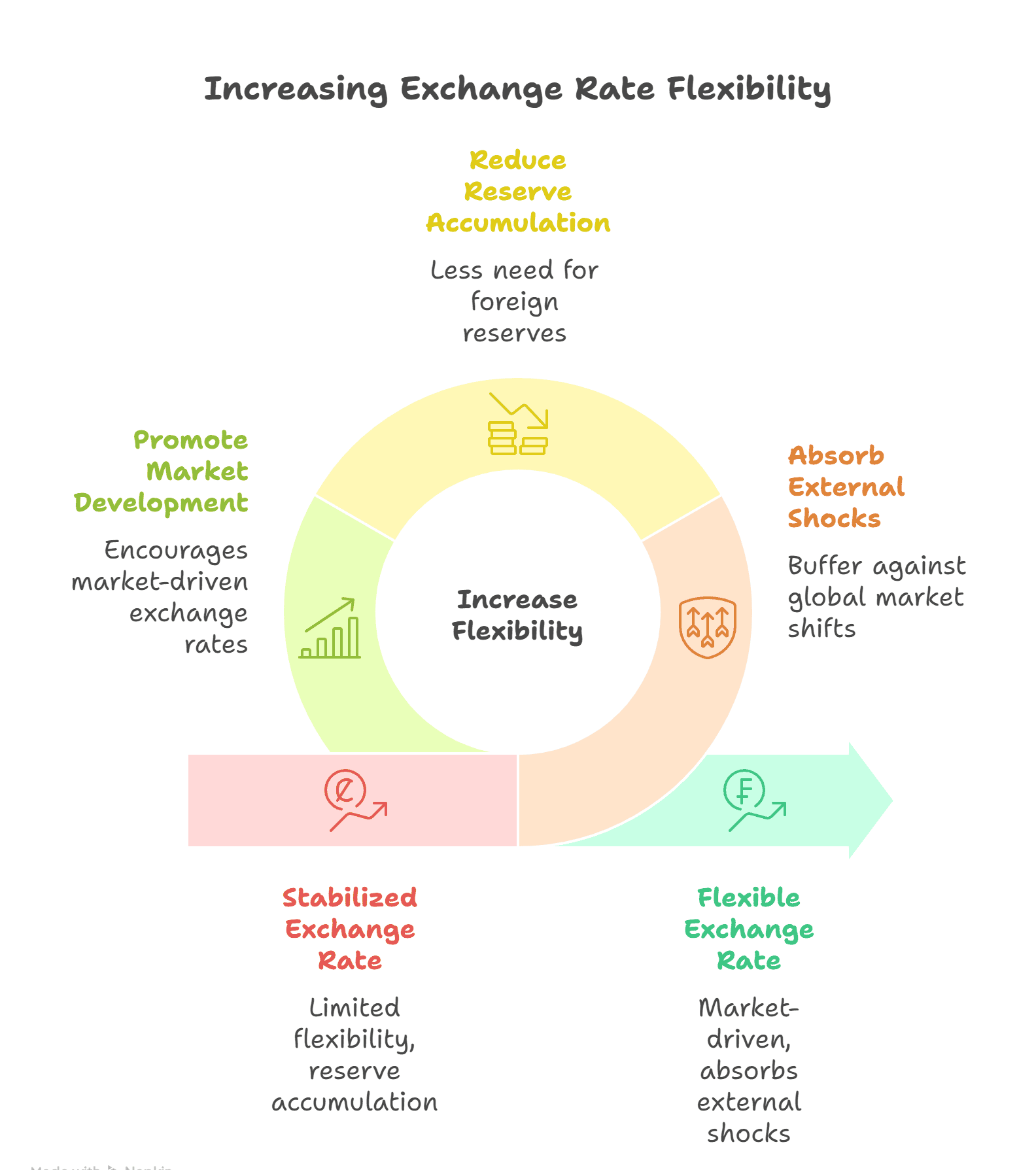
Increasing Exchange Rate Flexibility.png
Key Concepts Involved:
- Exchange Rate Regime: A system that governs how a country manages its currency value in relation to other currencies.
- Crawl-like Arrangement: An exchange rate regime where the currency is allowed to fluctuate within a narrow band, adjusted periodically.
- Stabilized Regime: An exchange rate regime where the monetary authority intervenes to prevent excessive fluctuations in the exchange rate.

SuperKalam is your personal mentor for UPSC preparation, guiding you at every step of the exam journey.
Download the App


STUDY RESOURCES
CONTACT US
ⓒ Snapstack Technologies Private Limited