GS 1: Physical GeographyGS 3: Disaster Management
East coast braces for rough weather as cyclone montha develops today, Pg9.
The India Meteorological Department (IMD) has issued red alerts for several districts in Andhra Pradesh and Odisha as Cyclone Montha over the Bay of Bengal is likely to make landfall near Kakinada on October 29, prompting large-scale evacuation and disaster preparedness measures.
Practice MCQs
796 Students attempted
Key Highlights:
- IMD forecasts Cyclone Montha to make landfall near Kakinada (Andhra Pradesh) late on October 29.
- Red alerts have been issued for multiple districts, including Kakinada, Krishna, Guntur, Nellore, Prakasam, and Srikakulam in Andhra Pradesh.
- Thousands of residents in low-lying coastal regions have been evacuated to relief camps.
- Andhra Home Minister Vangalapudi Anitha reviewed disaster preparedness with state officials and directed satellite phones to vulnerable districts to maintain communication.
- The state government has declared holidays for educational institutions till Wednesday to ensure safety.
- Odisha government also reviewed coastal preparedness under Revenue and Disaster Management Minister Suresh Pujari.
- Historical data show that October cyclones like Titli (2018), Hudhud (2014), and Ogni (2006) have caused severe damage in Andhra Pradesh.
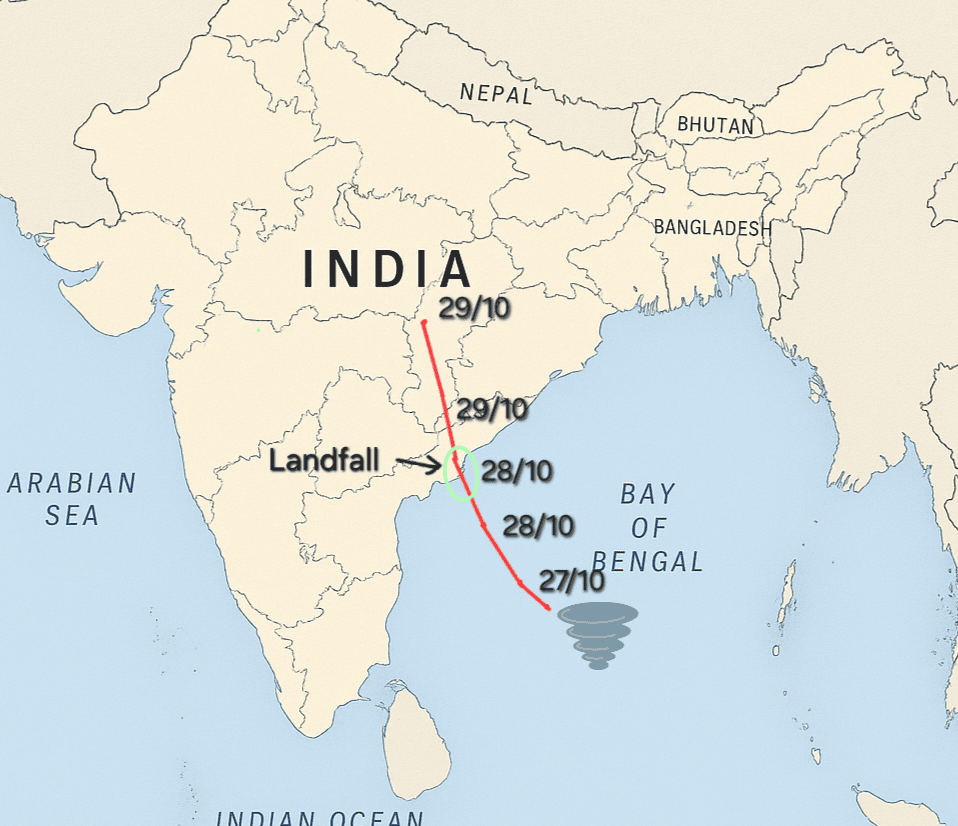
Trajectory of Cyclone Montha.png
Detailed Insights:
- Cyclone Path & Intensity: Formed over the west-central Bay of Bengal, Montha is expected to intensify as it moves northwest, affecting coastal Andhra and adjoining Odisha districts.
- Disaster Preparedness: Andhra Pradesh Disaster Management Authority (APDMA) is coordinating early warning dissemination, relocation of vulnerable populations, and deployment of rescue teams.
- Communication Measures: Use of satellite phones and SMS alerts aims to minimize communication disruptions due to storm damage.
- Administrative Coordination: Multi-departmental teams are stationed for search and rescue, medical support, and food and shelter arrangements.
- Historical Context: The Bay of Bengal is a high-frequency cyclone basin, especially during pre- and post-monsoon months, due to warm sea surface temperatures and favorable wind shear conditions.
- Socio-economic Impact: Potential disruption to fisheries, agriculture, and transport; hence, preemptive evacuation is crucial to mitigate human and economic losses.
Scientific/Technical Concepts Involved:
- Tropical Cyclone: A rapidly rotating storm system formed over warm ocean waters, characterized by low pressure, strong winds, and heavy rainfall.
- Red Alert: Issued by IMD when extremely severe weather conditions are expected, requiring immediate preventive action by authorities.
- Bay of Bengal Cyclogenesis: The process of cyclone formation facilitated by warm sea temperatures (>27°C), high humidity, and Coriolis effect near the equator.
- Storm Surge: Abnormal rise in sea level caused by strong winds and low atmospheric pressure during cyclones, leading to coastal flooding.

SuperKalam is your personal mentor for UPSC preparation, guiding you at every step of the exam journey.
Download the App


STUDY RESOURCES
CONTACT US
ⓒ Snapstack Technologies Private Limited