GS 2: PolityGS 2: GovernanceGS 3: Disaster ManagementPrelims
Right to safe travel on highways part of right to life: apex court, Pg1
Supreme Court affirms right to safe highway travel as fundamental under Article 21, addressing accident fatalities and infrastructure gaps.
Practice MCQs
760 Students attempted
Key Highlights:
- The Supreme Court declared that the right to safe travel on highways is a fundamental right under Article 21 of the Constitution.
- The ruling came in response to a suo motu case following accidents in Rajasthan and Telangana in November 2025 that caused 34 deaths.
- The court prohibited new dhabas, eateries, and commercial structures within the right-of-way of any National Highway.
- Heavy vehicles are now restricted to parking only at designated bays and wayside amenities.
Detailed Insights:
- National Highways account for approximately 2% of India’s total road length but contribute to nearly 30% of all road fatalities, highlighting a critical safety concern.
- The court emphasized that roads, especially high-speed expressways, should not become dangerous due to administrative inaction or infrastructural deficiencies.
- The right to life, as interpreted by the court, places a positive obligation on the state to ensure a safe environment, going beyond merely preventing unlawful killings.
- The order addresses hazards like illegal parking and blackspots, which the court views as failures of the state's responsibility to protect its citizens.
Key Concepts Involved:
- Article 21: Guarantees the protection of life and personal liberty.
- Suo Motu: An action taken by a court on its own without any prompting from parties.
- Right of Way: The legal right of passage over another person's property or a designated area.
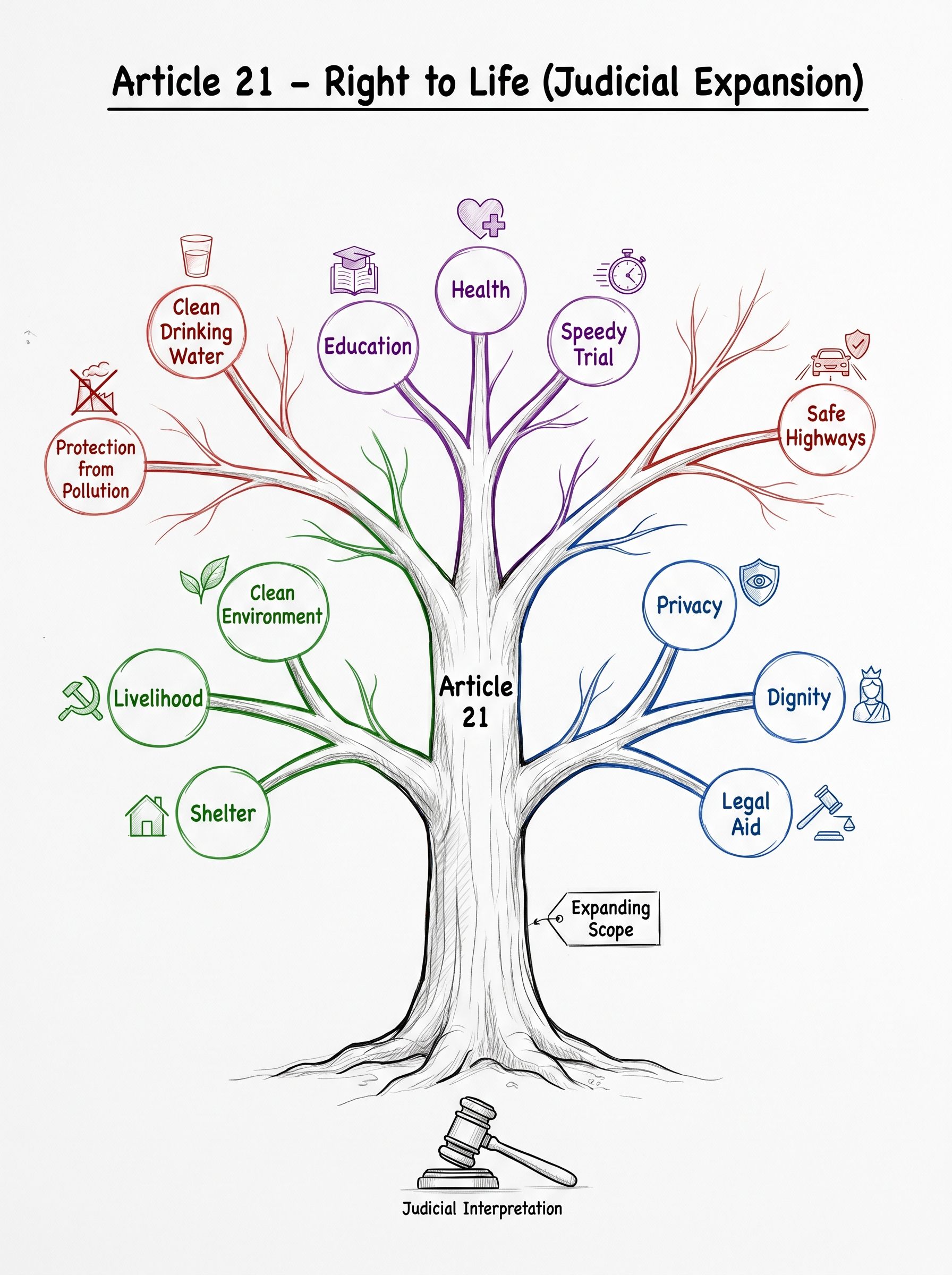
Right to Life

SuperKalam is your personal mentor for UPSC preparation, guiding you at every step of the exam journey.
Download the App


STUDY RESOURCES
CONTACT US
ⓒ Snapstack Technologies Private Limited