GS 3: EconomyPrelims
RBI's G-sec holding rises to 13-year high, Pg13
RBI's G-sec holdings hit a 13-year high, reaching 17.6% of outstanding issuance due to aggressive bond purchases and OMOs for liquidity injection.
Practice MCQs
767 Students attempted
Key Highlights:
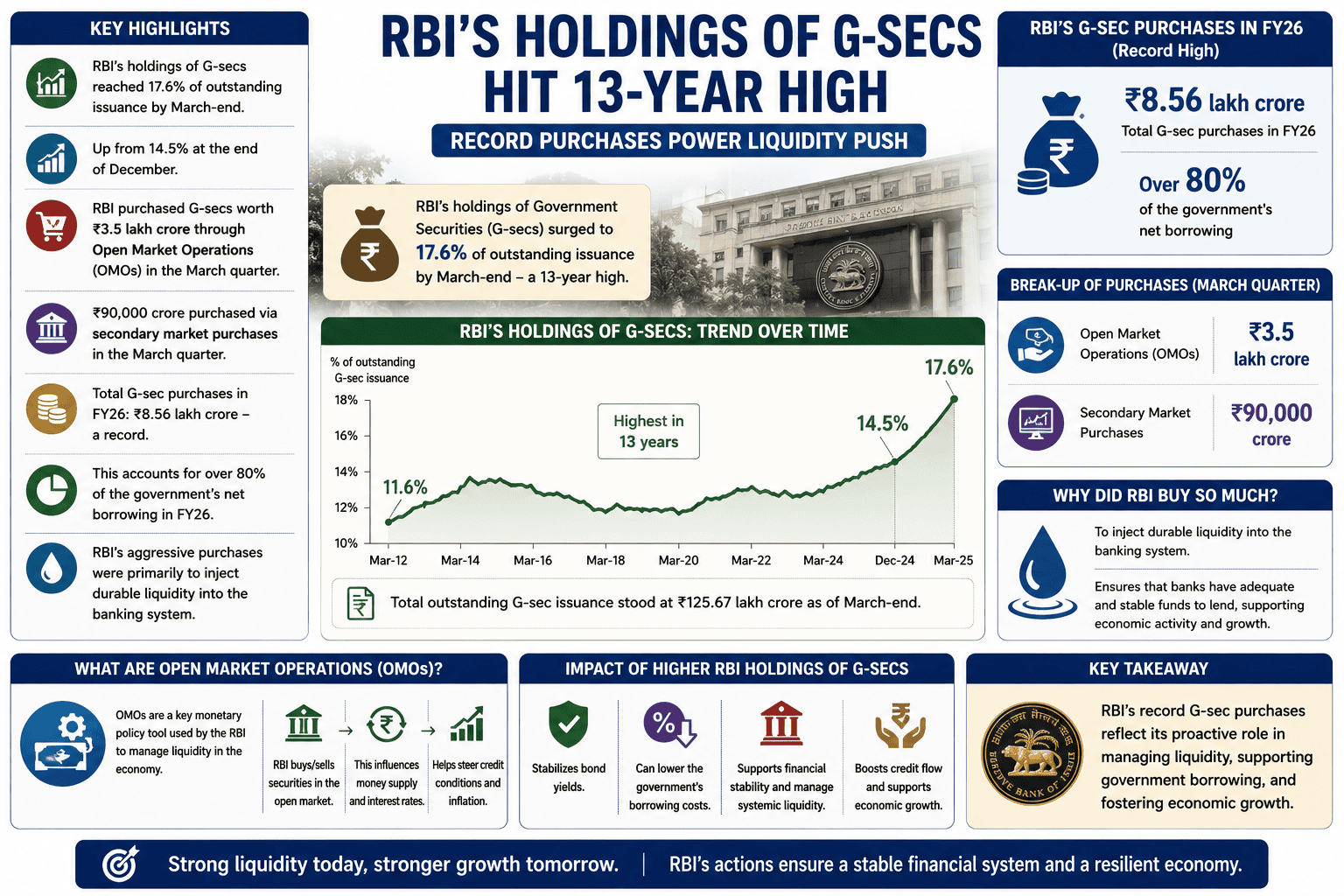
- The Reserve Bank of India (RBI)'s holdings of Government Securities (G-secs) surged to a 13-year high, reaching 17.6% of outstanding issuance by March-end.
- This marks a notable increase from 14.5% recorded at the end of December.
- The RBI purchased G-secs worth ₹3.5 lakh crore through Open Market Operations (OMOs) and ₹90,000 crore via secondary market purchases in the March quarter.
- For FY26, the RBI's total G-sec purchases amounted to a record ₹8.56 lakh crore, accounting for over 80% of the government's net borrowing.
- These aggressive purchases were primarily undertaken to inject durable liquidity into the banking system.
RBI Gsec.png
Detailed Insights:
- The substantial increase in RBI's G-sec holdings reflects its active role in managing systemic liquidity and supporting government borrowing.
- Open Market Operations (OMOs) are a crucial monetary policy tool used by the RBI to influence money supply and credit conditions in the economy.
- High RBI holdings of G-secs can help stabilize bond yields, potentially lowering the government's borrowing costs.
- Injecting durable liquidity ensures that adequate funds are available for banks to lend, thereby supporting economic activity and growth.
- The total outstanding G-sec issuance stood at ₹125.67 lakh crore as of March-end.
Key Concepts Involved:
- Government Securities (G-secs): Tradable debt instruments issued by the Union Government, considered risk-free, used to borrow money.
- Open Market Operations (OMOs): Monetary policy tool where the RBI buys or sells G-secs to regulate liquidity in the banking system.
- Liquidity: The ease with which an asset can be converted into cash; in the banking system, it refers to the availability of funds for lending and operations.
- Monetary Policy: Actions undertaken by a central bank, like the RBI, to control money supply and credit conditions to achieve macroeconomic objectives such as price stability and economic growth.

SuperKalam is your personal mentor for UPSC preparation, guiding you at every step of the exam journey.
Download the App


STUDY RESOURCES
CONTACT US
ⓒ Snapstack Technologies Private Limited