GS 2: International RelationsGS 2: GovernanceGS 3: Science & TechnologyPrelims
A Nalanda model for the 21st century, Pg10
India must embrace 'cognitive power' for 21st-century national advantage, leveraging a modern Nalanda model for strategic development and global influence.
Practice MCQs
767 Students attempted
Key Highlights:
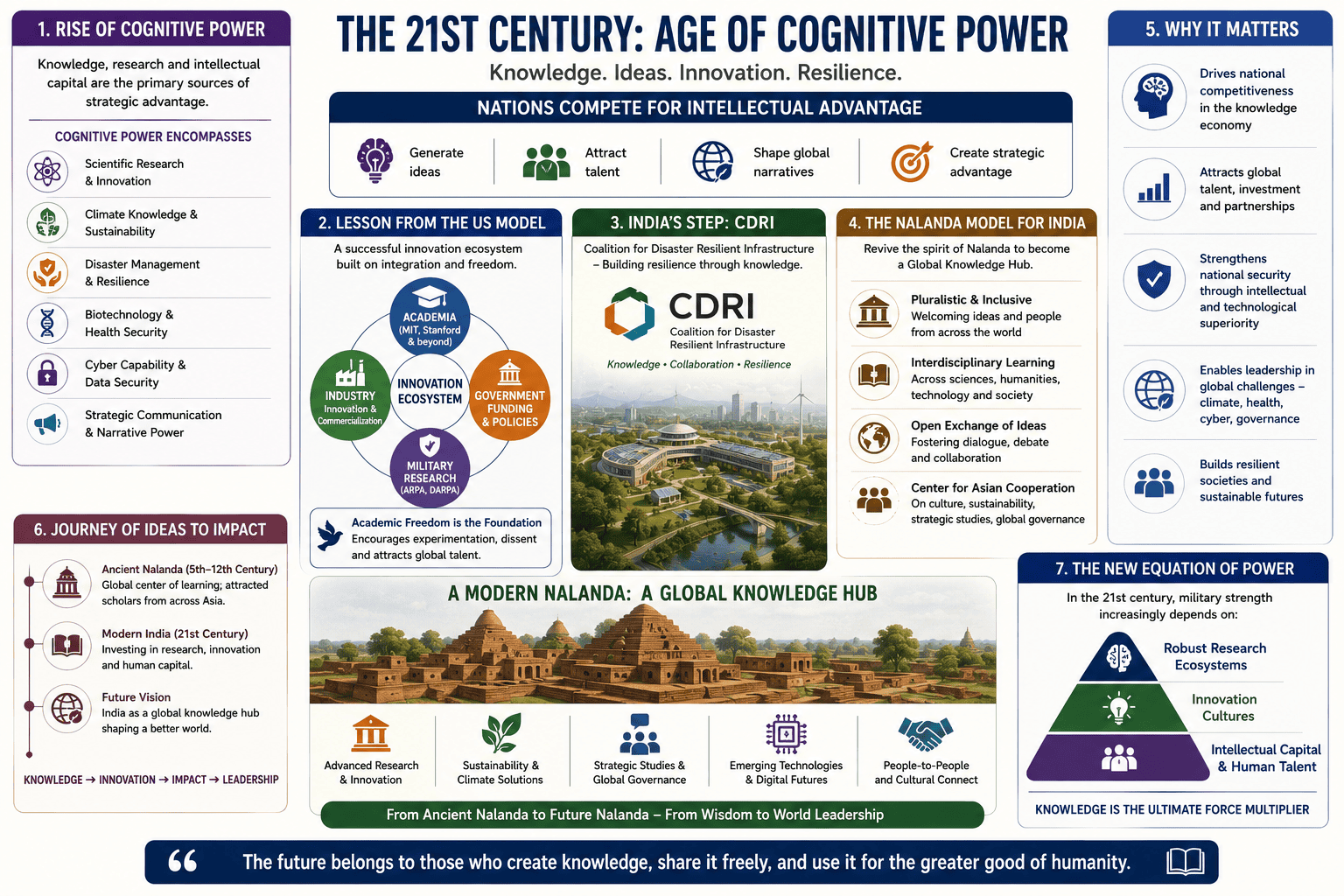
- The 21st century is characterized by the rise of cognitive power, where knowledge, research, and intellectual capital are primary sources of strategic advantage.
- Nations are now competing for intellectual advantage, focusing on generating ideas, attracting talent, and shaping global narratives.
- The US developed a successful innovation ecosystem by linking academia, industry, government funding, and military research.
- India's Coalition for Disaster Resilient Infrastructure (CDRI) is highlighted as a step towards building national resilience through knowledge.
- The article proposes a "Nalanda model" for India to become a global knowledge hub, drawing inspiration from the ancient university's pluralistic and interdisciplinary approach.
Nalanda Model.png
Detailed Insights:
- Cognitive power encompasses scientific research, climate knowledge, disaster management, biotechnology, cyber capability, and strategic communication.
- The US innovation ecosystem integrated academic freedom, allowing institutions like MIT and Stanford to become strategic assets.
- Academic freedom, fostering experimentation and dissent, is crucial for attracting global talent and driving innovation.
- India's future competitiveness depends on research, innovation, and higher education, moving beyond traditional infrastructure and industrial expansion.
- The ancient Nalanda University attracted scholars from across Asia, embodying pluralism, interdisciplinary learning, and openness to ideas.
- A modern Nalanda could serve as a center for Asian cooperation in culture, sustainability, strategic studies, and global governance.
- Military strength in the 21st century will increasingly rely on robust research ecosystems, innovation cultures, and intellectual capital.
Key Concepts Involved:
- Cognitive Power: The strategic value attached to knowledge, research, and intellectual capital as a defining source of national power in the 21st century.
- Innovation Ecosystem: A network of interconnected institutions, policies, and individuals that fosters the creation, development, and application of new ideas and technologies.
- Nalanda Model: A proposed framework for India to become a global knowledge hub, inspired by the ancient Nalanda University's historical role as a center for pluralistic and interdisciplinary learning.
- Coalition for Disaster Resilient Infrastructure (CDRI): An international partnership promoting the resilience of new and existing infrastructure systems to disaster risks.

SuperKalam is your personal mentor for UPSC preparation, guiding you at every step of the exam journey.
Download the App


STUDY RESOURCES
CONTACT US
ⓒ Snapstack Technologies Private Limited