GS 1: Physical GeographyGS 3: Environment & EcologyPrelims
Temperature spikes lead to change in El Nino labelling, PgII
El Nino labelling altered due to global warming; triple-dip La Nina contributed to earth's energy imbalance and temperature spikes.
Practice MCQs
739 Students attempted
Key Highlights:
- Meteorologists report the El Nino cycle is influenced by and contributes to global warming.
- A recent study explains the earth's temperature spike using changes in the El Nino/La Nina cycle.
- The NOAA has updated its El Nino/La Nina labeling due to rapid weather changes from global warming.
- Earth's average monthly temperature noticeably increased starting in early 2023, continuing through 2025.
Detailed Insights:
- The shift from a three-year La Nina to El Nino explains about three-quarters of the change in earth's energy imbalance.
- From 2020 to 2023, Earth experienced an unusual "triple dip" La Nina, which trapped warm water at deeper depths.
- The increased energy imbalance, resulting in warmer temperatures, is attributed to long-term climate change and the shift in El Nino/La Nina patterns.
- About 23% of the energy imbalance driving higher temperatures comes from the long La Nina pattern, while over half is from greenhouse gases.
Scientific/Technical Concepts Involved:
- El Nino: Cyclical warming of the equatorial Pacific that alters global weather patterns.
- La Nina: Marked by cooler-than-average waters in the equatorial Pacific.
- Earth's Energy Imbalance: The difference between energy coming to and leaving the planet.
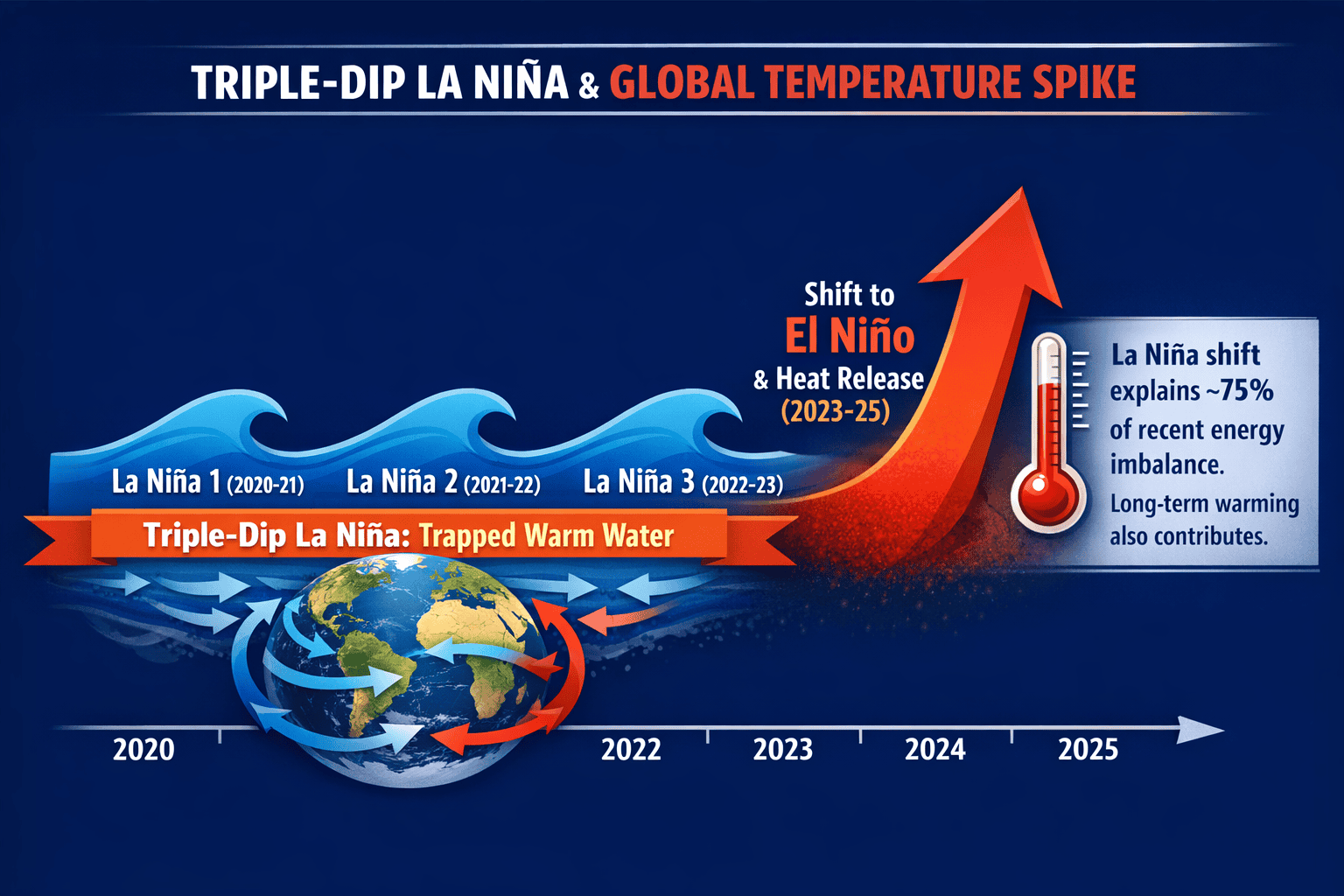
Triple-Dip La Niña & Global Temperature Spike
Previous12/12

SuperKalam is your personal mentor for UPSC preparation, guiding you at every step of the exam journey.
Download the App


STUDY RESOURCES
CONTACT US
ⓒ Snapstack Technologies Private Limited