GS 3: Science & TechnologyGS 2: Social JusticeGS 3: EconomyPrelims
As antibiotics fail, AIIMS leads the fight against superbugs, Pg20
AIIMS spearheads research to combat antimicrobial resistance (AMR), focusing on rapid diagnostics, targeted therapies, and infection control strategies amidst rising superbug threats.
Practice MCQs
731 Students attempted
Key Highlights:
- AIIMS Delhi is leading research efforts to combat antimicrobial resistance (AMR), a growing global health threat.
- Drug-resistant infections could cause 10 million deaths worldwide by 2050, with India bearing a significant burden (2.97 lakh deaths in 2019).
- AIIMS is designated as an Infectious Disease Research Diagnostic Laboratory (IRDL) centre and coordinates the Antimicrobial Resistance Surveillance Network (AMRSN).
- Research focuses on early diagnosis, targeted therapy, improved diagnostics, and promoting rational antibiotic use to reduce AMR.
Detailed Insights:
- Antimicrobial resistance (AMR) occurs when microorganisms evolve to survive exposure to medicines designed to kill them, posing a significant threat to public health.
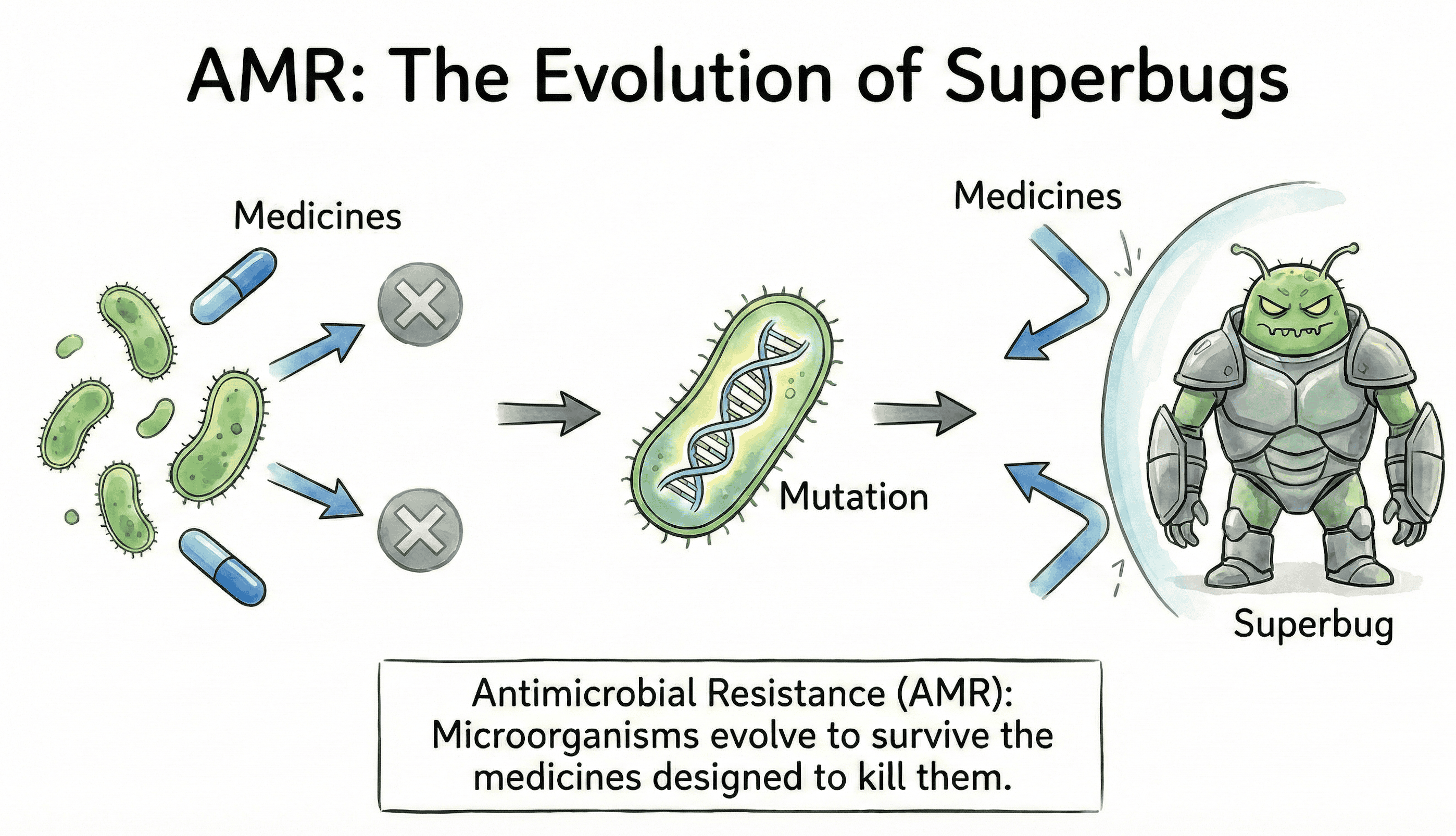
Antimicrobial Resistance (AMR)
- Empirical antibiotic use, often started before identifying the causative pathogen, is a major driver of AMR, but AIIMS studies aim to shorten the window of uncertainty through improved diagnostics.
- Sepsis, a life-threatening condition triggered by the body’s response to infection, is a key focus, with research aimed at identifying site-specific biomarkers for early detection of bacteremia.
- ESKAPE pathogens like Klebsiella pneumoniae, Acinetobacter baumannii, and Pseudomonas aeruginosa are increasingly common in India, prompting research into rapid detection methods for resistance patterns.
- Quorum sensing inhibitors are being explored as alternative treatments, disrupting bacterial communication systems to prevent coordinated harmful effects.
- The BPaL-M regimen (bedaquiline, pretomanid, linezolid, and moxifloxacin) has revolutionized treatment for drug-resistant tuberculosis, shortening therapy to six months with high success rates.
- Effective hospital infection control, including strict cleaning, disinfection, hand hygiene, and antimicrobial stewardship, is crucial in preventing the spread of resistant bacteria.
Key Concepts Involved:
- Antimicrobial Resistance (AMR): The ability of microorganisms to resist the effects of antimicrobial drugs, making infections harder to treat.
- ESKAPE Pathogens: A group of highly drug-resistant bacteria that pose a significant threat to human health.
- Quorum Sensing: A bacterial communication system that allows cells to coordinate group behavior.
- Bacteremia: The presence of bacteria in the bloodstream, which can lead to sepsis.

SuperKalam is your personal mentor for UPSC preparation, guiding you at every step of the exam journey.
Download the App


STUDY RESOURCES
CONTACT US
ⓒ Snapstack Technologies Private Limited