GS 3: Environment & EcologyGS 2: GovernanceGS 1: Indian GeographyPrelims
On Western Ghats, South must break impasse, Pg10
Western Ghats protection plan faces 12-year impasse; Gujarat, Maharashtra, Goa relent on ESA, urging southern states to act after floods and landslides.
Practice MCQs
760 Students attempted
Key Highlights:
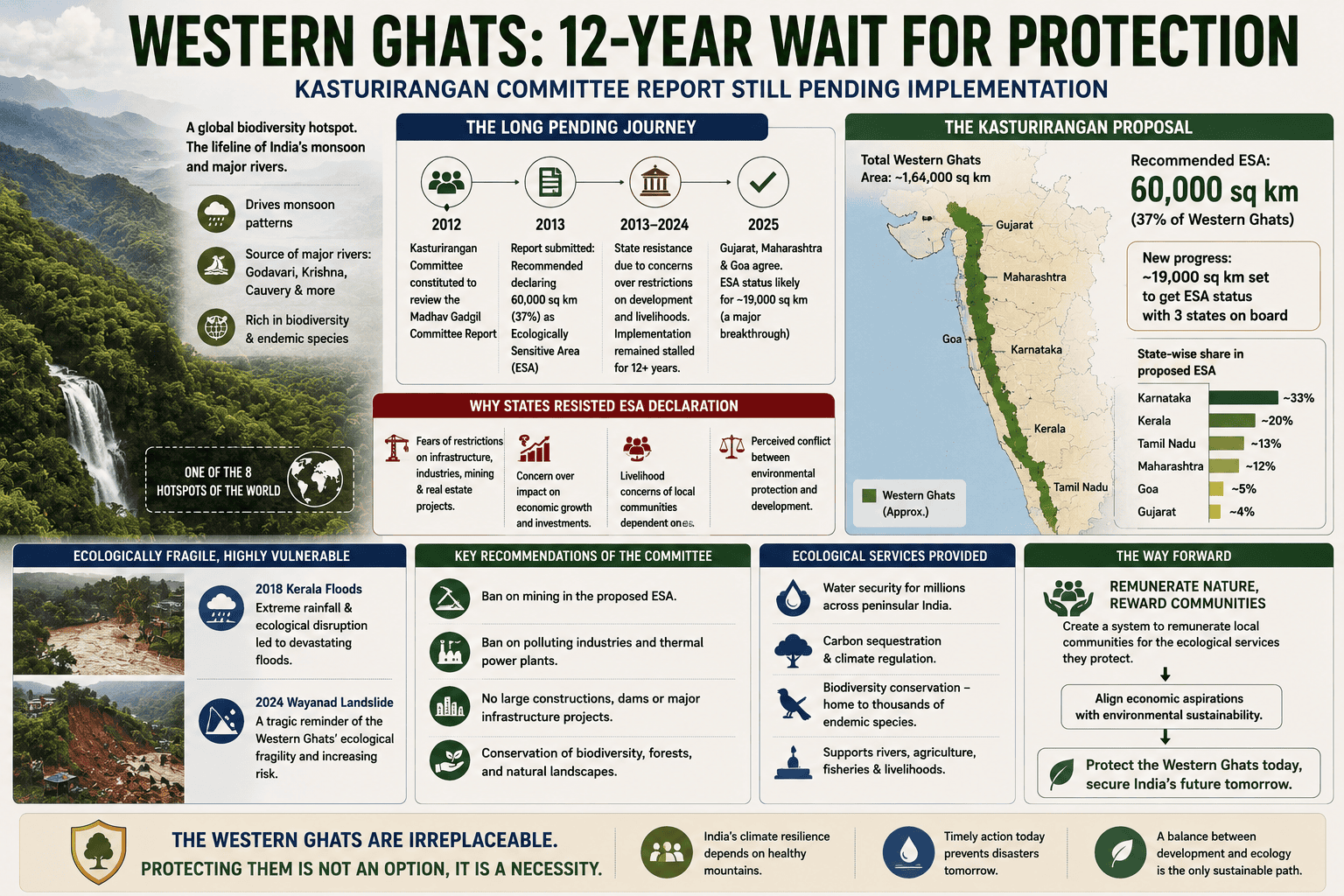
- The implementation of the Kasturirangan Committee Report for Western Ghats protection has been pending for over 12 years.
- The report proposed declaring 60,000 sq km, or 37%, of the Western Ghats as an Ecologically Sensitive Area (ESA).
- State governments initially resisted the ESA declaration due to concerns over development restrictions.
- Gujarat, Maharashtra, and Goa have now agreed, potentially securing ESA status for approximately 19,000 sq km.
- The Western Ghats is a global biodiversity hotspot and crucial for India's monsoon patterns and major rivers like Godavari, Krishna, and Cauvery.
Western Ghats.png
Detailed Insights:
- The Kasturirangan Committee was constituted in 2012 to review the recommendations of the earlier Madhav Gadgil Committee Report.
- The committee recommended a ban on mining, polluting industries, thermal power plants, and large constructions within the proposed ESA.
- Resistance from states like Kerala, Karnataka, and Tamil Nadu stems from the perceived conflict between environmental protection and economic development.
- Incidents such as the 2018 Kerala floods and the 2024 Wayanad landslide underscore the ecological fragility of the Western Ghats.
- The region provides critical ecological services including water security, carbon sequestration, biodiversity conservation, and climate regulation.
- A proposed solution involves establishing a system to remunerate local communities for these ecological services, aligning economic aspirations with environmental goals.
- Karnataka, Kerala, and Tamil Nadu collectively hold about two-thirds of the area proposed for ESA status by the committee.
Key Concepts Involved:
- Kasturirangan Committee Report: A 2013 report recommending 37% of the Western Ghats be declared an Ecologically Sensitive Area (ESA).
- Ecologically Sensitive Area (ESA): Geographically delineated areas notified under the Environment (Protection) Act, 1986, for their ecological importance.
- Western Ghats: A mountain range along India's western coast, recognized as a UNESCO World Heritage Site and a biodiversity hotspot.
- Biodiversity Hotspot: A biogeographic region with significant levels of biodiversity that is threatened by human habitation.
- Ecological Services: Benefits that humans receive from ecosystems, such as clean water, pollination, and climate regulation.

SuperKalam is your personal mentor for UPSC preparation, guiding you at every step of the exam journey.
Download the App


STUDY RESOURCES
CONTACT US
ⓒ Snapstack Technologies Private Limited