GS 3: Environment & EcologyGS 3: Disaster ManagementGS 2: GovernancePrelims
Ecological concerns as city runs out of space to dispose drain silt, Pg3
Delhi's monsoon de-silting drive creates ecological crisis as 30.91 lakh MT contaminated silt overwhelms disposal sites, forcing new bio-remediation solutions.
Practice MCQs
760 Students attempted
Key Highlights:
- Delhi is facing a significant challenge in disposing of large quantities of silt extracted from its drains ahead of the monsoon season.
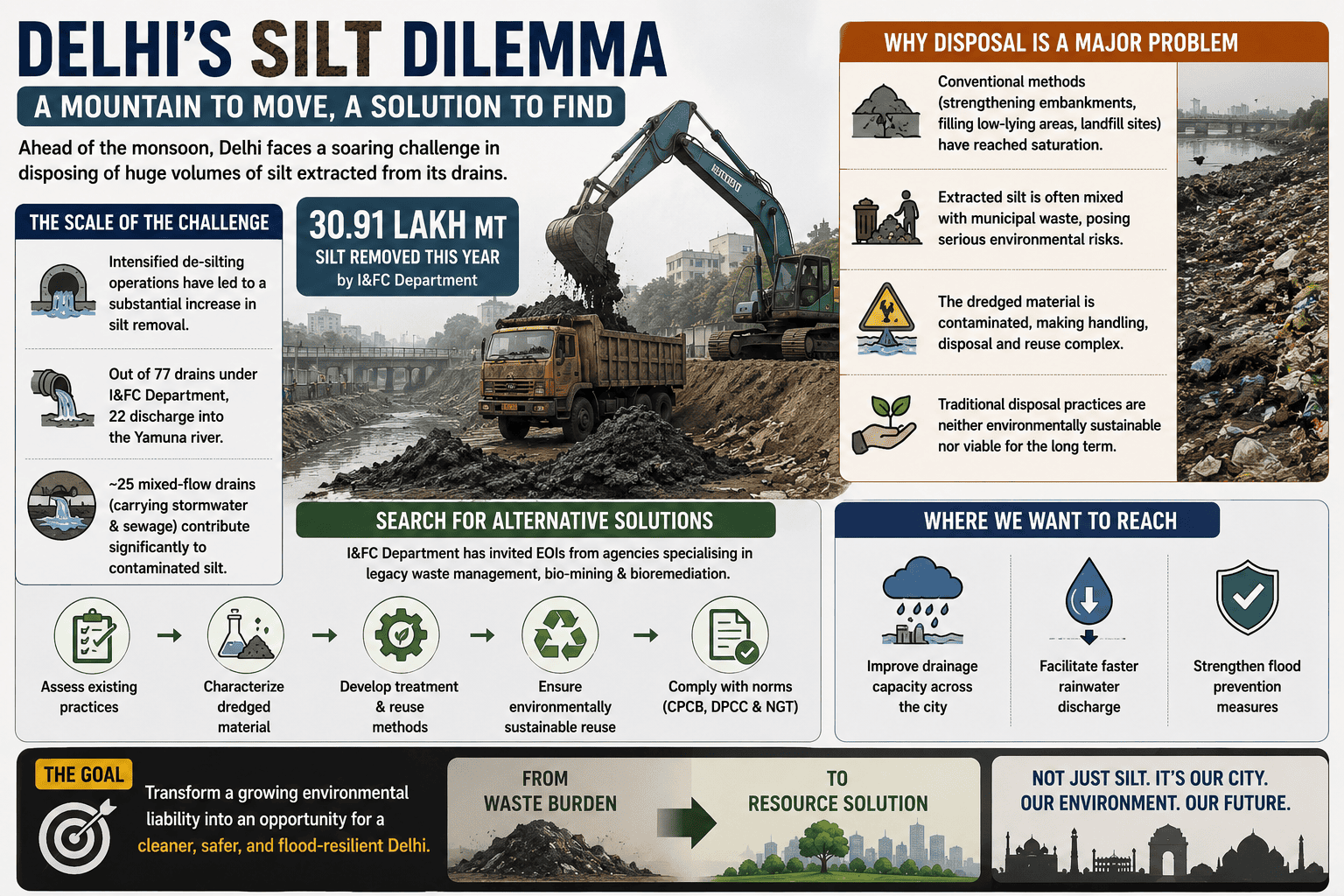
- Intensified de-silting operations have led to a substantial increase in silt removal, with the Irrigation and Flood Control (I&FC) Department removing 30.91 lakh MT this year.
- Conventional disposal methods, such as strengthening embankments, filling low-lying areas, and using landfill sites, have reached saturation.
- The extracted silt is often mixed with municipal waste, posing serious environmental risks and complicating disposal.
- The I&FC Department has invited Expressions of Interest (EOIs) from agencies specializing in legacy waste management, bio-mining, and bioremediation to find alternative solutions.
Delhi Silt.png
Detailed Insights:
- The problem is particularly acute because the dredged material is contaminated, making its handling, disposal, and reuse complex.
- Out of 77 drains under the I&FC Department, 22 discharge into the Yamuna river, highlighting the potential for river pollution.
- Approximately 25 mixed-flow drains, carrying both stormwater and sewage, contribute significantly to the contaminated silt.
- Traditional disposal practices are deemed neither environmentally sustainable nor viable for the long term due to saturated sites.
- The search for alternative methods includes assessing existing practices, characterizing dredged material, and developing treatment and reuse methods.
- Compliance with norms prescribed by the Central Pollution Control Board (CPCB), Delhi Pollution Control Committee (DPCC), and the National Green Tribunal (NGT) is a key requirement for new solutions.
- The de-silting drive aims to substantially improve drainage capacity, facilitate faster rainwater discharge, and strengthen flood prevention measures across the city.
Key Concepts Involved:
- De-silting: The process of removing accumulated silt and debris from drains and water bodies to improve their flow capacity.
- Bio-mining: A process of excavating old waste from landfills and separating it into different components for recycling, energy recovery, or safe disposal.
- Bioremediation: The use of living organisms, such as microbes, to remove pollutants, contaminants, and toxins from soil or water.
- Expressions of Interest (EOIs): A formal request by an organization for interested parties to submit proposals or demonstrate their capability for a project or service.

SuperKalam is your personal mentor for UPSC preparation, guiding you at every step of the exam journey.
Download the App


STUDY RESOURCES
CONTACT US
ⓒ Snapstack Technologies Private Limited