GS 2: GovernanceGS 3: Science & TechnologyGS 2: International RelationsPrelims
Skip travel to 3 African nations: govt. says amid Ebola outbreak, Pg12
India issues travel advisory for DRC, Uganda, South Sudan amid Ebola outbreak; implements strict screening at international gateways.
Practice MCQs
753 Students attempted
Key Highlights:
- The Indian government has advised against non-essential travel to the Democratic Republic of the Congo (DRC), Uganda, and South Sudan due to the Ebola outbreak.
- The advisory was issued by the Union Health Ministry on Saturday following the WHO's declaration of the outbreak as a "global public health emergency".
- The Directorate General of Health Services (DGHS) has implemented strict screening at major international entry points.
- Inbound passengers from affected areas must self-monitor for 21 days and seek immediate medical attention if symptoms appear.
Detailed Insights:
- The Ebola outbreak in central Africa prompted the WHO to declare a global health emergency, leading to international concern and travel advisories.
- DGHS is ensuring that passengers are screened thoroughly at international gateways to prevent the import of Ebola cases into India.
- The 21-day self-monitoring requirement is crucial because the incubation period for Ebola can be up to 21 days, allowing early detection of potential cases.
- This advisory aligns with international health regulations aimed at containing the spread of infectious diseases across borders and protecting public health.
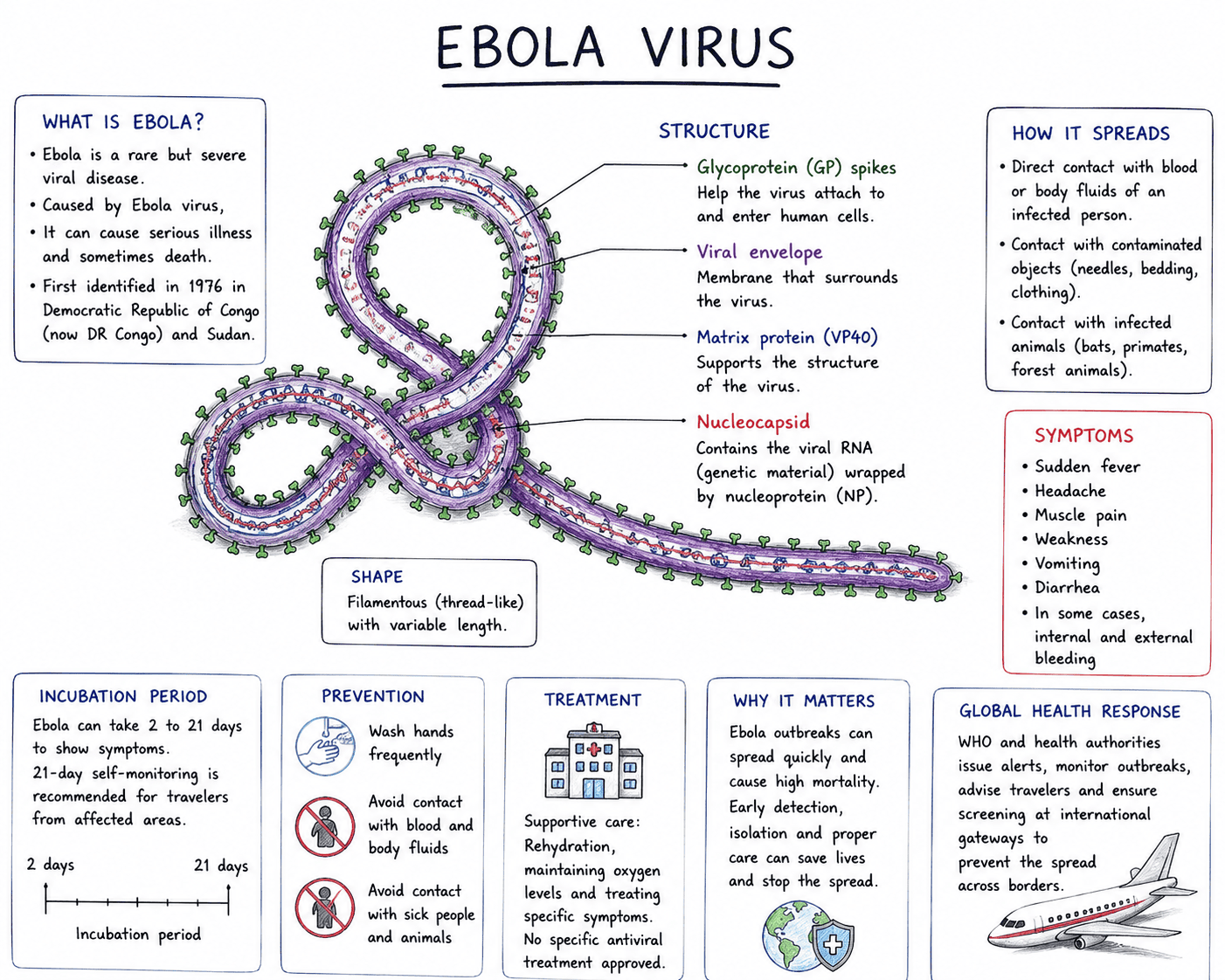
Ebola.png
Key Concepts Involved:
- Ebola: A rare and deadly disease caused by infection with one of the Ebola virus strains, affecting both humans and nonhuman primates.
- Global Public Health Emergency: A declaration by the WHO for an extraordinary event that constitutes a public health risk to other states through the international spread of disease.
- Incubation Period: The time interval between exposure to an infectious agent and the appearance of the first signs and symptoms of disease.
Previous7/7

SuperKalam is your personal mentor for UPSC preparation, guiding you at every step of the exam journey.
Download the App


STUDY RESOURCES
CONTACT US
ⓒ Snapstack Technologies Private Limited