GS 2: PolityGS 2: GovernanceGS 2: Social Justice
Coerced consent, Pg6
Supreme Court's stance on Section 124A raises concerns about coerced consent and prolonged detention for accused individuals, impacting judicial agency.
Practice MCQs
753 Students attempted
Key Highlights:
- In May 2022, the Supreme Court directed governments to refrain from registering new FIRs under Section 124A (sedition) of the IPC, during S.G. Vombatkere vs Union of India.
- Section 124A was effectively replaced by Section 152 of the Bharatiya Nyaya Sanhita (BNS) in 2024, increasing the minimum sentence to seven years.
- In February 2026, the Chief Justice of India noted that the Centre's 2022 promise to review Section 124A was not binding on Parliament.
- On May 21, 2026, the Supreme Court stated that courts may proceed on Section 124A cases if the accused consents, raising concerns about coerced consent.
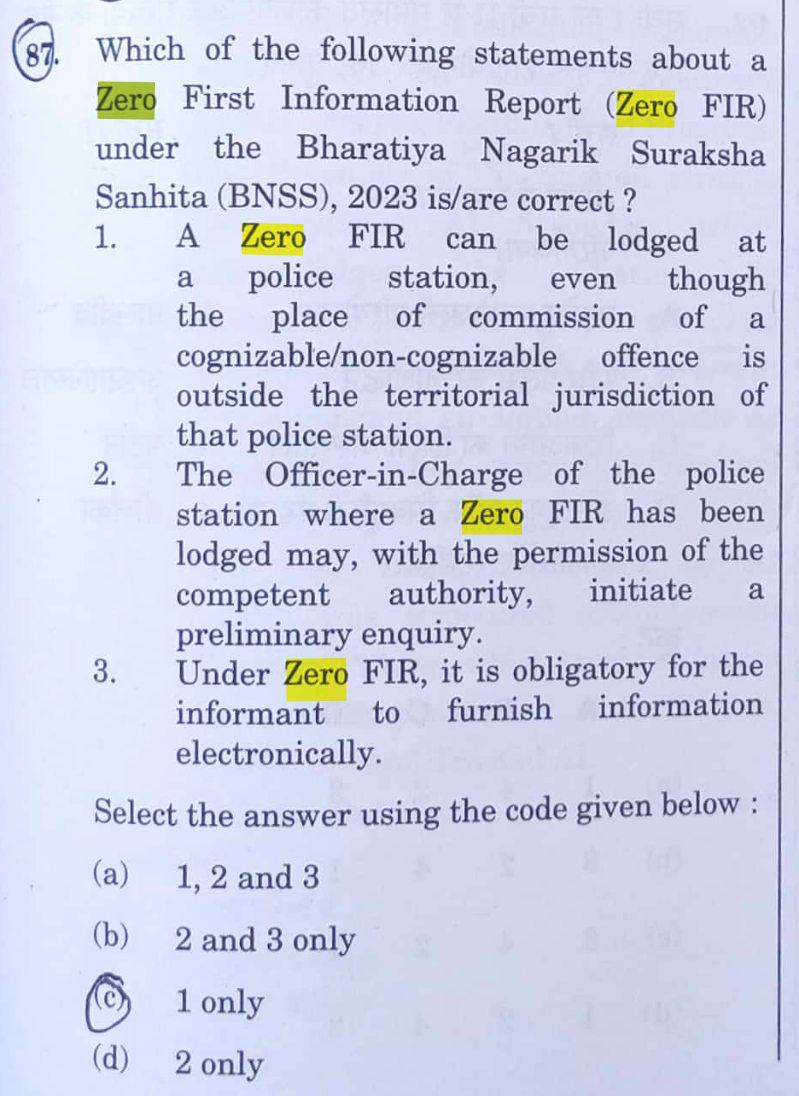
Zero FIR.jpg
Detailed Insights:
- The 2022 stay on Section 124A aimed to pause its use pending a constitutional challenge, but the accused's consent to trial may be influenced by potential prolonged delays if they refuse.
- S.G. Vombatkere case intended bail as a remedy for frozen trials, but the May 2026 clarification contrasts with the principle of 'bail is the rule' reinforced in Syed Iftikhar Andrabi.
- The 2022 stay sought to annul the chilling effect of sedition charges on free speech; however, the current situation may lead to unequal access to liberty based on the capacity to litigate.
- The state might have a perverse incentive to prolong uncertainty in cases involving constitutionally contested offenses if accused persons remain incarcerated.
Key Concepts Involved:
- Sedition: Conduct or speech inciting rebellion against the authority of a state.
- Coerced Consent: Agreement obtained through force, threat, or undue influence.
- Presumption of Bail: The principle that an accused person is entitled to release on bail unless there are sufficient reasons to detain them.

SuperKalam is your personal mentor for UPSC preparation, guiding you at every step of the exam journey.
Download the App


STUDY RESOURCES
CONTACT US
ⓒ Snapstack Technologies Private Limited