GS 3: Environment & EcologyGS 3: EconomyPrelims
Incremental change, Pg8
India's CAFE-III norms dilute emission targets via credits, potentially hindering EV transition and climate goals despite headline reductions.
Practice MCQs
746 Students attempted
Key Highlights:
- In mid-April, Indian automakers agreed to new fuel efficiency and emissions reduction targets proposed by the Bureau of Energy Efficiency (BEE).
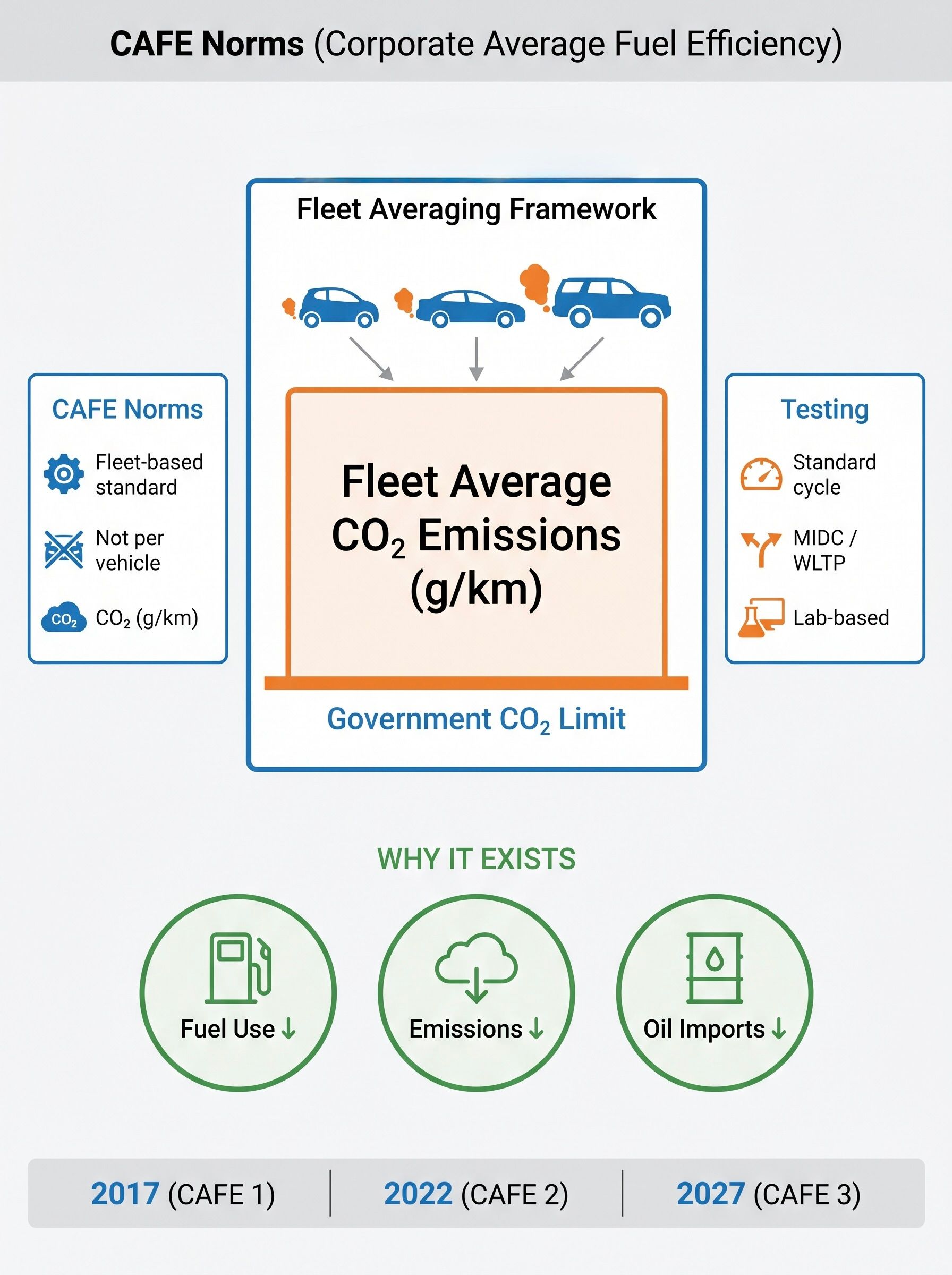
- The new Corporate Average Fuel Efficiency (CAFE) targets aim to reduce emissions from 113 grams of CO2 per kilometer to 77 g/km by 2031-32.
- The CAFE-III cycle is proposed to run from April 2027 to March 2032.
- The framework includes credits for higher ethanol blending and incremental efficiency technologies.
Detailed Insights:
- The earlier proposal had created a carve-out for small cars, accounting for about 14%-15% of passenger vehicle sales, delaying the shift to cleaner fuels and technologies.
- The explicit carve-out for small cars has been removed, but replaced by alternative compliance pathways like credits for E85-compatible vehicles.
- The BEE has proposed super-credits, where technologies like Battery Electric Vehicles (BEV) count multiple times towards compliance.
- Compliance will be assessed over three-year blocks rather than annually, reducing immediate pressure on manufacturers.
- The policy may be too weak to drive meaningful change in climate mitigation, India’s energy security, and macroeconomic stability.
Key Concepts Involved:
- Corporate Average Fuel Efficiency (CAFE): Regulations that set standards for the average fuel efficiency of a manufacturer's fleet of vehicles.
- Bureau of Energy Efficiency (BEE): An agency of the Government of India, responsible for promoting energy efficiency and conservation.
- Ethanol Blending: Mixing ethanol with gasoline to reduce greenhouse gas emissions and dependence on fossil fuels.
CAFE

SuperKalam is your personal mentor for UPSC preparation, guiding you at every step of the exam journey.
Download the App


STUDY RESOURCES
CONTACT US
ⓒ Snapstack Technologies Private Limited