GS 2: International RelationsGS 3: Economy
Trump discusses Strait of Hormuz in call with Modi, Pg1
Trump and Modi discuss West Asia conflict, Strait of Hormuz security amid rising energy concerns and global economic instability.
Practice MCQs
739 Students attempted
Key Highlights:
- President Trump and Prime Minister Modi discussed the West Asia conflict and the Strait of Hormuz on Tuesday, marking their first conversation since the conflict began on February 28.
- PM Modi emphasized India's support for de-escalation and the importance of keeping the Strait of Hormuz open for global energy security.
- The conflict has resulted in the death of at least six Indians and has impacted the free movement of energy resources.
- The disruption in the global energy market has led to high crude prices and uncertainty about LPG availability in India.
Detailed Insights:
- The conflict in West Asia, triggered by attacks on Iran's energy hubs by the U.S. and Israel, has prompted retaliatory strikes by Iran, disrupting the global energy market.
- India is actively engaged with both Russia and Iran to ensure continued energy supply and transit through the Strait of Hormuz.
- The conversation between President Trump and PM Modi highlights the global concern over the stability of the Strait of Hormuz and its impact on energy supplies.
- India has been closely monitoring mediation efforts, including those involving Pakistan, aimed at achieving a ceasefire between the U.S., Israel, and Iran.
Key Concepts Involved:
- Strait of Hormuz: A narrow waterway vital for global oil transit, connecting the Persian Gulf to the Gulf of Oman and the Arabian Sea.
- De-escalation: The process of reducing the intensity of a conflict or crisis.
- Energy Security: Measures taken by a country to assure adequate and reliable energy supplies.
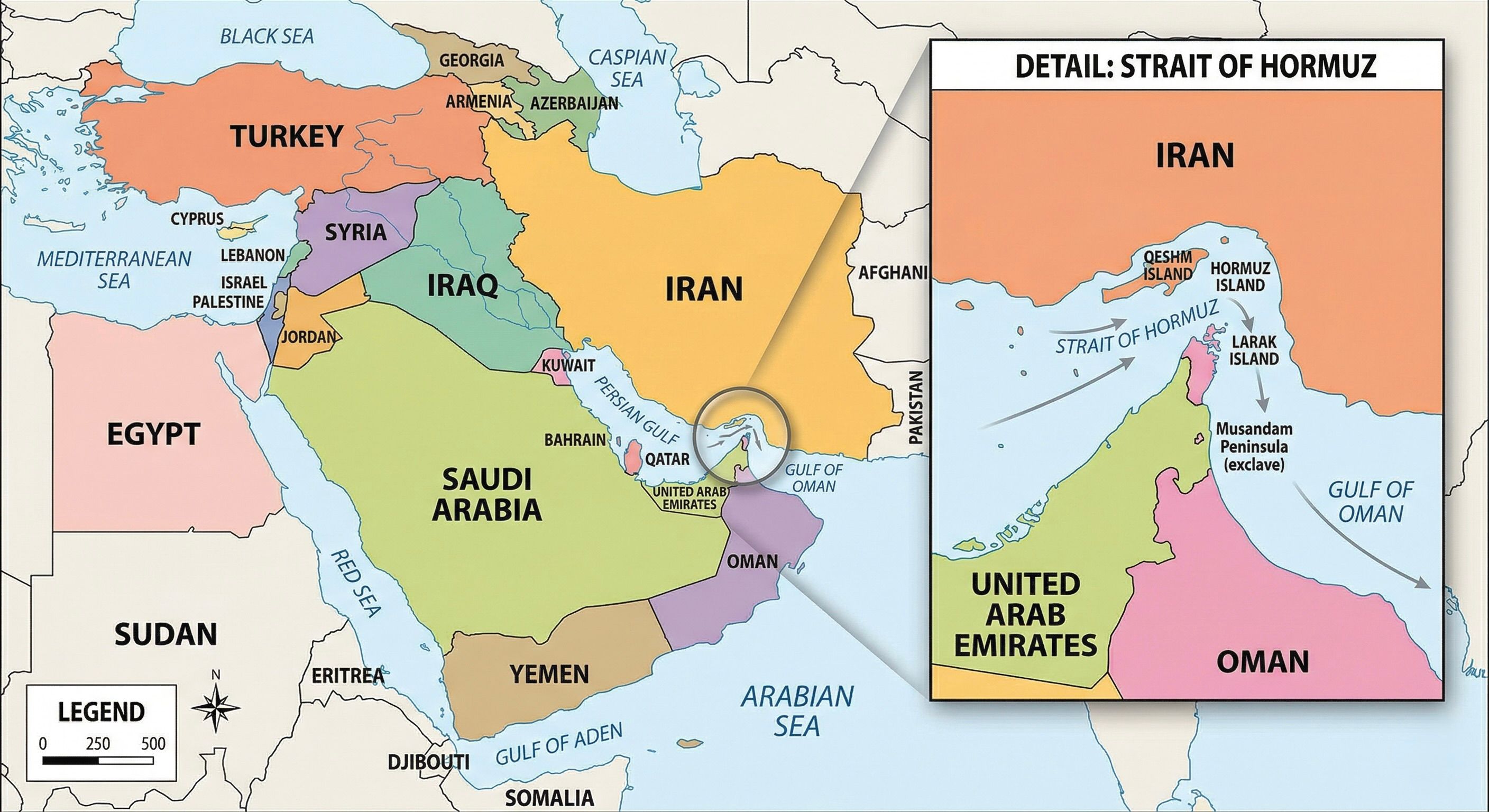
Strait of Hormuz

SuperKalam is your personal mentor for UPSC preparation, guiding you at every step of the exam journey.
Download the App


STUDY RESOURCES
CONTACT US
ⓒ Snapstack Technologies Private Limited