GS 2: PolityGS 2: Social JusticeEthicsPrelims
Harish Rana, first in country to get passive euthanasia nod, dies, Pg1
Harish Rana, India's first passive euthanasia recipient, dies after SC order; landmark case expands patient rights and eases procedures.
Practice MCQs
739 Students attempted
Key Highlights:
- Harish Rana, the first Indian granted permission for passive euthanasia by the Supreme Court, passed away at AIIMS New Delhi on March 24, 2026.
- Rana, 31, had been in a coma since a 2013 accident, remaining in a permanent vegetative state for 13 years.
- The Supreme Court permitted the withdrawal of life-sustaining treatment on March 11, 2026, leading to his transfer to palliative care.
- The case sets a precedent, building upon the 2018 Common Cause v. Union of India ruling that recognized passive euthanasia.
Detailed Insights:
- Harish Rana's condition necessitated constant care, including feeding through a gastrostomy tube, physiotherapy, and prevention of bedsores.
- The Supreme Court's decision eased procedural requirements for passive euthanasia, extending the principles to patients receiving care at home and reducing court intervention.
- Passive euthanasia involves withdrawing life-sustaining treatment and allowing death to occur naturally with palliative care, while active euthanasia remains illegal in India.
- The SC order in Harish’s case expanded on its 2018 ruling, further defining the legal and ethical framework surrounding end-of-life care in India.
Key Concepts Involved:
- Passive Euthanasia: Withholding or withdrawing life-sustaining treatment, allowing death to occur naturally.
- Active Euthanasia: Administration of a lethal substance to end life, which is illegal in India.
- Permanent Vegetative State: A state of severely impaired consciousness with no awareness of self or environment.
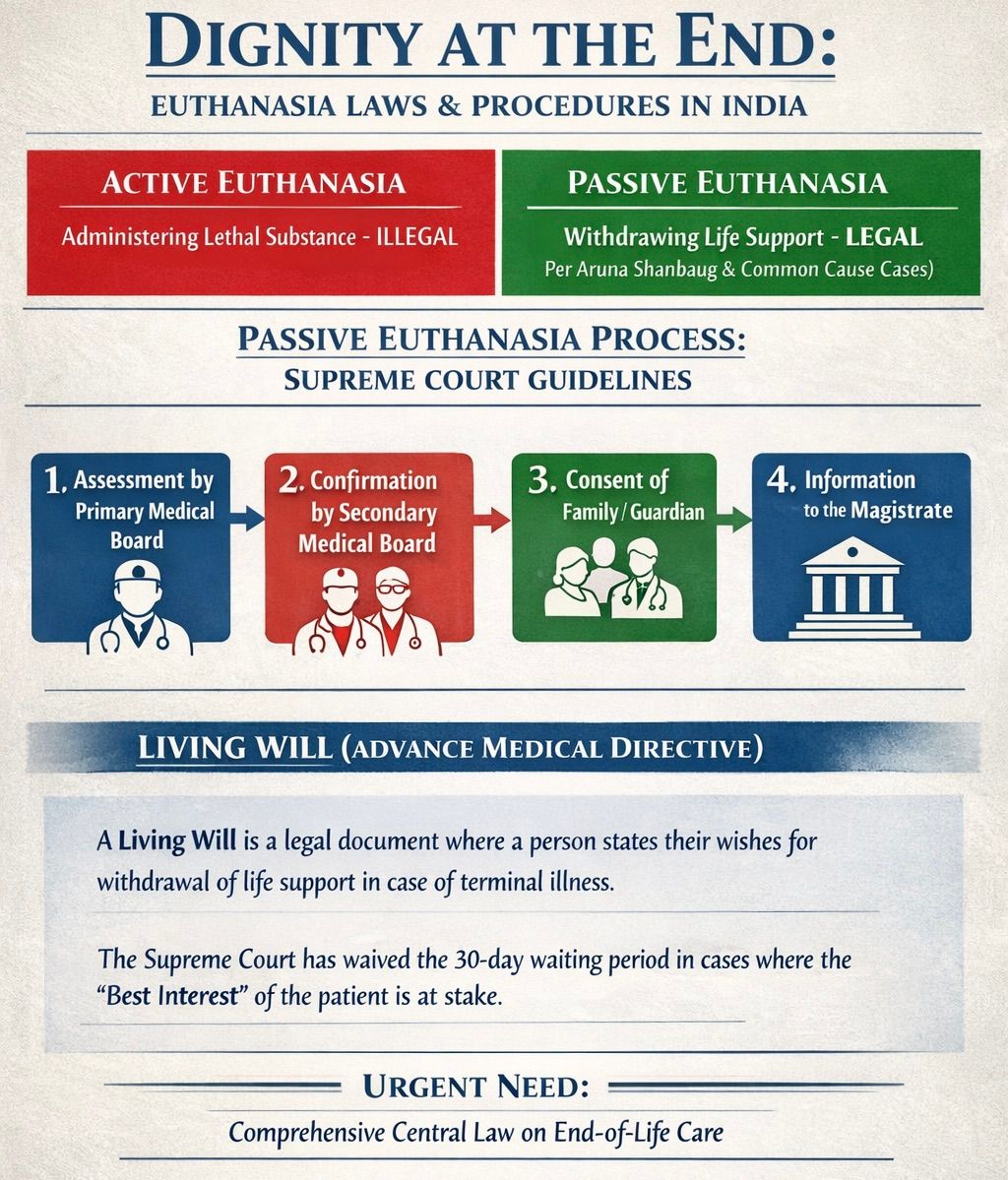
Euthanasia

SuperKalam is your personal mentor for UPSC preparation, guiding you at every step of the exam journey.
Download the App


STUDY RESOURCES
CONTACT US
ⓒ Snapstack Technologies Private Limited