GS 3: Science & TechnologyPrelims
Virus remnants in DNA help ‘kickstart’ human life, Pg14
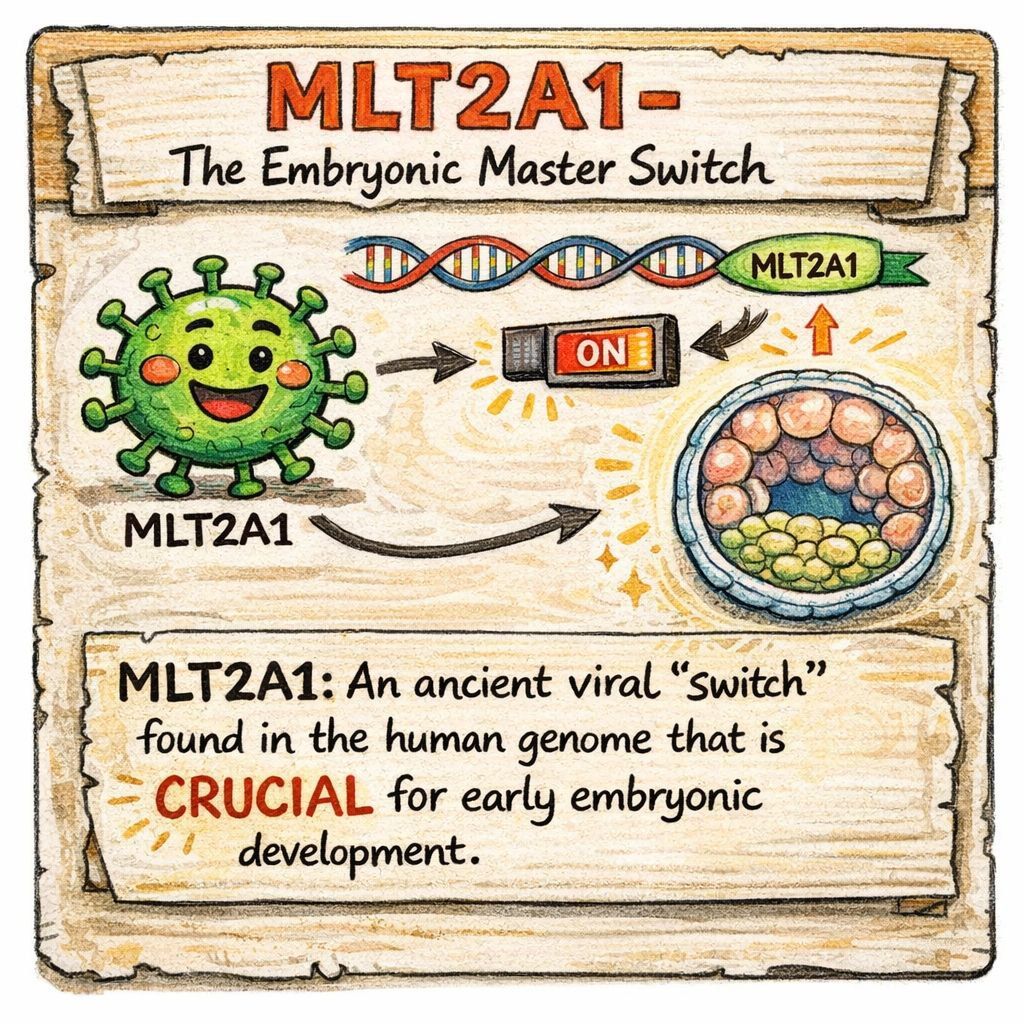
Ancient virus remnants in human DNA, MLT2A1, discovered to be crucial for kickstarting embryonic gene activation and development.
Practice MCQs
724 Students attempted
Key Highlights:
- Researchers discovered that remnants of ancient viruses in human DNA are essential for initiating human life.
- A viral relic called MLT2A1 assists in activating the embryo's genes, which is crucial for its survival.
- MLT2A1 creates hybrid RNA molecules that target genes and recruit proteins to activate them.
- Without MLT2A1, the gene activation process fails, preventing embryo development.
- This discovery could aid doctors in identifying healthy embryos during fertility treatments.
Detailed Insights:
- The human embryo needs to activate its own genes at a certain stage to ensure survival.
- MLT2A1, a viral relic, facilitates this process by producing hybrid RNA molecules.
- These hybrid RNA molecules have one end that locates specific genes and another end that attracts proteins to activate these genes.
- The failure of MLT2A1 to function correctly leads to the failure of the gene activation process, which halts embryo development.
- Identifying the role of MLT2A1 can help improve the selection of healthy embryos in fertility treatments, potentially increasing success rates.
MLT2A1.jpg
Scientific/Technical Concepts Involved:
- DNA (Deoxyribonucleic Acid): The hereditary material in humans and almost all other organisms that carries genetic instructions.
- RNA (Ribonucleic Acid): A molecule similar to DNA that plays a crucial role in gene expression.
- Gene Expression: The process by which information from a gene is used in the synthesis of a functional gene product, such as a protein.

SuperKalam is your personal mentor for UPSC preparation, guiding you at every step of the exam journey.
Download the App


STUDY RESOURCES
CONTACT US
ⓒ Snapstack Technologies Private Limited