GS 3: EconomyGS 1: Indian GeographyGS 2: GovernancePrelims
Sagarmala Programme, Pg1
Sagarmala Programme expands India's port connectivity with over 7,100 km of new infrastructure, boosting coastal development and trade.
Practice MCQs
753 Students attempted
Key Highlights:
- The Sagarmala Programme was approved by the Union Cabinet in March 2015 to promote port-led development across India.
- It aims to leverage India's 7,500 km long coastline and 14,500 km of potentially navigable waterways to reduce logistics costs for domestic and EXIM cargo.
- The program focuses on enhancing port connectivity infrastructure, with over 7,100 km of such infrastructure identified.
- It is implemented by the Ministry of Ports, Shipping and Waterways.
- As of March 2026, 315 projects worth ₹1.57 lakh crore have been completed out of 845 identified projects estimated at ₹6.06 lakh crore.
- The program has contributed to a 118% growth in coastal shipping and a 700% surge in inland waterway cargo movement over the last decade.
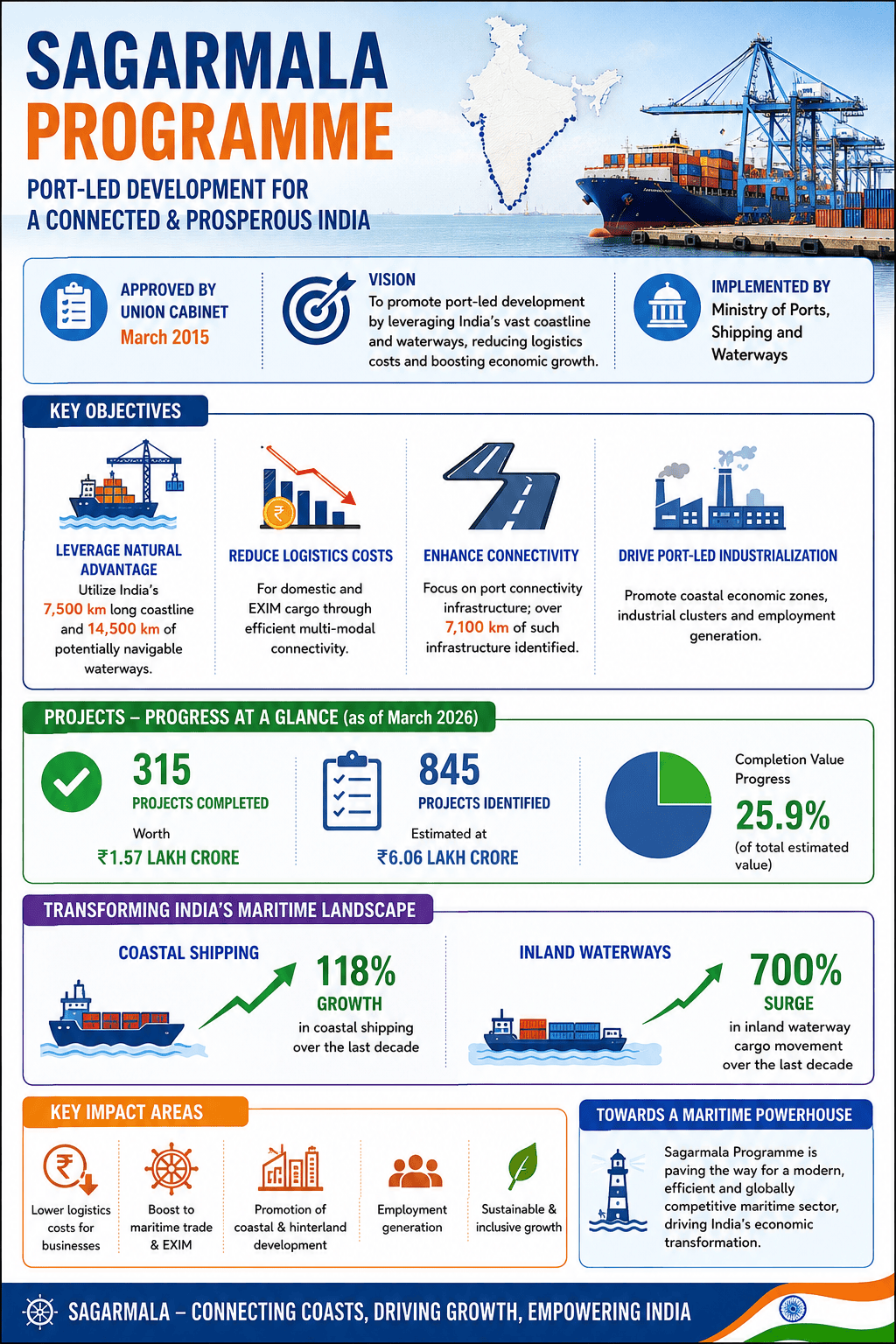
Sagarmala.png
Detailed Insights:
- The Sagarmala Programme seeks to transform India's maritime sector by modernizing ports, promoting port-led industrialization, and improving coastal and hinterland connectivity.
- Its vision is to reduce logistics costs and time for cargo movement with minimal infrastructure investment, thereby improving the competitiveness of Indian exports.
- The program is structured around five pillars: Port Modernization & New Port Development, Port Connectivity Enhancement, Port-led Industrialization, Coastal Community Development, and Coastal Shipping & Inland Water Transport.
- The National Sagarmala Apex Committee (NSAC) provides overall policy guidance and reviews implementation progress.
- The Sagarmala Development Company Limited (SDCL), now restructured as Sagarmala Finance Corporation Limited (SMFCL), provides funding support for projects.
- Achievements include a significant reduction in vessel turnaround time from 96 hours in 2014 to 49.5 hours in 2025.
- Nine Indian ports are now ranked among the world's top 100, with Visakhapatnam in the top 20 container ports globally.
- Sagarmala 2.0 is envisioned as the next phase, aligning with Maritime India Vision 2030 and Maritime Amrit Kaal Vision 2047, with a focus on shipbuilding, repair, recycling, and port modernization.
- The program has an estimated potential to create around 1 crore jobs, including 40 lakh direct and 60 lakh indirect employment opportunities.
Key Concepts Involved:
- Port-led Development: An economic strategy leveraging port infrastructure and connectivity to drive industrialization, trade, and overall economic growth.
- Coastal Economic Zones (CEZs): Industrial clusters developed near ports to reduce logistics costs and enhance manufacturing and trade activities.
- Multimodal Connectivity: The integration of various transport modes like road, rail, and waterways to ensure efficient and cost-effective movement of cargo to and from ports.

SuperKalam is your personal mentor for UPSC preparation, guiding you at every step of the exam journey.
Download the App


STUDY RESOURCES
CONTACT US
ⓒ Snapstack Technologies Private Limited