GS 2: International RelationsGS 3: EconomyPrelims
Iran-U.S. pact has helped in energy, fertilizer flow: govt., Pg18
Iran-U.S. 14-point MoU reopens Strait of Hormuz, ensuring vital energy and fertilizer supplies for India, says MEA.
Practice MCQs
753 Students attempted
Key Highlights:
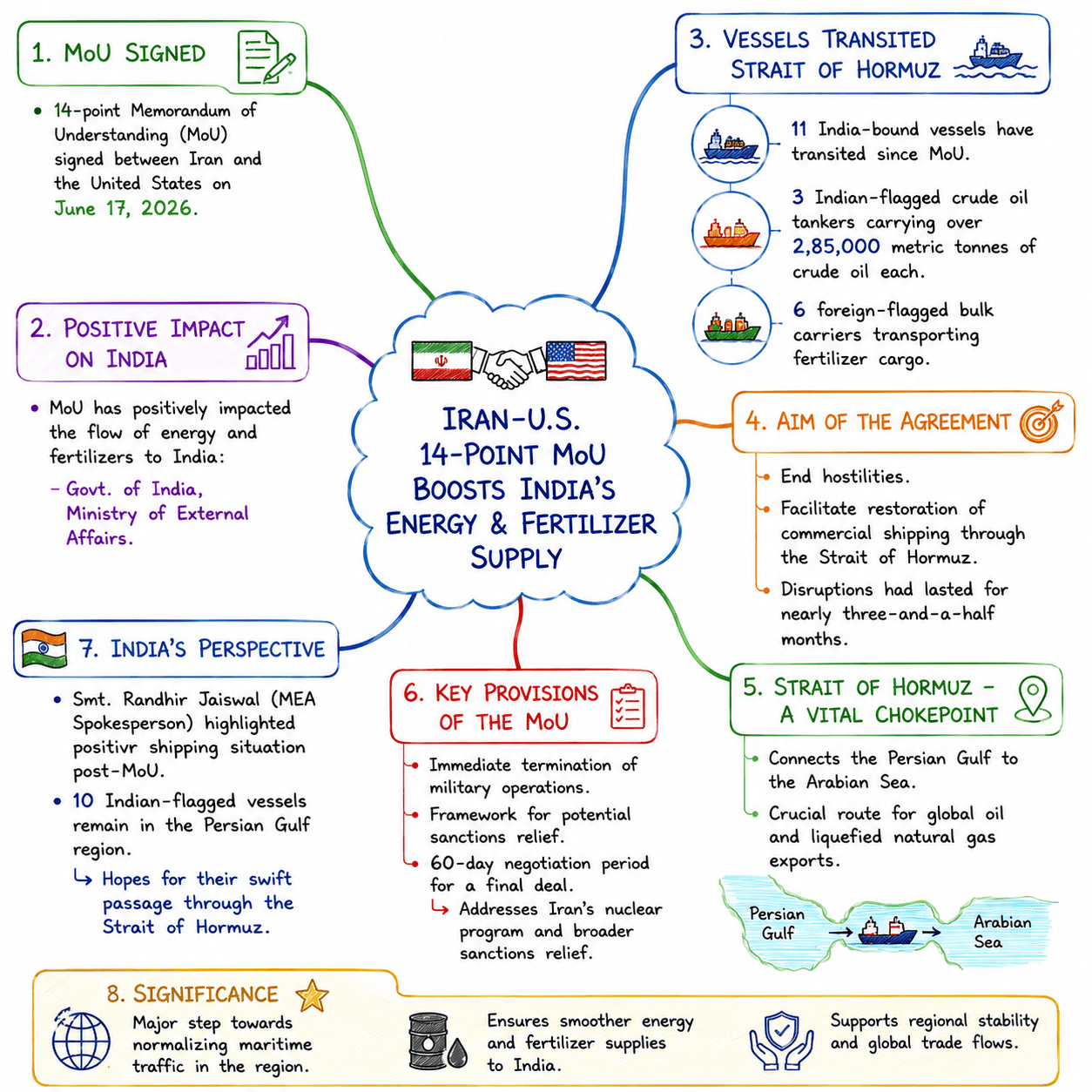
- A 14-point Memorandum of Understanding (MoU) was signed between Iran and the United States on June 17, 2026.
- The MoU has positively impacted the flow of energy and fertilizers to India, according to India's External Affairs Ministry.
- Since the signing, 11 India-bound vessels, including three Indian-flagged crude oil tankers carrying over 2,85,000 metric tonnes of crude oil each, have transited the Strait of Hormuz.
- Six foreign-flagged bulk carriers, transporting fertilizer cargo, also passed through the strait.
- The agreement aims to end hostilities and facilitate the restoration of commercial shipping through the Strait of Hormuz, which had faced disruptions for nearly three-and-a-half months.
US-Iran benefit for India.png
Detailed Insights:
- The MoU between the U.S. and Iran includes provisions for the immediate termination of military operations and a framework for potential sanctions relief.
- This development is seen as a significant step towards normalizing maritime traffic in the critical Strait of Hormuz.
- The Strait of Hormuz is a vital chokepoint connecting the Persian Gulf to the Arabian Sea, crucial for global oil and liquefied natural gas exports.
- India's External Affairs Ministry spokesperson, Randhir Jaiswal, highlighted the positive shipping situation in the days following the MoU.
- Ten Indian-flagged vessels remain in the Persian Gulf region, with hopes for their swift passage through the Strait of Hormuz.
- The MoU also sets a 60-day negotiation period for a final deal, addressing Iran's nuclear program and broader sanctions relief.
Key Concepts Involved:
- Memorandum of Understanding (MoU): A formal agreement between two or more parties outlining their intentions and mutual understanding on a particular matter.
- Strait of Hormuz: A narrow, strategically important waterway connecting the Persian Gulf to the Gulf of Oman and the Arabian Sea, vital for global oil shipments.
- External Affairs Ministry (MEA): The government agency responsible for India's foreign policy and international relations.

SuperKalam is your personal mentor for UPSC preparation, guiding you at every step of the exam journey.
Download the App


STUDY RESOURCES
CONTACT US
ⓒ Snapstack Technologies Private Limited