GS 2: PolityGS 2: GovernancePrelims
How has the BCCI resisted RTI scrutiny?, Pg14
CIC rules BCCI not a 'public authority' under RTI Act, sparking debate on transparency and accountability in sports governance.
Practice MCQs
746 Students attempted
Key Highlights:
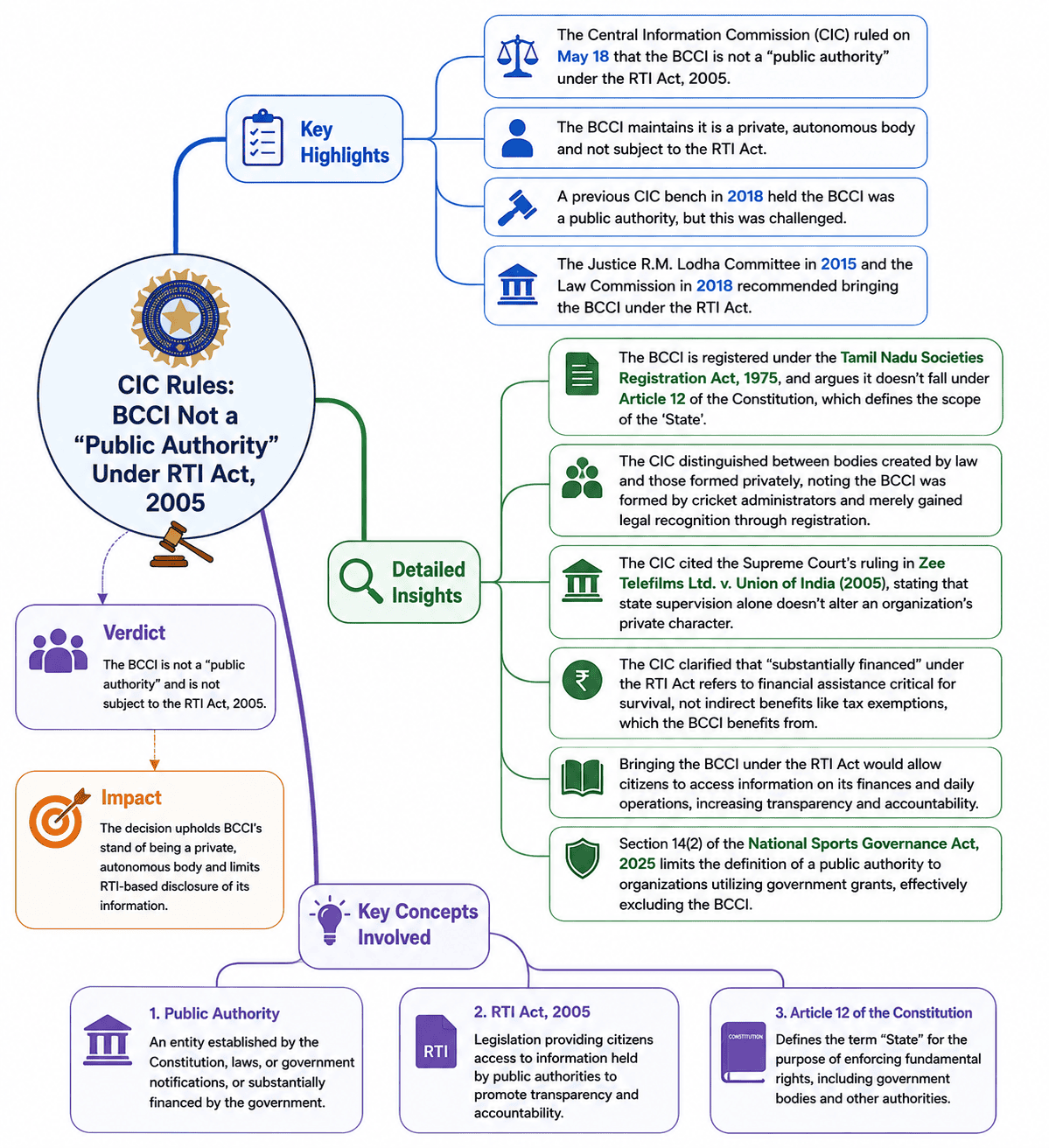
- The Central Information Commission (CIC) ruled on May 18 that the BCCI is not a "public authority" under the RTI Act, 2005.
- The BCCI maintains it is a private, autonomous body and not subject to the RTI Act.
- A previous CIC bench in 2018 held the BCCI was a public authority, but this was challenged.
- The Justice R.M. Lodha Committee in 2015 and the Law Commission in 2018 recommended bringing the BCCI under the RTI Act.
Detailed Insights:
- The BCCI is registered under the Tamil Nadu Societies Registration Act, 1975, and argues it doesn't fall under Article 12 of the Constitution, which defines the scope of the 'State'.
- The CIC distinguished between bodies created by law and those formed privately, noting the BCCI was formed by cricket administrators and merely gained legal recognition through registration.
- The CIC cited the Supreme Court’s ruling in Zee Telefilms Ltd. v. Union of India (2005), stating that state supervision alone doesn't alter an organization's private character.
- The CIC clarified that "substantially financed" under the RTI Act refers to financial assistance critical for survival, not indirect benefits like tax exemptions, which the BCCI benefits from.
- Bringing the BCCI under the RTI Act would allow citizens to access information on its finances and daily operations, increasing transparency and accountability.
- Section 14(2) of the National Sports Governance Act, 2025 limits the definition of a public authority to organisations utilising government grants, effectively excluding the BCCI.
CIC.png
Key Concepts Involved:
- Public Authority: An entity established by the Constitution, laws, or government notifications, or substantially financed by the government.
- RTI Act, 2005: Legislation providing citizens access to information held by public authorities to promote transparency and accountability.
- Article 12 of the Constitution: Defines the term "State" for the purpose of enforcing fundamental rights, including government bodies and other authorities.

SuperKalam is your personal mentor for UPSC preparation, guiding you at every step of the exam journey.
Download the App


STUDY RESOURCES
CONTACT US
ⓒ Snapstack Technologies Private Limited