GS 3: EconomyGS 3: Environment & EcologyPrelims
Why India must step on the gas with ethanol, Pg14
India considers aggressive ethanol blending strategy amid oil shocks, aiming for E30/E100 fuels and flex-fuel vehicles.
Practice MCQs
731 Students attempted
Key Highlights:
- In 2024-25, India achieved an average ethanol blending ratio of 19.2% in petrol, supplying 1,039 crore litres of ethanol to Oil Marketing Companies (OMCs).
- Ethanol production in India has diversified from solely C-heavy molasses to include B-heavy molasses, direct sugarcane juice/syrup, rice, maize, and damaged foodgrains.
- OMCs have contracted 1,058 crore litres of ethanol for the current supply year, with 766 crore litres from grains and 292 crore litres from sugarcane-based feedstocks.
- The Indian government is urged to increase the ethanol blending mandate from 20% to 30% and incentivize the production of flex-fuel vehicles.
Detailed Insights:
- Brazil's Proalcool programme, initiated in 1975, serves as a model for India, demonstrating how to reduce dependence on imported fuels through ethanol blending.
- India has witnessed three major oil shocks since 1979, highlighting the need for energy security through increased ethanol usage.
- The current taxation structure in India treats ethanol-blended petrol and pure petrol identically, necessitating a revision to bring all ethanol-blended fuels under the GST regime.
- Encouraging the production of flex-fuel vehicles and providing conversion kits for existing vehicles are crucial steps for promoting E30 and E100 fuels.
- India's surplus in sugarcane, rice, and maize presents an opportunity to significantly increase ethanol production for E-30 and E-100 fuels.
Key Concepts Involved:
- Ethanol Blending: Mixing ethanol with gasoline to reduce reliance on fossil fuels and lower emissions.
- Flex-Fuel Vehicles: Vehicles designed to run on gasoline, ethanol, or any blend of the two.
- Oil Shocks: Sudden increases in crude oil prices that can destabilize economies dependent on imports.
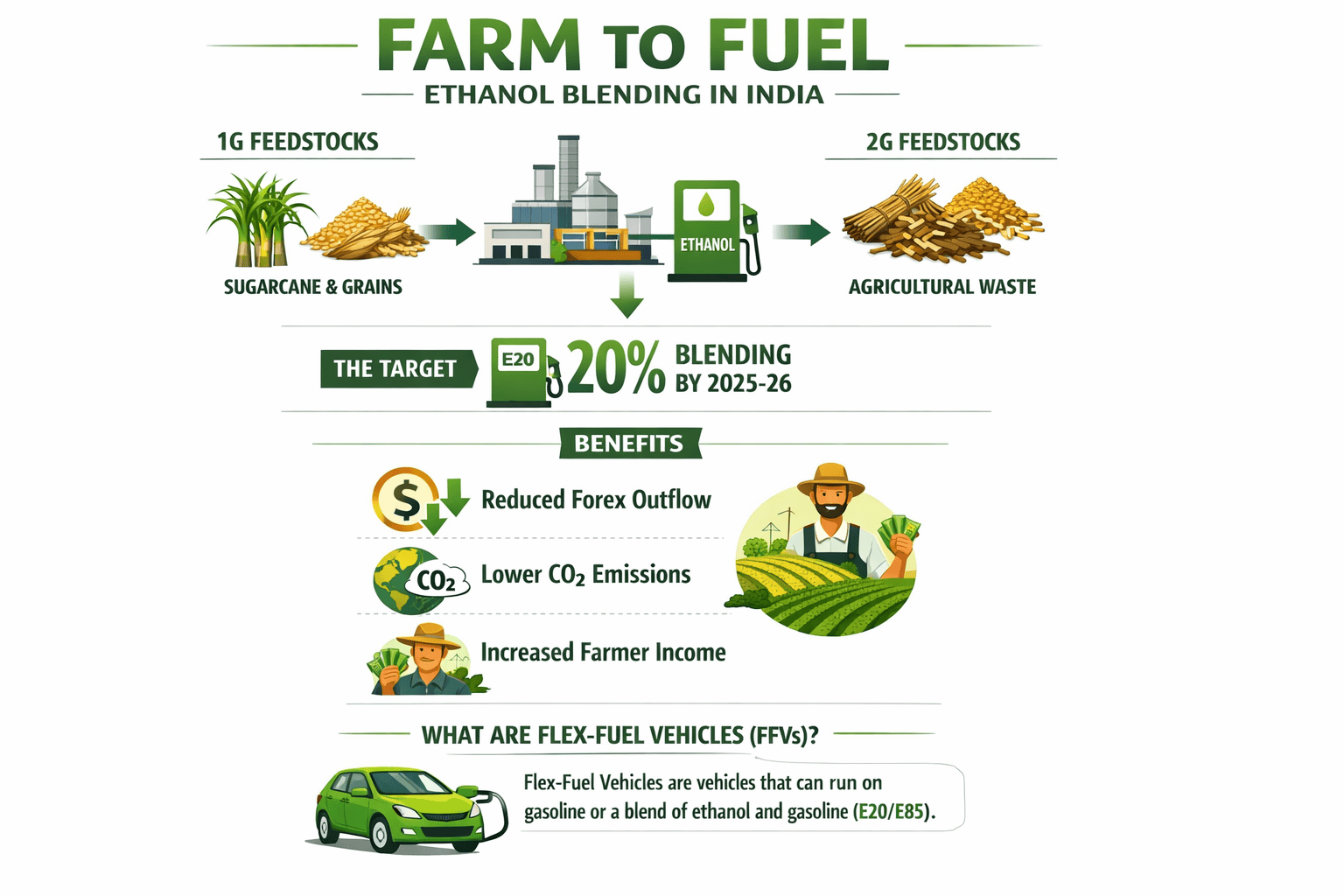
Ethanol Blending

SuperKalam is your personal mentor for UPSC preparation, guiding you at every step of the exam journey.
Download the App


STUDY RESOURCES
CONTACT US
ⓒ Snapstack Technologies Private Limited