GS 3: Environment & EcologyGS 3: Science & TechnologyGS 2: GovernancePrelims
India a big contributor to global toxicity by pesticides, PgII
India among top contributors to global pesticide toxicity, risking biodiversity; new bill aims for safer alternatives, faces scrutiny.
Practice MCQs
724 Students attempted
Key Highlights:
- India, along with China, Brazil, and the U.S., contributes nearly 70% to the world's total applied toxicity (TAT) from pesticides.
- A Science paper revealed that global pesticide risk reduction efforts are not on track, despite the UN's commitment to reduce it by 50% by 2030.
- The study calculated TAT from 2013 to 2019 across 65 countries and over 600 pesticides, finding an overall increase in toxicity.
- India uses at least 66 pesticides that are banned in other countries, according to public policy expert Narasimha Reddy Donthi.
- The Pesticides Management Bill 2025, expected to be passed in March, aims to reduce environmental risk and promote biological and traditional knowledge-based pesticides.
Detailed Insights:
- The increase in TAT was largely due to the copious use of pesticides on fruits, vegetables, maize, soybean, rice, and other cereals.
- Terrestrial arthropods, soil organisms, and fish are the most affected non-target species by pesticide toxicity.
- Pesticides are now pervasive in daily life, found in unexpected places like wall paints, incense sticks, and even temple prasad.
- The current Insecticides Act 1968 is considered obsolete as it primarily focuses on agricultural use and lacks provisions for household and other uses.
- Experts suggest India needs a long-term agricultural transformation policy that shifts away from Green Revolution packages that heavily rely on pesticides.
- The Pesticides Management Bill 2025 aims to promote biological pesticides and those based on traditional knowledge to reduce environmental risk.
- Comprehensive monitoring and regular reporting of annual data on agricultural pesticide use, broken down by active ingredient, is essential.
Key Concepts Involved:
- Total Applied Toxicity (TAT): A measure of the overall potential harm caused by pesticides to non-target species in the environment.
- Pesticides Management Bill 2025: Proposed legislation in India to regulate the import, manufacture, sale, transport, distribution, and use of pesticides.
- Green Revolution: A period of agricultural development in India that introduced high-yielding crop varieties and increased use of fertilizers and pesticides.
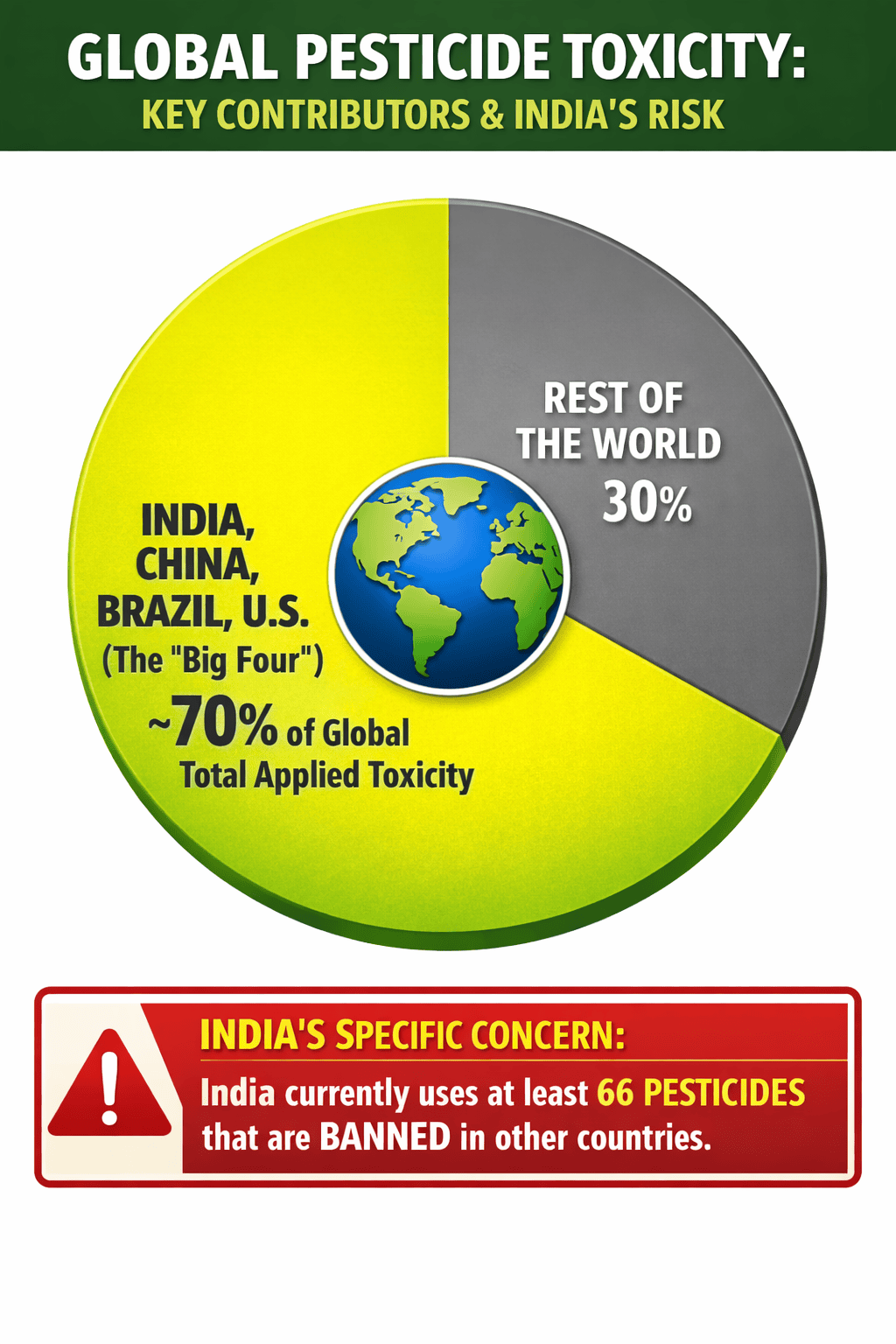
Pesticide Toxicity
Previous9/9

SuperKalam is your personal mentor for UPSC preparation, guiding you at every step of the exam journey.
Download the App


STUDY RESOURCES
CONTACT US
ⓒ Snapstack Technologies Private Limited