GS 3: Environment & EcologyGS 2: International RelationsPrelims
COP30 ends with plan for road maps to halt deforestation, curb fossil fuels, Pg1
COP30 concludes with 'Global Mutirão' agreement, focusing on deforestation, fossil fuel transition, and climate finance, despite disagreements on timelines.
Practice MCQs
775 Students attempted
Key Highlights:
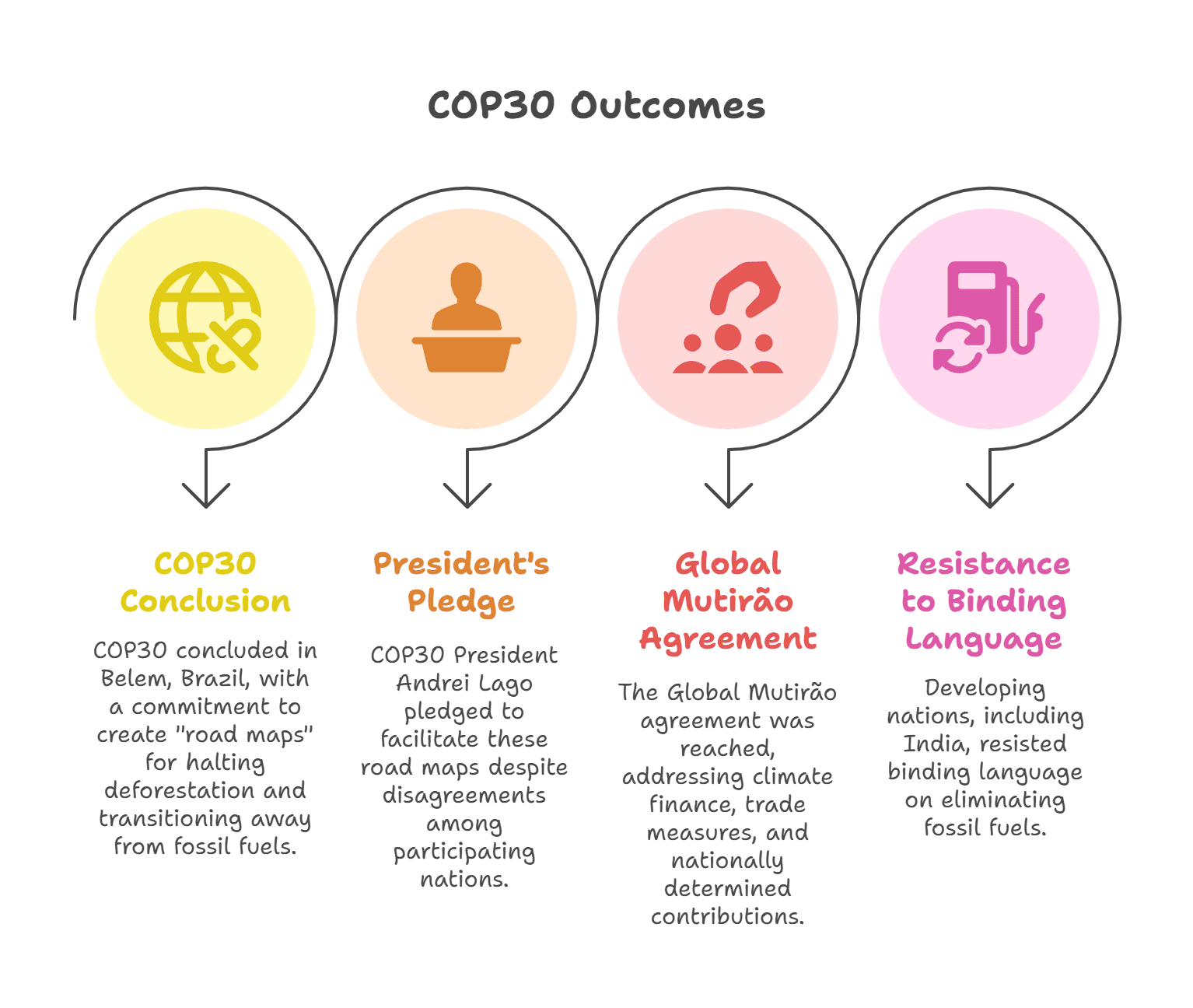
- COP30 concluded in Belem, Brazil, with a commitment to create "road maps" for halting deforestation and transitioning away from fossil fuels.
- COP30 President Andrei Lago pledged to facilitate these road maps despite disagreements among participating nations.
- The Global Mutirão agreement was reached, addressing climate finance, trade measures, and nationally determined contributions.
- Developing nations, including India, resisted binding language on eliminating fossil fuels.
COP30 Outcomes.png
Detailed Insights:
- The Global Mutirão aims to implement Article 9 of the Paris Agreement, focusing on mobilizing funds from developed countries to aid developing nations in transitioning from fossil fuels.
- Disagreements arose regarding specific timelines for eliminating fossil fuels, with developed countries advocating for it to limit global warming to 1.5°C.
- Besides Mutirão, ten major agreements were facilitated, covering topics like just transition, loss and damage, technology implementation, and a global goal on adaptation.
- The global goal on adaptation faced objections from South American countries, highlighting the challenges in achieving consensus on adaptation measures.
Key Concepts Involved:
- Nationally Determined Contributions (NDCs): Climate action plans to reduce emissions and adapt to climate impacts.
- Just Transition: Managing the shift to a low-carbon economy in a way that is equitable and inclusive.
- Loss and Damage: Addressing the impacts of climate change in vulnerable countries.

SuperKalam is your personal mentor for UPSC preparation, guiding you at every step of the exam journey.
Download the App


STUDY RESOURCES
CONTACT US
ⓒ Snapstack Technologies Private Limited