GS 3: EconomyGS 2: Social JusticeGS 2: GovernancePrelims
Economy is growing, but that isn't translating to well-being, Pg10
India's economic growth fails to uplift well-being; 30% face food deprivation, youth unemployment soars, as rising food prices erode real wages.
Practice MCQs
746 Students attempted
Key Highlights:
- India's economic growth is not adequately translating into improved well-being for a large section of the population.
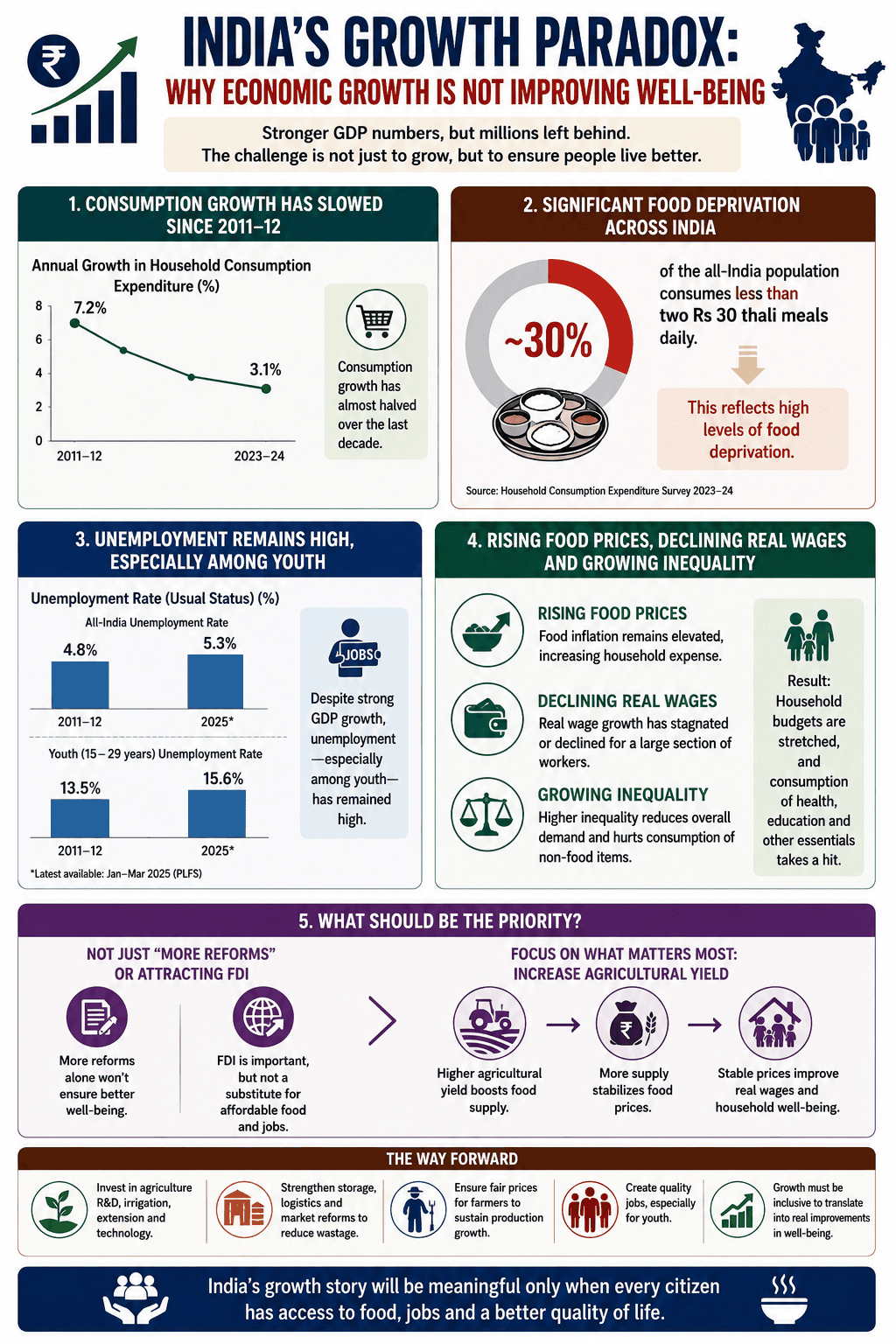
- Consumption growth has slowed since 2011-12, with the Household Consumption Expenditure Survey 2023-24 indicating significant food deprivation.
- Approximately 30% of the all-India population consumes less than two Rs 30 thali meals daily, reflecting high food deprivation.
- Unemployment rates, including youth unemployment, remained higher in 2025 compared to 2011-12, despite economic growth.
- Rising food prices have led to declining real wages and growing inequality, impacting household budgets and consumption of non-food items.
- The article suggests focusing on increasing agricultural yield to stabilize food prices rather than solely pursuing "more reforms" or attracting Foreign Direct Investment (FDI).
growth paradox.png
Detailed Insights:
- Deliberations at the Prime Minister’s Economic Advisory Council (PMEAC) have focused on sustaining growth and advancing "ease of living," but the article highlights a disconnect with actual well-being.
- National Sample Survey (NSS) household expenditure surveys consistently show a deceleration in consumption growth post-2011-12.
- Data from the UN’s Food and Agricultural Organisation (FAO) indicates that a significant portion of India's population, estimated at 50%, cannot afford a healthy diet.
- The increase in the real price of food by over 30% since 2011-12 is identified as a primary driver of declining real wages and reduced overall consumption.
- While Ease of Doing Business reforms address supply-side issues for non-agricultural activities, the current economic challenge is a demand shortage, exacerbated by high food prices.
- The article argues that rising profits, often accompanying declining real wages, tend to favor capital-intensive goods, which have a limited impact on employment generation.
Key Concepts Involved:
- Real Wages: Wages adjusted for inflation, reflecting the actual purchasing power of earnings.
- Food Deprivation: A state where individuals lack consistent access to sufficient, safe, and nutritious food for an active and healthy life.
- Ease of Living: A measure of the quality of life experienced by citizens, encompassing various economic, social, and environmental factors.
- Foreign Direct Investment (FDI): An investment made by a firm or individual in one country into business interests located in another country, establishing lasting interest and managerial influence.
- Ease of Doing Business: The relative simplicity, cost, and time required to start, operate, and wind up a business within an economy's regulatory environment.
- Prime Minister’s Economic Advisory Council (PMEAC): An independent body constituted to advise the Government of India, specifically the Prime Minister, on economic and related issues.
- Household Consumption Expenditure Survey (HCES): A survey conducted by the National Sample Survey Office (NSSO) to collect data on household spending patterns, used to assess economic well-being and update economic indicators.

SuperKalam is your personal mentor for UPSC preparation, guiding you at every step of the exam journey.
Download the App


STUDY RESOURCES
CONTACT US
ⓒ Snapstack Technologies Private Limited