GS 2: International RelationsGS 3: EconomyGS 3: Disaster Management
PM chairs meet to review impact of conflict on India, Pg1
PM Modi convenes CCS meeting amid West Asia conflict, assessing economic impact and forming GoM for mitigation strategies.
Practice MCQs
724 Students attempted
Key Highlights:
- Prime Minister Narendra Modi chaired a Cabinet Committee on Security (CCS) meeting on Sunday to assess the impact of escalating tensions in West Asia on India and to discuss mitigation strategies.
- The meeting addressed the conflict's potential effects on the global economy and India in the short, medium, and long term.
- A Group of Ministers (GoM) and a group of secretaries will be formed to address the crisis using a "whole-of-government approach".
- Discussions included diversifying import sources for key commodities like fertilizers, chemicals, pharmaceuticals, and petrochemicals.
- The committee emphasized maintaining sufficient coal stocks at power plants to meet anticipated summer power demand.
Detailed Insights:
- The CCS assessed the need to diversify sources for essential imports, particularly fertilizers, considering disruptions to natural gas imports following attacks on energy infrastructure in Qatar.
- Measures taken in recent years to maintain adequate fertilizer stocks aim to ensure timely availability and food security during the upcoming kharif season.
- Ensuring sufficient coal supply is crucial due to expected peak power demand in the summer and potential constraints on natural gas supplies resulting from the conflict.
- The "whole-of-government approach" directed by the Prime Minister seeks to integrate efforts across various sectors and stakeholders to manage the multifaceted impacts of the crisis.
- The ongoing conflict in West Asia poses a threat to energy and commodity supply routes, necessitating proactive measures to safeguard India's economic interests and essential supplies.
Key Concepts Involved:
- Cabinet Committee on Security (CCS): A body that deals with issues pertaining to national security.
- Kharif Season: The crop sowing and harvesting cycle during the monsoon.
- Food Security: The state of having reliable access to a sufficient quantity of affordable, nutritious food.
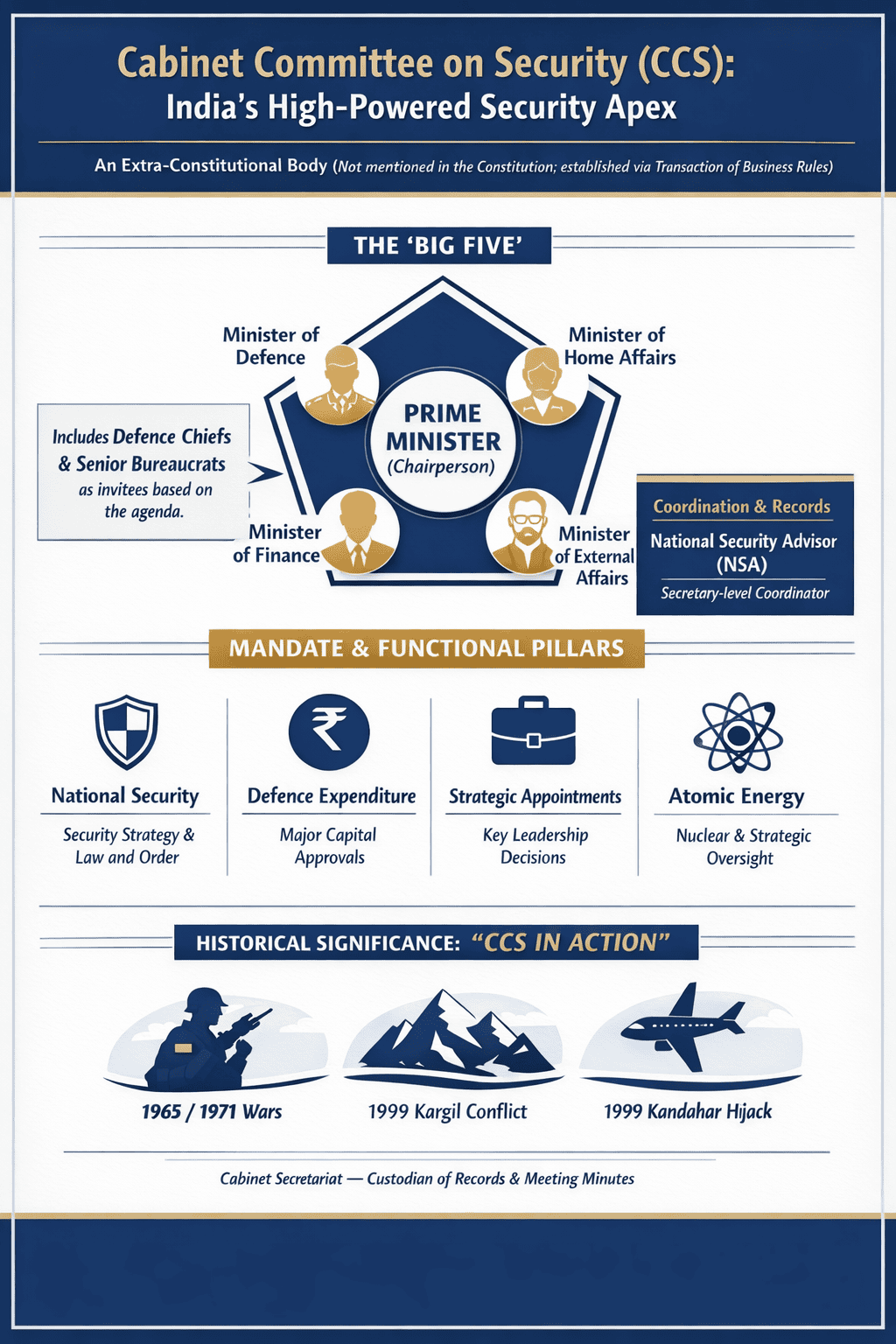
CCS

SuperKalam is your personal mentor for UPSC preparation, guiding you at every step of the exam journey.
Download the App


STUDY RESOURCES
CONTACT US
ⓒ Snapstack Technologies Private Limited