GS 2: PolityGS 2: Governance
Details sought on inquiry, prosecution wings of the Lokpal, Pg12
Parliamentary panel demands details on operationalizing Lokpal's inquiry and prosecution wings, crucial for combating corruption, even a decade after the Act.
Practice MCQs
724 Students attempted
Key Highlights:
- A parliamentary committee is seeking details on the operationalization of the Lokpal's inquiry and prosecution wings.
- The Lokpal and Lokayuktas Act 2013 came into force on January 1, 2014, but the Lokpal began functioning on March 27, 2019.
- Section 11 of the Act mandates the Lokpal to have an inquiry wing headed by a Director of Inquiry.
- The Lokpal Act also provides for a prosecution wing headed by a Director of Prosecution.
- As of the latest report, the appointment of the Director of Inquiry and staffing of the inquiry wing are still in process.
- The prosecution wing was formally constituted on June 6, 2025, but prosecution matters are currently handled through the CBI.
Detailed Insights:
- The Lokpal and Lokayuktas Act aims to combat corruption by establishing an anti-corruption ombudsman.
- Delay in fully operationalizing the inquiry and prosecution wings hinders the Lokpal's ability to independently investigate and prosecute corruption cases.
- The parliamentary committee emphasizes the need for coordination between the Lokpal's inquiry wing and existing investigative agencies.
- The committee's report highlights the slow progress in establishing independent mechanisms for the Lokpal to function effectively.
- The Lokpal is dependent on the CBI for prosecution, which could compromise its autonomy and effectiveness.
- Fully operationalizing the Lokpal is crucial for ensuring accountability and transparency in governance.
Key Concepts Involved:
- Lokpal: An anti-corruption ombudsman responsible for investigating allegations of corruption against public officials.
- Inquiry Wing: A division within the Lokpal responsible for conducting preliminary inquiries into corruption-related offenses.
- Prosecution Wing: A division within the Lokpal responsible for prosecuting public servants accused of corruption.
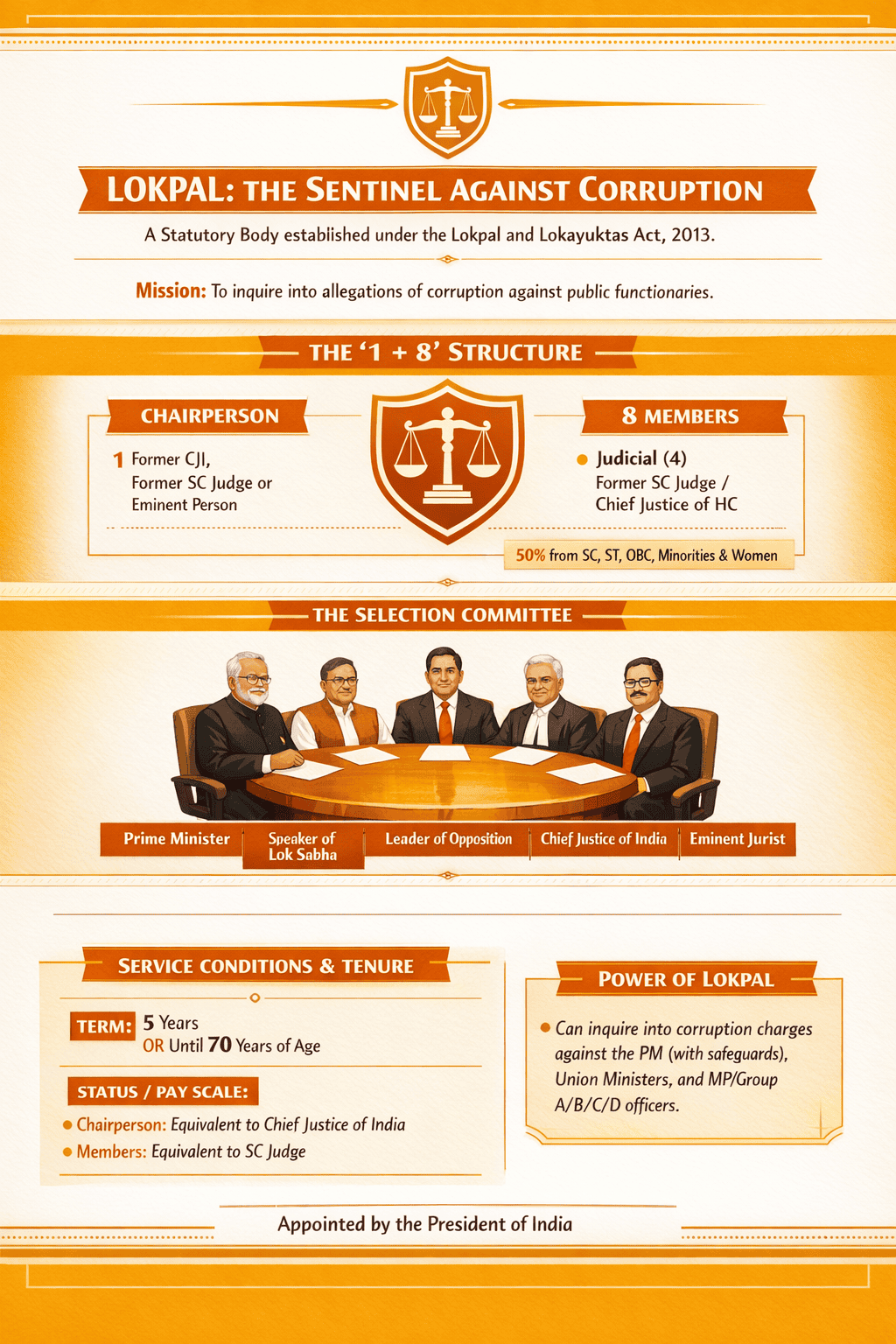
Lokpal

SuperKalam is your personal mentor for UPSC preparation, guiding you at every step of the exam journey.
Download the App


STUDY RESOURCES
CONTACT US
ⓒ Snapstack Technologies Private Limited