GS 3: EconomyPrelims
How India's agri exports posted impressive growth, Pg17
India's agricultural exports surge 8.8% to $25.9 billion, outpacing overall merchandise exports amid fluctuating global prices and trade dynamics.
Practice MCQs
767 Students attempted
Key Highlights:
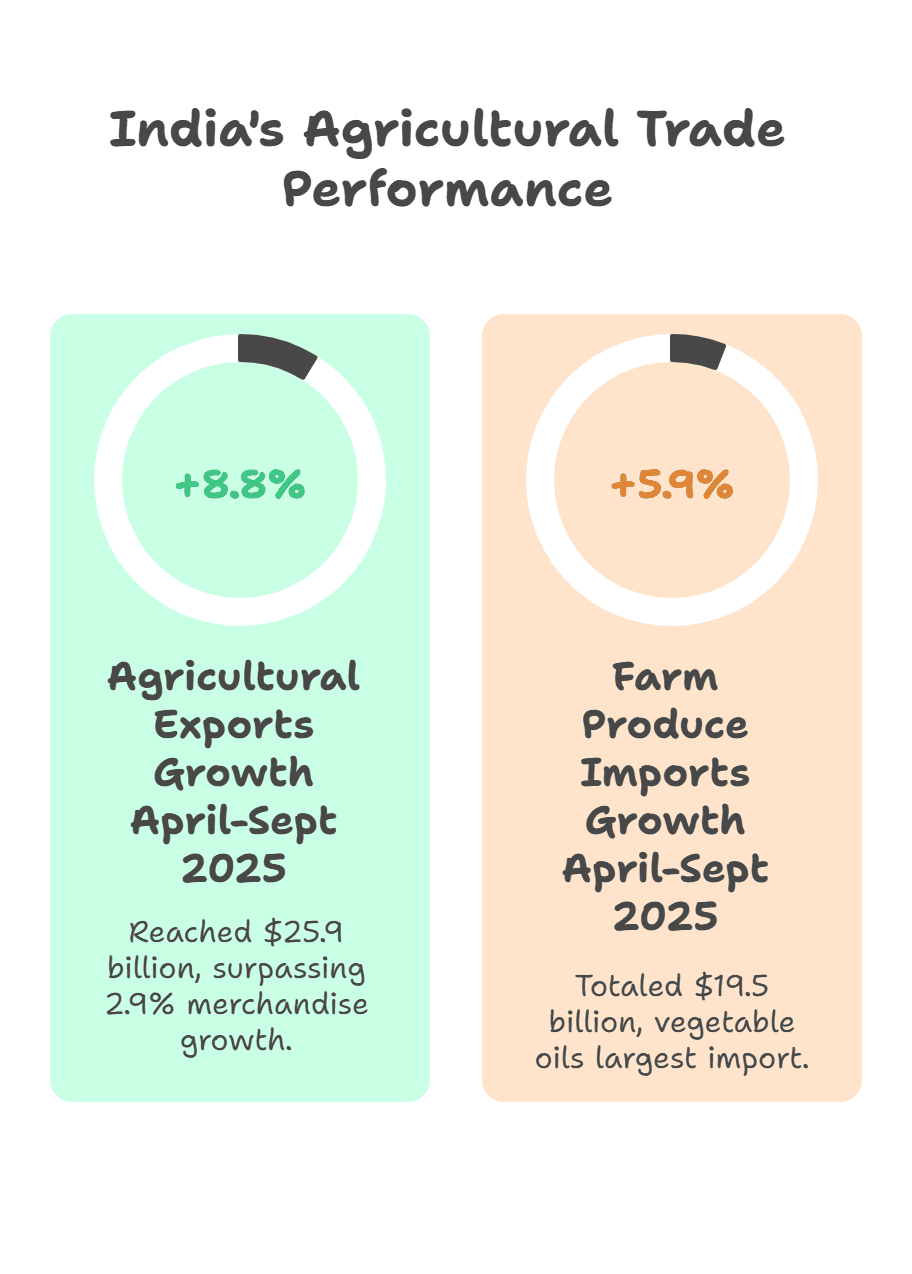
- India's agricultural exports grew by 8.8% in April-September 2025, reaching $25.9 billion, surpassing the 2.9% growth in overall merchandise exports.
- Non-basmati rice, buffalo meat, and marine products are key drivers of this export growth.
- Coffee exports have more than doubled since 2019-20, reaching $1.8 billion in 2024-25, and are projected to exceed $2 billion this fiscal year.
- India's farm produce imports also increased by 5.9% during April-September 2025, totaling $19.5 billion, with vegetable oils being the largest import commodity.
India's Agricultural Trade Performance.png
Detailed Insights:
- The growth in non-basmati rice exports is attributed to the easing of export restrictions imposed between September 2022 and August 2023 to control domestic food inflation.
- Despite tariffs imposed by the U.S., Indian seafood exporters have managed to increase exports by diversifying into markets like China, Vietnam, and the European Union.
- The surge in coffee exports is primarily due to skyrocketing global prices resulting from a 25-year low in global ending stocks for 2024-25.
- While pulses imports saw a sharp decline due to a bumper domestic crop and the reinstatement of import duties, fresh fruits and raw cotton imports have significantly expanded.
- Raw cotton imports are increasing due to domestic production shortfalls, stemming from the lack of new yield-enhancing technologies after Bt cotton.
Key Concepts Involved:
- Merchandise Exports: Tangible goods that are exported from one country to another.
- Food Price Index: A measure of the monthly change in international prices of a basket of food commodities.
- Tariffs: Taxes imposed on imported goods, affecting their price and competitiveness.

SuperKalam is your personal mentor for UPSC preparation, guiding you at every step of the exam journey.
Download the App


STUDY RESOURCES
CONTACT US
ⓒ Snapstack Technologies Private Limited