GS 2: GovernanceGS 3: EconomyGS 2: Social JusticePrelims
Over 2,000 cough syrup brands: Can regulators ensure they’re safe?, Pg15
Fragmented drug regulation and lax enforcement allow 2,000 cough syrup manufacturers to operate, jeopardizing public health and India's global pharma reputation.
Practice MCQs
739 Students attempted
Key Highlights:
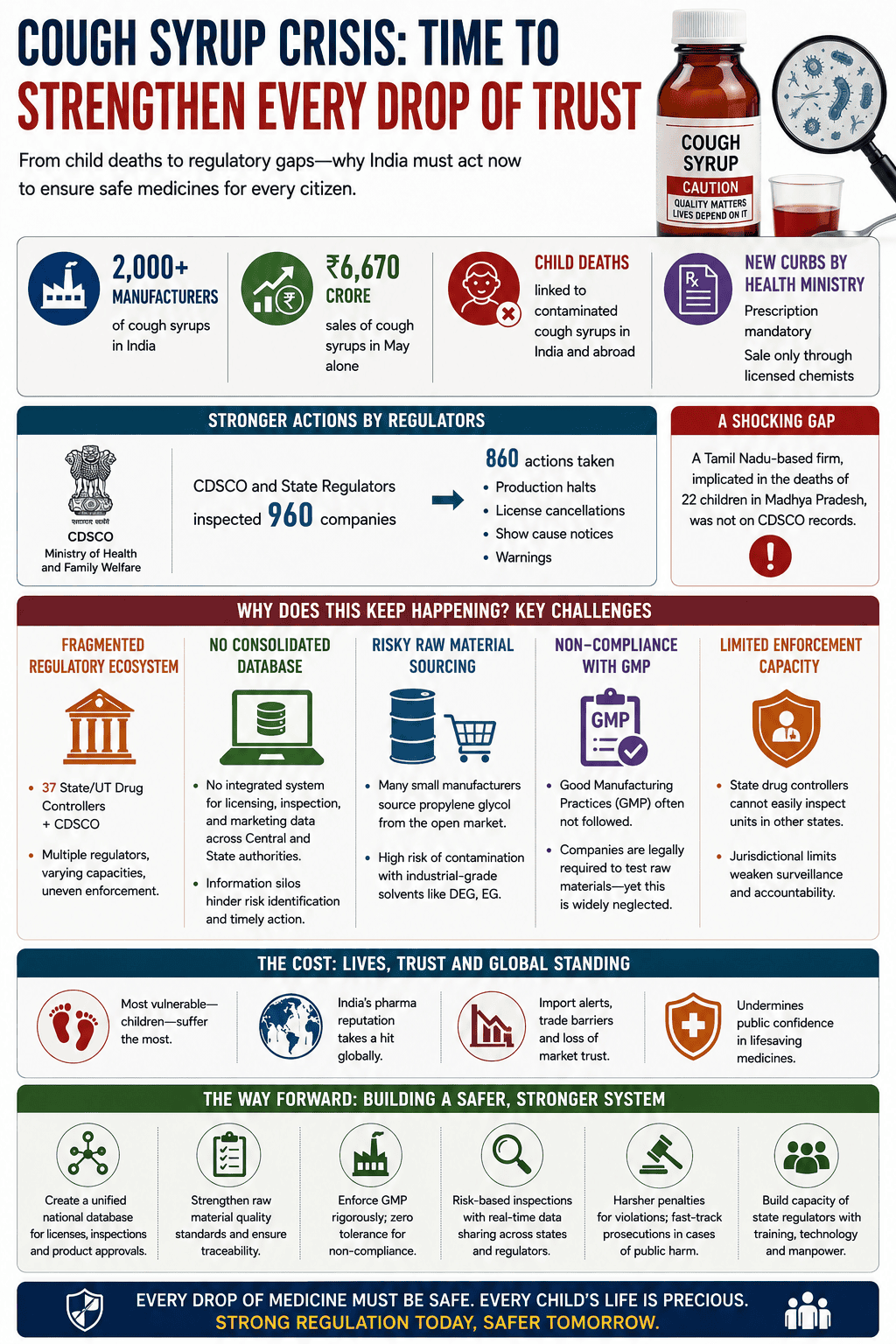
- India has over 2,000 manufacturers of cough syrups, with sales reaching ₹6,670 crore in May alone.
- Contaminated cough syrups have been linked to child deaths both in India and internationally.
- The Health Ministry has tightened regulations, mandating prescriptions and restricting sales to licensed chemists.
- The Central Drugs Standard Control Organisation (CDSCO) and state regulators inspected 960 companies, leading to 860 actions including production halts and license cancellations.
- A Tamil Nadu-based firm, implicated in the deaths of 22 children in Madhya Pradesh, was not on CDSCO records.
Cough syrup.png
Detailed Insights:
- The fragmented regulatory ecosystem, with 37 state/UT regulators and the CDSCO, poses a significant challenge to quality control.
- There is a lack of a consolidated database for licensing, inspection, and marketing information across central and state authorities.
- Smaller manufacturers often source propylene glycol from the open market, increasing the risk of contamination with industrial-grade solvents.
- Non-compliance with Good Manufacturing Practices (GMP) is a major concern, as companies are legally required to test raw materials.
- State drug controllers face limitations in inspecting manufacturing units located in other states, hindering effective enforcement.
- India's pharmaceutical industry is facing reputational damage globally due to recurring quality control issues in its products.
Key Concepts Involved:
- Central Drugs Standard Control Organisation (CDSCO): India's principal regulatory body responsible for ensuring the quality and safety of drugs and medical devices.
- Good Manufacturing Practices (GMP): A system ensuring that products are consistently produced and controlled according to quality standards appropriate for their intended use.
- Propylene Glycol: A common solvent used in pharmaceuticals, cosmetics, and food products, which can be a source of contamination if industrial-grade is used.
- Risk-based inspection: A regulatory approach that prioritizes inspection of manufacturing units based on their potential for non-compliance or risk to public health.
Previous16/16

SuperKalam is your personal mentor for UPSC preparation, guiding you at every step of the exam journey.
Download the App


STUDY RESOURCES
CONTACT US
ⓒ Snapstack Technologies Private Limited