GS 2: International RelationsGS 3: EconomyGS 2: PolityPrelims
Britain after Brexit, divided, uncertain and stagnant, Pg8
Ten years post-Brexit, UK faces deep divisions, economic stagnation, and political turmoil, with its seventh PM likely, as unfulfilled promises fuel populism.
Practice MCQs
739 Students attempted
Key Highlights:
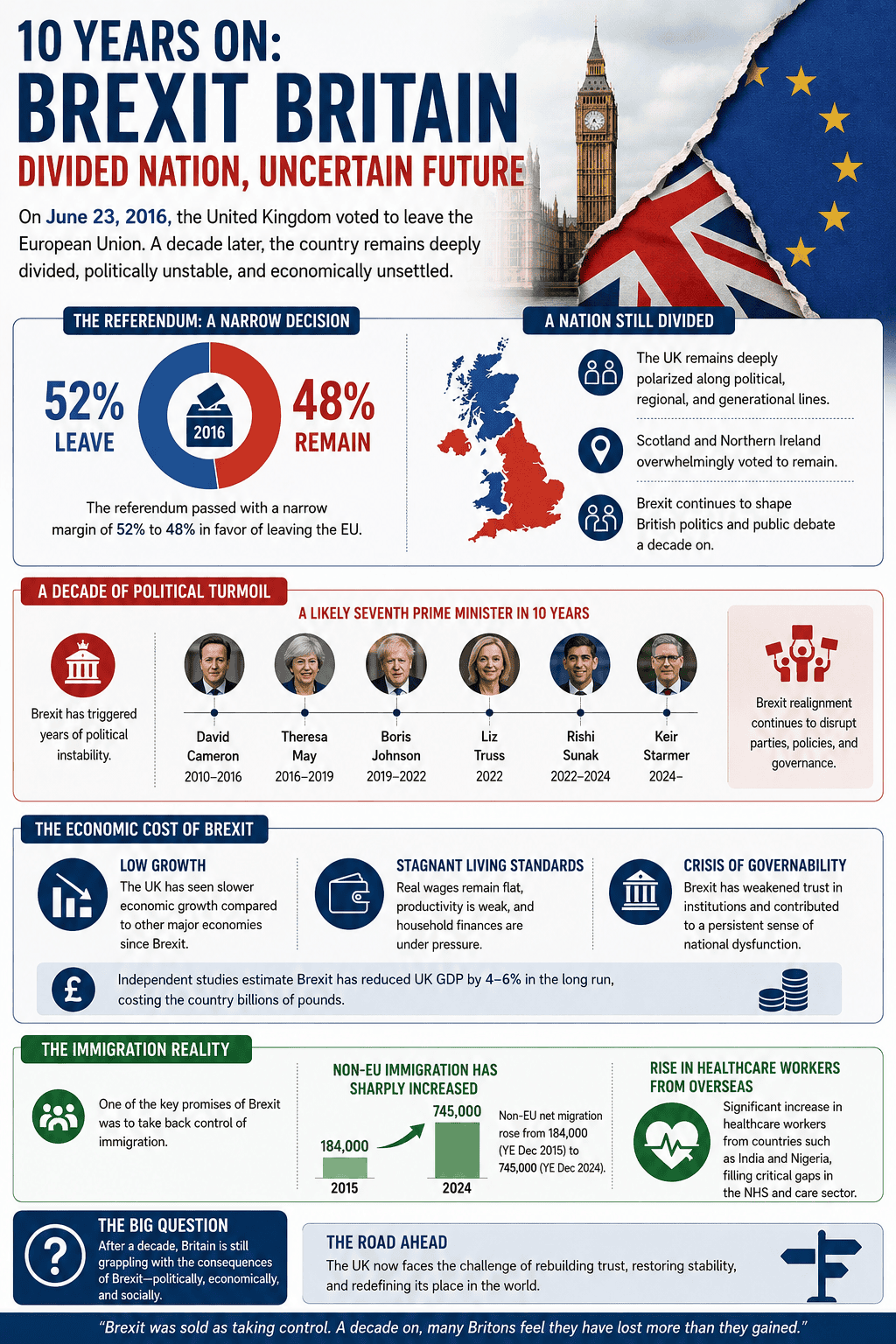
- Ten years after the United Kingdom voted to leave the European Union (EU) on June 23, 2016, the nation remains deeply divided and faces political instability.
- The referendum passed with a narrow margin of 52% to 48% in favor of leaving the EU.
- The UK has experienced significant political turmoil, with a likely seventh Prime Minister in the decade since the Brexit vote.
- Economically, Brexit has been linked to low growth, stagnant living standards, and a crisis of governability.
- Despite rhetoric about controlling immigration, non-EU immigration has sharply increased, with a notable rise in healthcare workers from countries like India and Nigeria.
Brexit.png
Detailed Insights:
- Brexit was initially driven by a desire for greater control over trade, regulation, and immigration, partly fueled by nostalgia for Britain's imperial past.
- The "in/out referendum" was offered by David Cameron to resolve internal divisions within the Conservative Party regarding the EU's project of "ever closer union".
- The vote transformed into a protest against Westminster, reflecting structural problems like stagnant living standards and underfunded public services post-2008 financial crisis.
- Economists largely agree that the loss of unfettered access to the European Single Market has negatively impacted trade, investment, and productivity.
- The National Health Service (NHS) has increasingly recruited qualified workers from outside the EU, particularly from India, Nigeria, and the Philippines, due to domestic shortages.
- The issue of immigration has become highly politicized, with mainstream politicians often adopting populist rhetoric, further dividing the multicultural country.
- The political instability is evident in the high turnover of senior government officials, including 10 Home Secretaries, nine Foreign Secretaries, eight Chancellors of the Exchequer, and six Prime Ministers since Brexit.
Key Concepts Involved:
- Populism: A political approach that appeals to ordinary people who feel that their concerns are disregarded by established elite groups.
- Austerity: A set of economic policies implemented by governments to reduce budget deficits, typically through spending cuts, tax increases, or a combination of both.
- Single Market: A type of trade bloc in which most trade barriers have been removed, with common policies on product regulation and free movement of goods, services, capital, and people.

SuperKalam is your personal mentor for UPSC preparation, guiding you at every step of the exam journey.
Download the App


STUDY RESOURCES
CONTACT US
ⓒ Snapstack Technologies Private Limited