GS 2: GovernanceGS 2: Social JusticeGS 3: Science & TechnologyPrelims
16 fixed dose combination drugs, including antibiotics, banned, Pg10
Union Health Ministry bans 16 fixed dose combination drugs, including antibiotics, citing lack of therapeutic justification and patient risks.
Practice MCQs
731 Students attempted
Key Highlights:
- The Union Ministry of Health and Family Welfare has banned 16 Fixed Dose Combination (FDC) drugs.
- The ban was implemented in the public interest due to concerns about lack of therapeutic justification and potential patient risks.
- The prohibited drugs include certain dermatological preparations, analgesic, antispasmodic, and antibiotic-based formulations.
- These combinations were deemed irrational or unsafe for use.
FDC.png
Detailed Insights:
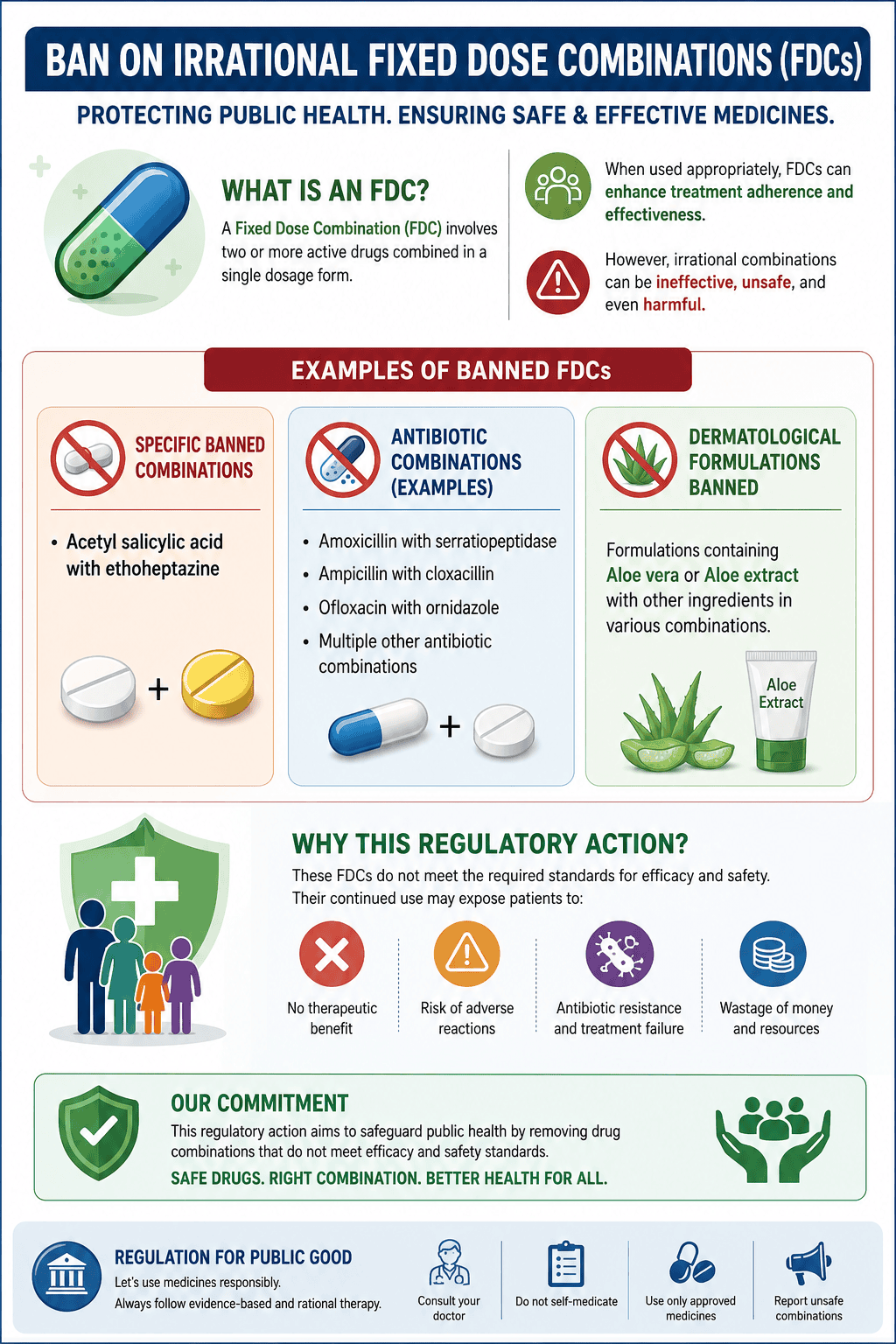
- A Fixed Dose Combination (FDC) involves two or more active drugs combined in a single dosage form.
- While some FDCs enhance treatment adherence and effectiveness, irrational combinations can be ineffective or harmful.
- The banned list includes combinations like acetyl salicylic acid with ethoheptazine and various antibiotic combinations such as amoxicillin with serratiopeptidase.
- Several dermatological formulations containing aloe vera or aloe extract with other ingredients were also prohibited.
- This regulatory action aims to safeguard public health by removing drug combinations that do not meet efficacy and safety standards.
Key Concepts Involved:
- Fixed Dose Combination (FDC): A medicine containing two or more active drugs combined in a fixed ratio in a single dosage form.
- Therapeutic Justification: The scientific and clinical evidence supporting the efficacy and safety of a drug or drug combination for a specific medical condition.
- Irrational Drug Combinations: Drug combinations that lack scientific basis, offer no additional benefit, or pose increased risks compared to individual components.

SuperKalam is your personal mentor for UPSC preparation, guiding you at every step of the exam journey.
Download the App


STUDY RESOURCES
CONTACT US
ⓒ Snapstack Technologies Private Limited