GS 3: Environment & EcologyGS 1: Indian GeographyGS 2: Social JusticePrelims
Rising night-time heat an urgent health hazard, Pg17
India faces rising night-time temperatures, posing severe health risks, especially for low-income urban residents lacking cooling solutions.
Practice MCQs
724 Students attempted
Key Highlights:
- Night-time temperatures in India are rising faster than daytime temperatures, posing a significant health risk, especially for low-income populations.
- A study in Chennai showed occupants in low-income houses frequently experience temperatures exceeding 32° Celsius at night, sometimes reaching 35° Celsius.
- Rising night-time temperatures, exacerbated by the urban heat island effect, prevent the human body from recovering from daytime heat.
- Increased night-time temperatures correlate with a rise in all-cause mortality, as seen in Ahmedabad, where deaths increased significantly when night temperatures exceeded 28-30° Celsius.
Detailed Insights:
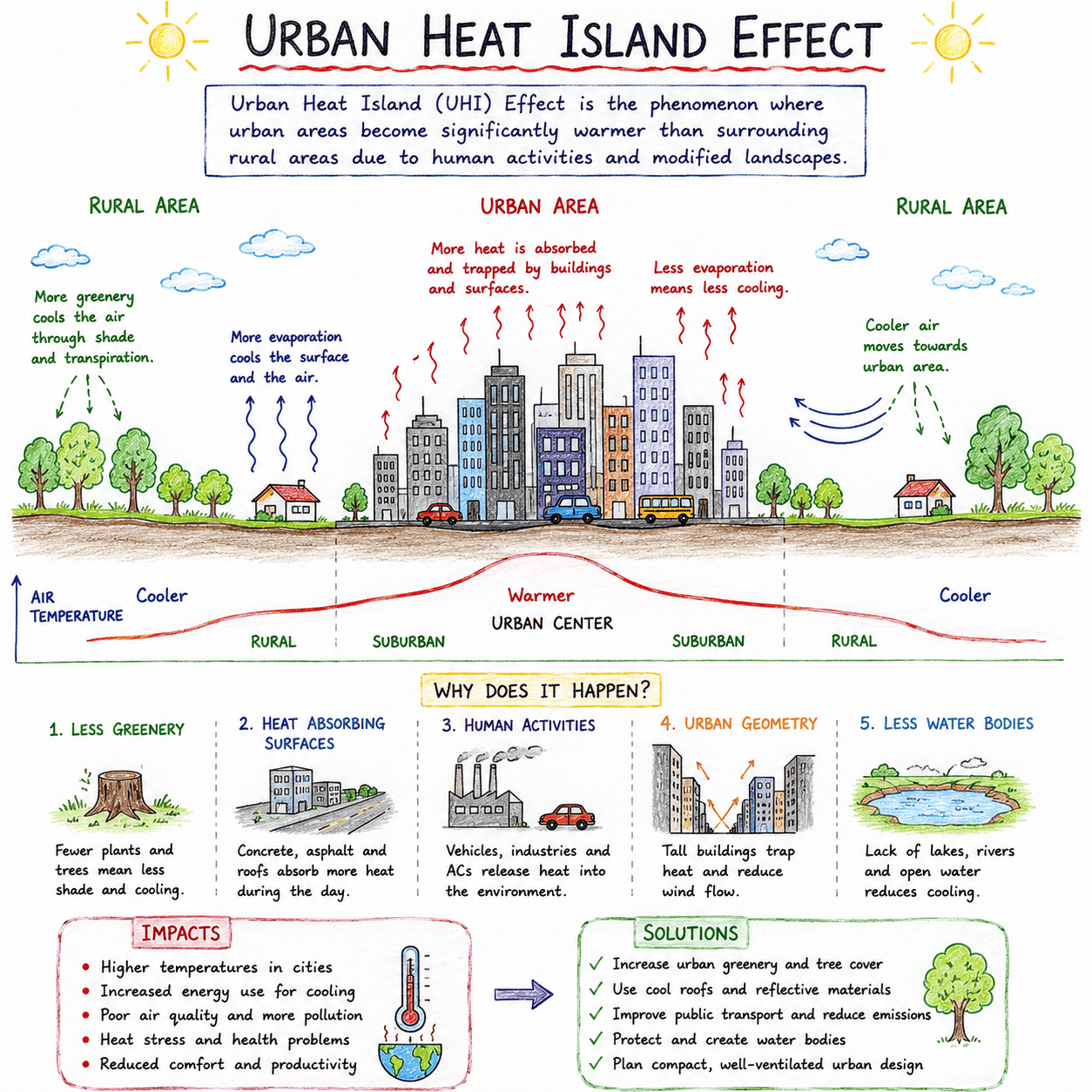
Urban Heat Island Effect.png
- India's average temperature increased by about 0.7° Celsius between 1901 and 2018, with projections indicating night-time temperatures could rise by as much as 5.5° Celsius by the end of this century.
- The urban heat island effect, caused by concrete, roads, and lack of vegetation, amplifies night-time temperatures in urban areas by 4-6° Celsius or more compared to outskirts.
- High night-time temperatures lead to sleep discomfort, exhaustion, and reduced productivity, with potential major adverse health impacts still being assessed.
- Heat action plans in over 200 cities across at least 23 states primarily focus on heatwave situations, while the constant threat of rising night-time temperatures requires more attention.
- Passive cooling solutions like reflective roof coatings, whitewashed surfaces, and improved natural ventilation can provide immediate relief in cramped households.
Key Concepts Involved:
- Urban Heat Island Effect: The phenomenon where urban areas experience higher temperatures than surrounding rural areas due to human activities and infrastructure.
- Passive Cooling: Techniques that use natural processes to cool buildings, reducing the need for energy-intensive air conditioning.
- Heat Action Plan: A set of strategies and measures implemented to reduce the health impacts of extreme heat events.
Previous9/9

SuperKalam is your personal mentor for UPSC preparation, guiding you at every step of the exam journey.
Download the App


STUDY RESOURCES
CONTACT US
ⓒ Snapstack Technologies Private Limited