GS 3: EconomyPrelims
Deceptively benign, Pg6
India's retail inflation rises to 3.4% in March amid concerns over rising wholesale prices and rupee depreciation.
Practice MCQs
891 Students attempted
Key Highlights:
- India's March retail inflation (CPI) increased marginally to 3.4% from 3.2% in February.
- The Wholesale Price Index (WPI) climbed to a 38-month high of 3.88% in March.
- Rupee depreciation of about 2.5%-3% against the U.S. dollar has amplified imported inflation.
- Exports contracted by about 3%-4% year-on-year and imports by about 5%-6% YoY in March.
Detailed Insights:
- The divergence between CPI and WPI is driven by factors like rupee depreciation, rising fuel prices, and supply chain disruptions due to geopolitical tensions.
- The Consumer Food Price Index (CFPI) rose moderately from roughly 3.4% in February to about 3.8% in March, showing muted reflection of wholesale price pressures on food prices.
- Exporters, especially MSMEs, are redirecting output to the domestic market due to export contraction and policy relaxations, creating localized supply gluts and delaying price pass-through.
- The IMF's latest World Economic Outlook flags rising global recession risks and trims India’s FY27 growth forecast to around 6.2%.
- The current situation presents an opportunity for India to accelerate its shift to renewable energy to mitigate the vulnerability of oil-import-dependent economies.
Key Concepts Involved:
- Consumer Price Index (CPI): Measures the average change over time in the prices paid by urban consumers for a basket of consumer goods and services.
- Wholesale Price Index (WPI): Measures the changes in the prices of goods at the wholesale level, reflecting the supply side of the economy.
- Stagflation: An economic situation characterized by slow economic growth and relatively high unemployment accompanied by rising prices (inflation).
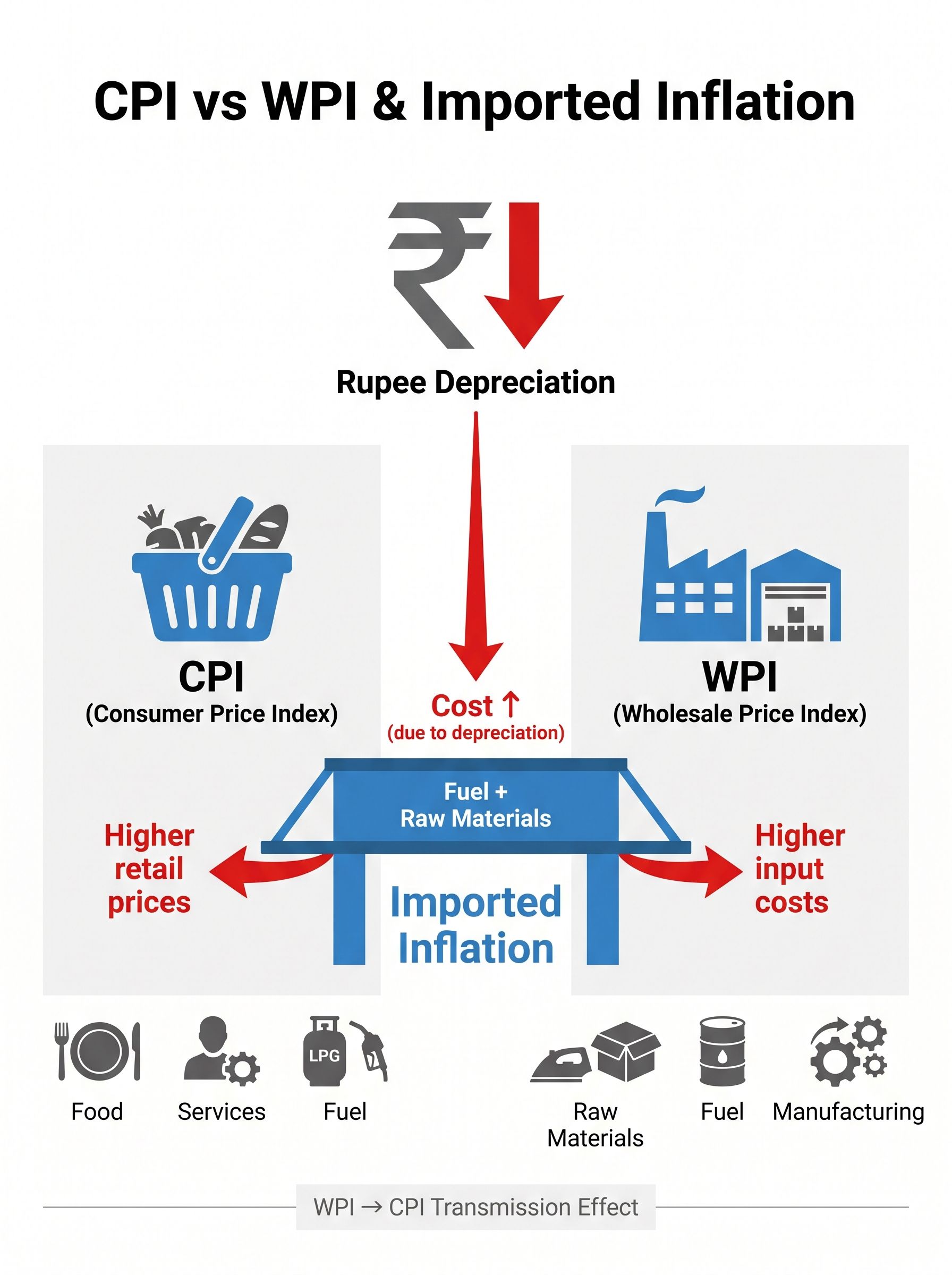
CPI VS WPI

SuperKalam is your personal mentor for UPSC preparation, guiding you at every step of the exam journey.
Download the App


STUDY RESOURCES
CONTACT US
ⓒ Snapstack Technologies Private Limited