GS 1: Indian SocietyGS 2: GovernanceGS 3: EconomyEthicsPrelims
Unpacking the global ‘happiness’ rankings, Pg6
World Happiness Report 2024: Finland tops, India at 118; highlights social trust, mental health, and governance for improved well-being.
Practice MCQs
746 Students attempted
Key Highlights:
- The World Happiness Report 2025 ranks Finland as the happiest country for the eighth consecutive year, while India ranks 118th.
- Pakistan, despite economic struggles, scores higher than India in the report.
- The report uses the Cantril Ladder based on factors like GDP per capita, social support, life expectancy, freedom, generosity, and corruption perception.
- The report suggests that social trust and community kindness are better predictors of happiness than income.
Detailed Insights:
- The World Happiness Report relies on perception-based metrics that can be subjective and influenced by societal expectations and rising aspirations.
- India's lower ranking may reflect self-critical awareness and higher expectations for governance and public services, rather than actual unhappiness.
- The report's framework may have a WEIRD bias, overlooking the importance of collective trust networks in countries like India, where family and community play a significant role.
- To improve its happiness ranking, India needs to focus on rebuilding social capital, restoring institutional trust, and recognizing mental health as an economic policy priority.
- Initiatives like Tele-MANAS and Mind India indicate a growing recognition of mental health's importance in governance and policy.
- Investing in Gross National Happiness (GNH) through community building, transparent public services, and mental health support can lead to economic and social benefits.
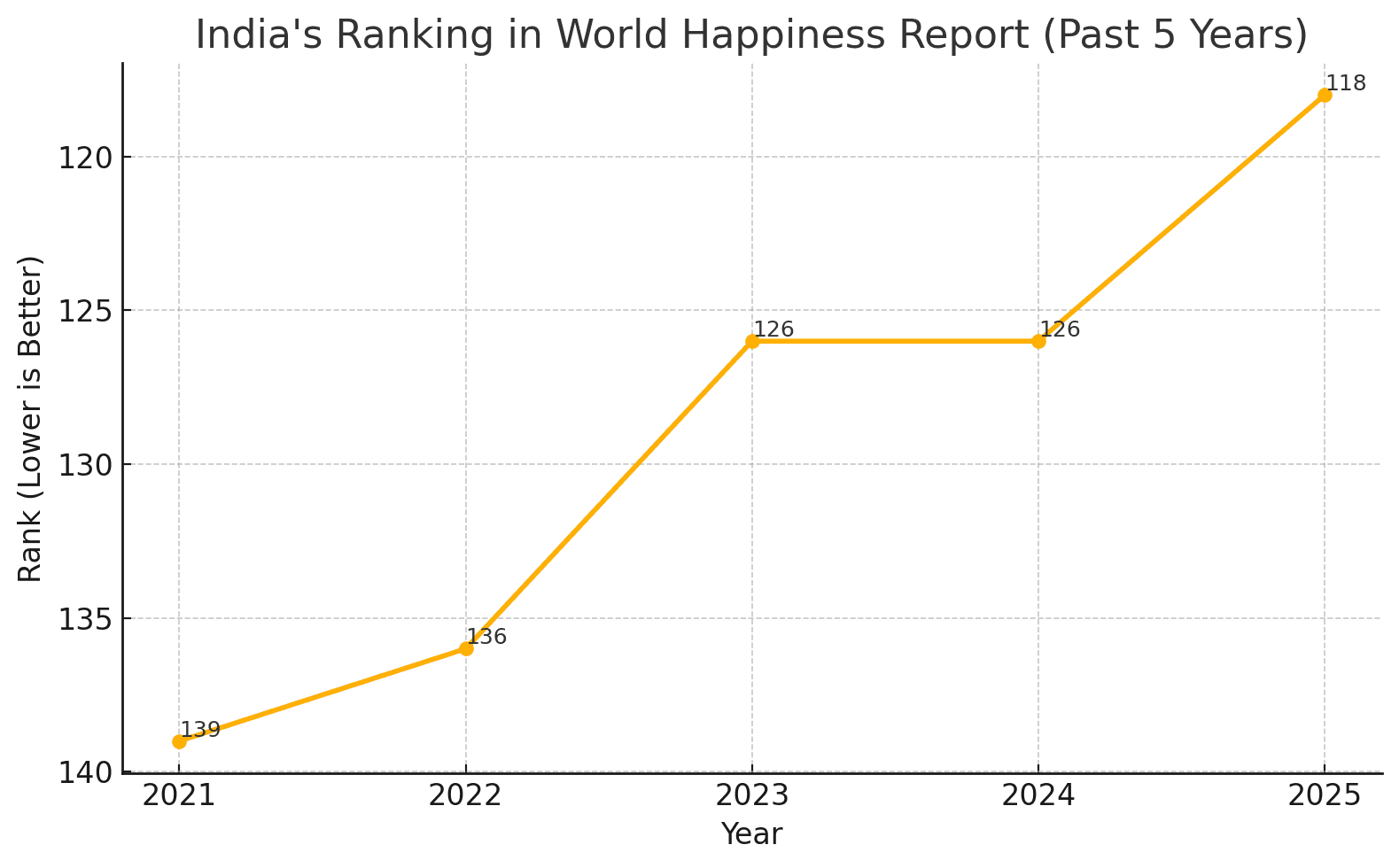
India's Ranking in World Happiness Report (Past 5 Years).png
Key Concepts Involved:
- Cantril Ladder: A survey method where respondents rate their lives on a scale from 0 to 10.
- GDP per capita: A measure of a country's economic output per person, often used as an indicator of living standards.
- Social Capital: The networks of relationships among people who live and work in a particular society, enabling that society to function effectively.

SuperKalam is your personal mentor for UPSC preparation, guiding you at every step of the exam journey.
Download the App


STUDY RESOURCES
CONTACT US
ⓒ Snapstack Technologies Private Limited