GS 2: International RelationsPrelims
NSAs, Pg2
BRICS NSAs convene to tackle global security challenges, setting stage for September summit with Xi Jinping and Vladimir Putin confirmed.
Practice MCQs
898 Students attempted
Key Highlights:
- Chinese Foreign Minister Wang Yi is set to attend the 16th Meeting of BRICS National Security Advisers (NSAs) in India from June 22-23.
- The meeting will address the current international security situation, major international and regional issues, and prepare for the upcoming BRICS summit.
- Chinese President Xi Jinping is likely to visit India for the BRICS leaders' summit scheduled for September 12-13, with Russian President Vladimir Putin's attendance already confirmed.
- India is hosting the BRICS summit in 2026, marking its fourth time chairing the group.
NSA.png
Detailed Insights:
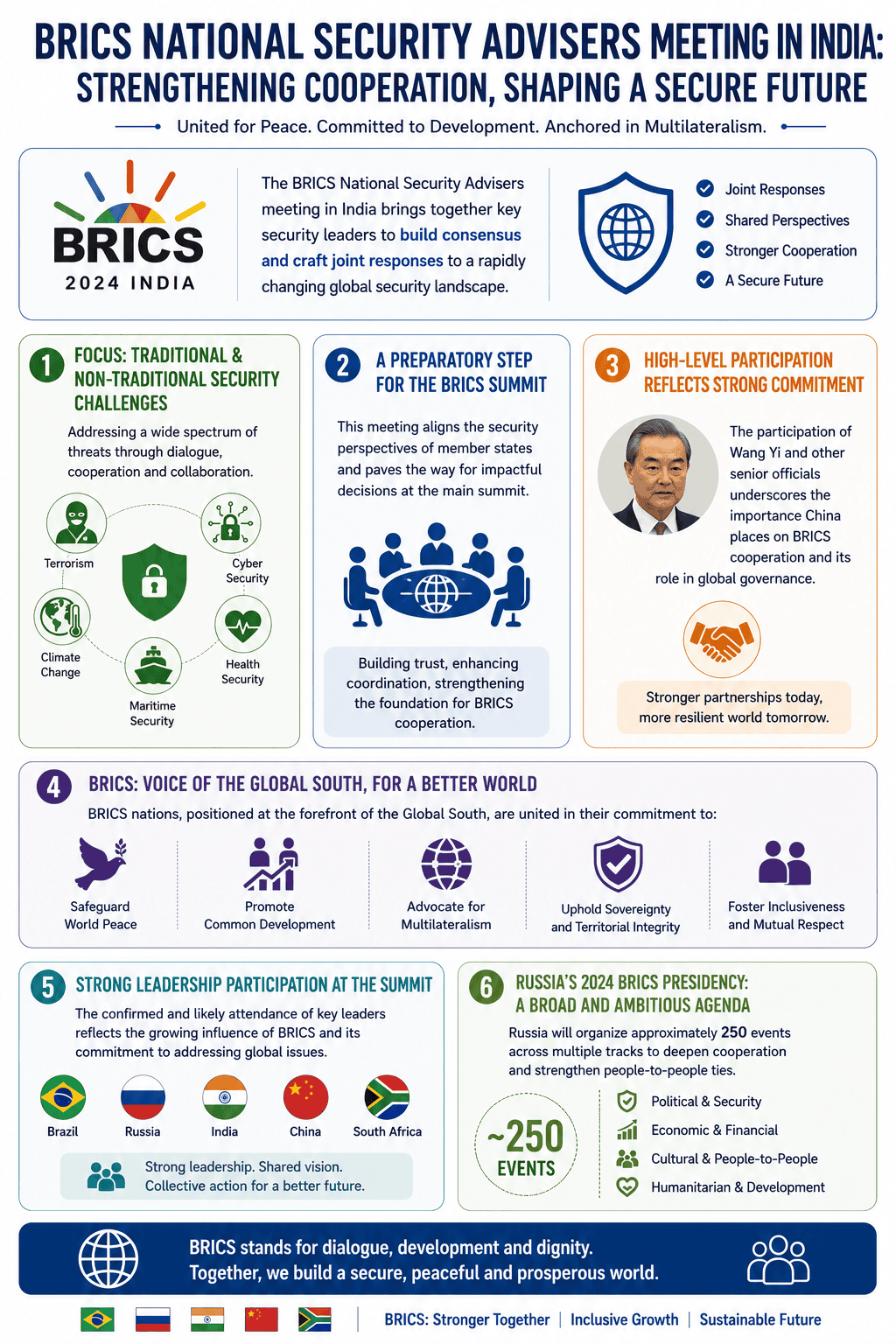
- The BRICS National Security Advisers meeting in India will focus on joint responses to traditional and non-traditional security challenges.
- This gathering serves as a crucial preparatory step for the main BRICS summit, aligning the security perspectives of member states.
- The participation of high-level officials like Wang Yi underscores the importance China places on BRICS cooperation and its role in global governance.
- BRICS nations, positioned at the forefront of the Global South, aim to safeguard world peace, promote common development, and advocate for multilateralism.
- The confirmed and likely attendance of key leaders at the summit highlights the bloc's growing influence and commitment to addressing global issues.
- Russia will organize approximately 250 events during its 2024 BRICS presidency, focusing on political, security, economic, financial, cultural, and humanitarian ties.
Key Concepts Involved:
- BRICS: An intergovernmental organization comprising Brazil, Russia, India, China, South Africa, Egypt, Ethiopia, Iran, Saudi Arabia, and the United Arab Emirates, representing major emerging economies.
- Global South: A term referring to developing, emerging, and newly industrialized countries, often those with shared histories of colonialism, seeking a more equitable global order.
- National Security Advisors (NSAs): Senior government officials who serve as the chief advisors to their respective heads of government on matters of national security.

SuperKalam is your personal mentor for UPSC preparation, guiding you at every step of the exam journey.
Download the App


STUDY RESOURCES
CONTACT US
ⓒ Snapstack Technologies Private Limited